Churchill: When Britain Said No (BBC2) | iPlayer
Joan of Arc: God’s Warrior (BBC2) | iPlayer
24 Hours in A&E (C4) | 4oD
Nina Simone and Me With Laura Mvula (BBC4) | iPlayer
The Big Bang Theory (E4) | 4oD
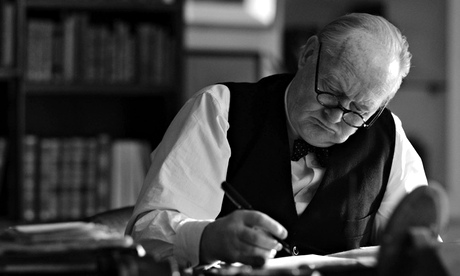
For anyone seeking an object lesson on how to rewrite history, as SW1 recriminations over the election only now fully begin to lean beefy elbows against the beer-soaked oak, hoist up their britches and address the spittoon, Monday night’s iconoclastic Churchill: When Britain Said No was a splendid example.
The great (but only -ish, it turns out, as I suspect some of us already knew) man reportedly said it himself. “History shall bear me out. Particularly as I shall write that history myself.” He did, it does have to be stated, manage an excellent job of that.
Thus he was able to garner, in 1965, the largest state funeral in the world up to that moment, and a certain inviolacy among succeeding generations, most of whom now seem to regard him with a folk memory somehow conflating Sir Alf Ramsey, Moses, John Wayne and the Davids Attenborough, Niven and the fellow-me-lad who slew the Philistine.
It took a few grand talking heads to disabuse us of this notion and remind us why he won the war but so badly lost the 1945 election, the Tories’ worst defeat yet that century. Some of them, clever authors mainly, shouldn’t have been discounted, but can be, because they were a bit too didactic, beardy or worse. It took, bizarrely enough, that arch-Tory Max Hastings to give an objective account because, with some of the left ranged and railing against Winston’s honour, a genuinely decent if right-skewed historian was required to recognise Winston’s multifarious flaws, his simple humanity: very much a man, not a god.
Played unambitiously straight and true here by Christian Rodska in the rather over-frequent re-creations, he was single-minded in battle, unutterably dreadful when it came to recognising common British people and what they had just endured. “His flaws were put to very good use in the war,” said Max. “But the future was not an idea with which Churchill had any sympathy.” Winston was, it turned out, woefully, wilfully, splenetically antipathetic to the labouring classes, to a degree bordering on dysfunction. “I did not understand what had taken place in the British Isles,” he wrote after that election, which ushered in welfare and the NHS. As well he mightn’t: this was a man who had only taken one tube journey in his life, and had to be rescued after three Circle line circuits. Winston Churchill existed, always had, in a brilliant old bubble of chivalry, privilege and disregard – not distaste, just a mystification, as one might chart the progress of ants – for the untermensch, and a man, at that moment in 1945, suddenly and grossly out of his time. This was a terrific tale and a belatedly necessary corrective.
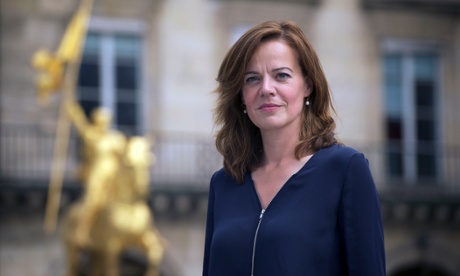
Very much a woman, not a god, was the inevitable conclusion to Dr Helen Castor’s lovely, intriguing hour on Joan of Arc: God’s Warrior. Lovely only in that the arc of the narrative arched inch-perfect throughout; deeply unlovely in Joan’s suffering at the hands of men, from the dauphin in whom she’d invested all her trust, who withdrew crucial troops in her hour of need, via the bastard English and Burgundians who shouted “whore” as they rained spears and oil on her, to God himself, who had apparently spoken to her but, later, sent out mixed messages, as do many men if one lets them. I hadn’t realised that Joan actually recanted at one stage, in Rouen, under the hunger of the church’s gaze and too-humanly fearing for her 19-year-old life. Her bitter and confused recantation of the recanting just four days later, all certainties gone, which may (it was suggested here) have been exacerbated by a brutal rape in prison, was saltpetre-bitter even to hear about, let alone to have briefly recreated by the ever-fine actor Georgia Moffett. These scenes had a little feel of the old Jackanory reconstructions about them, admittedly, but there was a sudden lurch to high relevance when Castor concluded that the immense power of faith to move armies, for high good or great evil, is just as urgently relevant in 2015 as it was in 1431.

Goodness, what a lot of history. It was almost a respite to relax with some trauma.The latest series of 24 Hours in A&E, not only won, as have they all, some fantabulous access to St George’s, Tooting – and if I believed at all in popery I would not only have had Joan d’Arc sainted after her death but also Melissa, Bhav and all the other doctors and scrub nurses – but carefully, subtly, winnowed the backstories from the victims and their families. The guilty father whose son has “two left feet” but who still got on the back of said son’s superbike, and was thus able to helmet-cam film an unutterably stupid slow car which almost killed them both. A single mother with four sons, all unmanageable, as were her tears for what she thought was one’s broken back. Forget entirely Benefits Britain: this is the most searingly true account of life in Britain today.
Laura Mvula, you could tell, had gleeful fun recreating Nina Simone, but warily. It was only when she got to perform with the actual, ancient (and genuinely impressed) Al Shackman, Nina’s guitarist, that she truly channelled Nina. Every single song, every single note – actually every single note Nina had ever dropped on the floor and wiped off like spit – exceeded any musicality in last week’s Eurovision.
The Big Bang Theory, meanwhile, is defying many televisual laws. The eighth season began, and it gets ever better and more gloriously bright, more so even than Friends. If I said, simply, “Penny has a new sexy haircut; Raj has to send a message into space”, my puppyish delights at these two sentences might have mystified Churchill and the Maid of Orleans. But they still bring me joy.