Britain’s Got Talent (ITV) | ITV.com
The Auction House (C4) | 4oD
The Syndicate (BBC1) | iPlayer
Doll & Em (Sky Atlantic)
Has Britain got talent? Well, it appears we’ve certainly got a talent for making meaningless complaints about entertainment shows. The smoke machine from last Sunday’s final of Britain’s Got Talent had barely been switched off before the phone calls came rolling into Ofcom.
Viewers were aghast at Amanda Holden and Alesha Dixon’s plunging necklines. They were incensed that the winner, a pleasant-faced woman named Jules O’Dwyer who flapped her hands in front of her face to denote high emotion, had staged a perfectly nice tightrope stunt with a dog who may or may not have been the same dog as she used in the auditions. Apparently this was a problem.
Then there were complaints about the runner-up, a magician called Jamie Raven (because if you’re not actually an animal, you have to be named after one to stand a chance with the British voting public), who had performed a trick involving finding a banknote in a lemon. Viewers had spotted a hole in one half of the lemon through which Raven had pushed the banknote and they were enraged, presumably because they expected him to perform proper wizardry, as taught by Professor Dumbledore at Hogwarts.

It’s sweet to conclude that the people tuning into Britain’s Got Talent are credulous enough to believe in magic, but I think it’s simply symptomatic of our growing mistrust of the genre. We continue to love talent shows in spite of ourselves – the BGT final attracted 13.4 million viewers – and yet we’re an increasingly savvy audience. Deep down, we know Simon Cowell is manipulating us with those moving montages of creaky old age pensioners dancing to Uptown Funk and pigtailed nine-year-old girls singing tremulously to camera and we hate ourselves for continuing to watch. So we insist what we’re really after is “authenticity” and “real” people and cute, dumb animals who can be trusted not to pull a fast one. And it’s all a giant lie we’re telling one another: none of this is real. It’s entertainment. It’s a show. Everyone’s in on the game. Let’s just admit we like the trickery and be done with it.
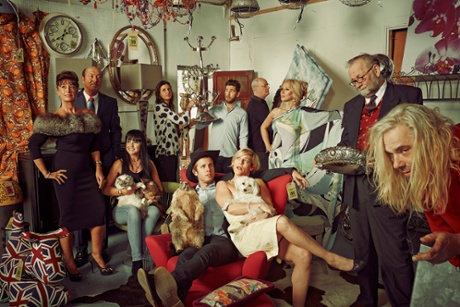
Personally, I prefer the glittery, tit-taped nonsense of Britain’s Got Talent to the ersatz sincerity of Channel 4’s The Auction House , which follows the goings on of Lots Road Auctions in Chelsea, south-west London. There are so many substandard fly-on-the-wall documentaries these days one is tempted to take a giant swatter to the lot of them. This one has all the necessary cliches firmly in place from the off – a plinkety-plonk piano soundtrack, a posh tongue-in-cheek voiceover from some guy who was in The Thick of It and a cast of eccentric characters who are supposed to be lovable. It’s essentially a televisual mash-up of Bargain Hunt and Made in Chelsea.
We were confidently told that Lots Road was “the strangest auction house in Britain”, although there was no evidence of this, given that the cameras basically followed people bidding on stuff they wanted to buy in auctions and one imagines this kind of nefarious activity goes on in, well, every other auction house in Britain.
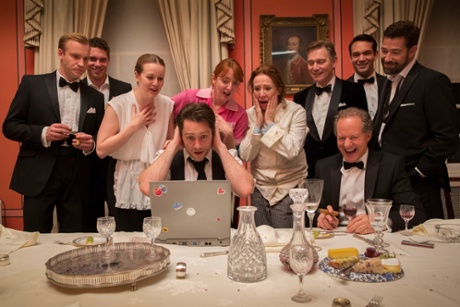
It was a relief, after so much fake reality, to turn to two pieces of excellently scripted drama. In The Syndicate, Kay Mellor has hit upon a structure that showcases her adeptness at storytelling and character. This time, the setting for an unexpected lottery win is a crumbling stately home (think Downton Abbey crossed with Gosford Park and a smattering of Hotel Babylon).
The above-stairs poshos are, admittedly, painted with rather a broad brush (Alice Krige as Lady Hazelwood spends a lot of time looking icily disapproving and at one point someone actually says: “You degenerate scrote” while holding a rifle) but it’s the interactions between the below-stairs staff who are on course to win £14.5m where Mellor really flexes her muscle. She is particularly good at those warm, casual conversations between women of a certain age, in much the same vein as the brilliant Sally Wainwright (Happy Valley, Last Tango in Halifax, Scott & Bailey). Mellor even allows her characters to talk at the same time on screen, not something you see that often on prime time and a trick that can only be pulled off by someone truly confident in the form.

Over on Sky Atlantic, there were two more women with an ear for convincing, funny and unselfconscious dialogue. Last week saw the welcome return of Doll & Em, a sitcom written by real-life best friends Emily Mortimer and Dolly Wells who play exaggerated versions of themselves. The opening episode saw the duo retreat to a lighthouse to write a play.
The charm of Doll & Em lies in its minute and accurate observation of female friendship. There is one scene, in the back of a New York cab, when Doll congratulates Em for having hair that “looks French” before bemoaning the state of her own barnet in order to elicit a return compliment from Em, which is an understated masterclass in the way women work.