Too Much Fighting on the Dance Floor Radio 4 | iPlayer
The Reunion: Alan Bennett’s Talking Heads R4 | iPlayer
From Our Own Correspondent: Migration Special R4 | iPlayer
A week of memories. Not total recall, but the odd moment of hindsight, and several points at which you thought, Oh, I remember that! and wondered where those particular times had gone.
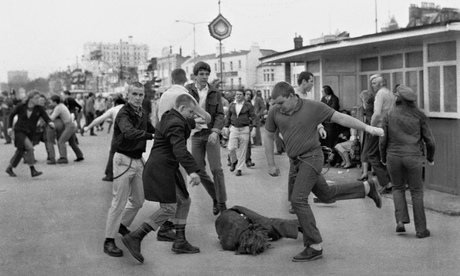
The enormously enjoyable Too Much Fighting on the Dance Floor concerned itself with the adrenaline-fuelled era in the late 1970s and early 80s – post-punk, pre-rave – when every gig was a potential scrap. When, as critic Paul Morley said, your musical taste was a matter of life or death. Morley was an NME journalist around then and told presenter Adrian Goldberg of the time when he went to review a Secret Affair concert. Secret Affair were a mod band, and Morley himself was more of a Throbbing Gristle kind of guy. He hated the gig and left early, whereupon he was set upon by a group of skinheads who slashed him with a razor blade. As he went down, recalled Morley, he said: “I’m not a mod, I’m post-punk!”
In today’s dowatchalike cultural climate, it can be hard to believe that 30 years ago, your haircut, the music you liked, your choice of trousers could – and did – get you beaten up. But youth culture was tribal then, and you were defined by your taste and beliefs. As Goldberg pointed out, music wasn’t an escape, it was a conflict in its own right. He, and some of his excellent interviewees, also made the astute point that, at that time, the lives of men in the UK were changing. Manufacturing was dying, jobs were disappearing and masculine roles were morphing into something that many men couldn’t cope with. So a scrap at a gig or at football was a way of getting all those frustrations out. Plus, there wasn’t any CCTV.
The Reunion is, of course, consumed with what happened in the past. I love this show. Sue MacGregor’s presentational style is so elegant, her beautiful voice and her journalistic brain working seamlessly together. Plus recently the topics have been more interesting: Guantánamo Bay, foot-and-mouth disease, with the Birmingham Six coming up. At least, I think they’re more interesting. Maybe I’m just getting older.
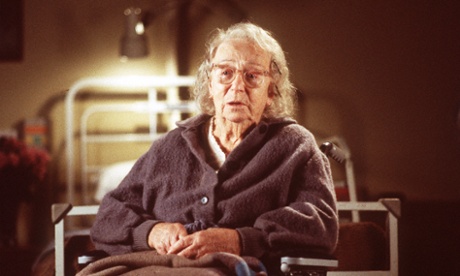
This week’s Reunion was about Alan Bennett’s Talking Heads monologues and was worth listening to, if only to hear Bennett himself. There aren’t many moments in life that aren’t improved by hearing Alan Bennett’s creaky northern tones. But we also got Patricia Routledge, Penelope Wilton and Stephanie Cole, plus director Tristram Powell. All recalled how tough Talking Heads was to film. Bennett told of when Maggie Smith got through a 15-minute section in Bed Among the Lentils, only to make a tiny fluff on her very last line; Powell recalled that Bennett used to sit at the back, wringing his hanky and sometimes chewing it. When Wilton filmed Nights in the Gardens of Spain, he actually swallowed his handkerchief whole, because of the tension.
The programme played a few clips from the monologues, including Thora Hird’s tours de force, A Cream Cracker Under the Settee and Waiting for the Telegram. As soon as I heard the short extracts, I burst into tears. Thora Hird was very, very like my granny, and memories can get you that way.

From Our Own Correspondent also brought us blasts from the past this week. Four different reporters, all diligently reporting the refugee crisis, but at a time – just a few months ago – when not so many people were paying attention. We heard stories from Syrians, from Gambians, from Hungary and the Czech Republic. After just half an hour, I’d learned what it’s like to survive a terrifyingly overcrowded boat trip travelling from Libya to Sicily, how it feels to be a Syrian studying in Edinburgh, why people from eastern Europe are harder on migrants than westerners. All snapshots taken from different angles and brought to us by committed, clever journalists. The world is changing, and will continue to do so, no matter if the past makes us cry or laugh. Perhaps we can learn from previous mistakes and successes; and then maybe those hardcore tribal divisions won’t end up in so many fights.