Arthur Cares (BBC Radio 4) | BBC Sounds
Where Is George Gibney? | BBC Sounds
Mothers of Invention
I don’t know about you, but my Christmas spirit is proving a little tricky to locate now that much of the country is unable to enjoy anything other than nonstop, hardcore consumerism, with no inter-human conviviality allowed other than a punch-up at the till.
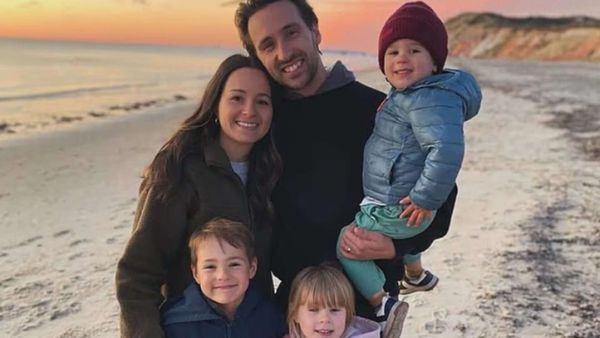
Still, this cheered me up: listening to a young lad giving adults some life advice. Arthur, who is just turning 13, has not yet reached the era of teenagerhood that means he rolls his eyes and grunts dismissively at grownups. Instead, he’s offering to solve their minor problems: “I’m not qualified for anything more than minor,” he says, in the first episode of Arthur Cares, which ran every day last week on Radio 4. Though, listening to him, I think Arthur could solve almost anything. In case he can’t, his father, artist Babak Ganjei, is helping. Arthur dresses Babak up in a dinosaur costume to promote Babak’s art. Arthur is very much up to the job.
Anyway, Arthur asked people to leave their problems on an answerphone, and tackled them diligently. On Monday he solved Emma’s question: what should she do with all the sticks she’s collected on her long lockdown walks? Arthur completely understood that she had become fond of the sticks, and had given some of them characters. “She should decide which personality each stick has and then get rid of the ones which have bad personalities,” he pronounced. On Tuesday, it was writer Kash, who wanted to overcome his mental block over going for a drink with his dad. Arthur suggested that he wrote a short play that would demonstrate how Kash hoped such a meeting would pan out. And then he and Babak read it out. (It ended in comfortable silence.) Wednesday, Thursday and Friday brought problems with singing, dancing and other creative dilemmas. Arthur’s attitude towards each one was impeccable.
These 15-minute programmes, nicely produced by Barney Rowntree of Reduced Listening, gave me enough hope and moral sustenance to be able to tackle a couple of shows I’d been putting off: first, the follow-up programmes of Where Is George Gibney?, which I reviewed in September. It’s a thoroughly gripping, absolutely devastating investigation into the past of a man once feted as Ireland’s most successful national swimming coach. Gibney is now in hiding in Florida, avoiding his past: dozens of kids who he coached – now adults – have come forward to say he sexually abused them.
Host Mark Horgan and producer Ciaran Cassidy are dogged, sensitive and moral, and the podcast has been front-page news in Ireland. As a result, 18 other surivors of Gibney’s sexual abuse have contacted Horgan and Cassidy. These people have never spoken before on the subject, and the extra episodes illustrate how hard it can be for survivors of childhood sexual attacks to talk about what happened to them. One woman could only write down her memories of Gibney’s abuse; another had to stop halfway through to have a cigarette.
The whole series is hard to listen to, but it’s vital and compelling. I was riveted throughout. The gardaí are following up new leads due to the podcast, and it would have been great (though unlikely) if the last two shows could have ended with news of Gibney’s arrest. Nobody who listened to this podcast would want anything less.
There’s more Irish morality from Mothers of Invention, the climate crisis podcast hosted by Maeve Higgins and the former president of Ireland Mary Robinson. Last week, Robinson was joined by Senator Bernie Sanders – you remember him! – and their conversation was mature, optimistic and just a little dull. Sanders has a lovely speaking voice, as does Robinson, but this felt like a conference panel, an agreement by important people to keep talking to and at each other. Perhaps it’s just me and my un-Christmassy mood, but I’ve listened to many environmental podcasts and Joe Biden has not endorsed the Green New Deal. And, according to David Attenborough, the Paris agreement fell apart when it came to turning principles into real-life action. Ah well. Bring on Arthur to solve it all!
Three shows that explain today’s biggest stories
How to Vaccinate the World
Radio 4/BBC Sounds
The soberly intelligent Tim Harford and other clever people – professors of immunology, of anthropology, heads of statistics, disinformation specialists – talk to each other about where we are when it comes to vaccinations against Covid. This podcast has been going for five weeks now, running contemporaneously with everything vaccine: which ones are being bought, which one is being used, who’s getting it and how. HTVTW explains everything clearly and expertly; an excellent analysis of real, breaking events that are going to affect us. The latest episode looks at people who are scared of having the vaccine and the best way to persuade them that they’re wrong. God, if only one member of the cabinet would listen to this show.
A Plague on All Our Houses
Radio 4/BBC Sounds
Here’s an arts explanation of these strange Covid times. Well… sort of. Gregory Doran, artistic director of the Royal Shakespeare Company, talks us through the theory that Shakespeare was very influenced by the plague. The plague hit Stratford within 11 weeks of the playwright’s birth, and he was extremely lucky to survive infancy. Later, it affected his stage life, with theatres closing to stop infection. The number of plague deaths in London was published every Thursday in the late 1500s, and from 1603, when the pandemic became particularly virulent, he wrote darker and darker plays. An interesting takethat makes you reconsider today.
Living British
Radio 4/BBC Sounds
Adrian Chiles tries to shop exclusively British for a week, to see how we’ll manage after Brexit happens on 1 January. (British, as ever, is often irritatingly conflated with English.) He starts with a fruit-and-veg stall: “Nobody ever asks what’s British, no,” says the market trader, perhaps because no one really cares, despite what we’re told. Chiles chats to economists, who tell him buying exclusively British is impossible and pointless. Still, on he continues. Eating British isn’t too hard, but Chiles comes unstuck when trying to British-ify his clothes. And it gets worse when he tries to travel in a British-made car…






.png?w=600)