After the Admiral Duncan (Radio 4) | iPlayer
Lives in a Landscape (Radio 4) | iPlayer
Mind the Gender Pay Gap (Radio 4) | iPlayer
Any radio programme that’s made and presented by Alan Dein is worth a listen. Unlike many Radio 4 stalwarts, he’s not a household name, but if you’re interested in everyday people and their un-everyday lives, Dein is your man. An oral historian who works independently, producing and directing his own programmes, he’s made several award-winning series that leave their mark. Contemporary podcasters owe much to Dein’s approach: he searches out stories that lie under the surface of news, goes to where the story is happening and lets those involved tell their tales. Through him, we hear voices that would never otherwise be broadcast on Radio 4.
The long-running Lives in a Landscape is the series you’re most likely to know: where Dein talks to people who find themselves in an intriguing situation. A couple of these shows have really stayed with me: 2014’s The Roman Way, about a Luton pub squatted by a local character, Biggs, when it was threatened with closure; 2013’s Wheelchair Pusher Needed, which featured Terry, an ex-photographer, and Robert, who pushes his wheelchair. Both were an absolute delight, funny and life-affirming, and you can find them on the extensive Lives in a Landscape archive, hooray! Gradually, the BBC is offering up its wonderful collection of past programmes so that we can binge-listen and enjoy.
And, another hooray – Dein is back with a new series, Aftermath, which centres on the human fallout from a seismic event. The week before last, the focus was on an air disaster that I’d never heard of before: 45 years ago, 108 people were killed when a plane crashed in Switzerland. Most were women from villages near Bristol; they’d travelled to Basel for a special day out shopping.
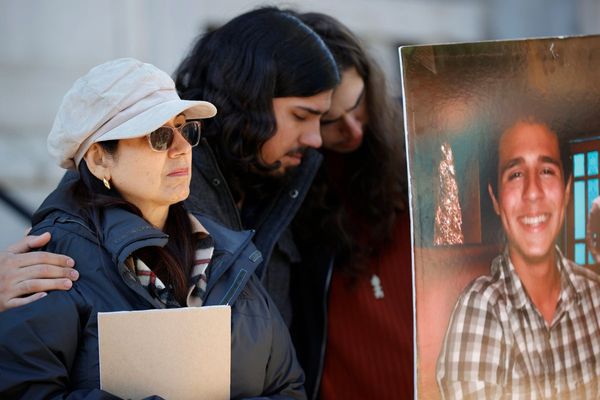
Last week the subject was the 1999 nail-bombing of Soho gay pub the Admiral Duncan, which I remember clearly. We heard from two survivors, as well as from the vicar of St Anne’s church, Soho, and from the sister of one of the victims. As ever, their voices roll around the mind. One victim visits the Admiral Duncan to gain strength when he’s down. One has become a policeman. The devastated sister works for LGBT and homelessness support groups. There’s a break in the vicar’s voice when he describes the Soho gathering in support of those who died in the 2016 Orlando nightclub shooting. People are wonderful and horrible, but mostly wonderful. Dein’s commentary, which can veer towards the ponderous, is excellent in this series, clear and unimposing. His interviewing, as ever, is glorious.

More aftermath: the long-term consequences of our expectations about gender and work were revealed in Mind the Gender Pay Gap on Radio 4. Social historian Emma Griffin went back a long way – she pointed out that in the Bible, the Lord tells Moses that female servants should be paid three-fifths of the amount male servants get – but focused mostly on agricultural Britain, and from there, the Industrial Revolution, the world wars and beyond. We have, in this country, a deeply held assumption that the work that men do is more important than women’s work and should be paid more bountifully, as the man is supporting his family. Until we unpick these assumptions (and bear in mind that the workforce is split 50-50 male-to-female), our pay gap, currently 18.4%, will stay.
Griffin, a woman in a hurry, zipped through her lively commentary and pointed out the anomalies of our traditions. Did you know that laundry is still the single job most likely to be done by women? Even now? “Throughout the 20th century, there is a dominant assumption that even if men participate in housework, women retain responsibility for it,” pointed out one commentator. Grrr. It’s enough to make you chuck his dirty smalls in the bin.
Still. Like the Admiral Duncan programme, the gender pay gap is a depressing subject; like that programme, we were left with a sense of optimism. The world isn’t perfect. That doesn’t mean we can’t try to change it for the better.
Three shows I’ve changed my mind about

Hip Hop Saved My Life With Romesh Ranganathan
audioboom.com
When this podcast first came out, I found Ranganathan’s upbeat silliness a distraction. Why, I thought loftily, doesn’t he just talk about music? Well, duh. Ranganathan’s podcast is, of course, an interview podcast rather than a musical one. Once you realise that it’s a version of Desert Island Discs, as opposed to a talking heads BBC 4 programme, the delights of the show are revealed. Ranganathan is a warm, witty interviewer who wears his hip-hop knowledge lightly. His interviewees – Doc Brown, Mo Gilligan, Example – are impressive, though it would be nice to have a few more women on.

Fortunately… with Fi and Jane
bbc.co.uk
I have been rude about this podcast in the past, despite my great love for Fi Glover and Jane Garvey. Its remit was to recommend great things on the radio, a positive and lovely thing. Unfortunately, I feel that Garvey, in particular, is a far better broadcaster when she’s being scratchy, as opposed to positive and lovely. Luckily for me, Fortunately… has settled into being a funny, slightly scratchy podcast, with Garvey and Glover chuntering on (a delight) about things that irritate them, with the occasional jolly diversion into interviews. They merrily ripped into Radio 2’s Jeremy Vine, which tickled me greatly.

Turning Points with Julie Walters
classicfm.com
This is a new show, so I can’t say I didn’t like it before: but I have a prejudice against programmes with celebrity hosts. Radio 2 used to stuff its late-night schedules with the things: serious documentaries made by clever producers, presented by a Hollywood actor sight-reading the producer’s script. Classic FM’s Turning Points, a six-part series going out on Saturday nights (we’re about halfway through), isn’t very different to this. But it’s presented by Julie Walters, who could read out 16 Horses That Look Like Miley Cyrus on BuzzFeed and make it sound interesting.