The Turning the Tide millennium project has restored this coastline, transforming industrial wasteland into high quality wildlife habitat. This month, primroses and a blaze of gorse blossom are giving a foretaste of the floral display that will grace the cliff-top here over the coming season. Already, leaves of orchids are forcing their way through the turf.
On the beach, where coal mining waste once created a sterile, nightmarish alien landscape, the transformation is even more heartening for those who remember the condition of the area when Dawdon colliery closed in 1991.
In that year, divers conducting a marine life survey off Noses point, reported that the sea floor was smothered in half a metre of silt, the water so turbid no marine life could be seen. When they came back in 2009, after the big clean-up, they found kelp, brittle starfish, sponges, plaice, even lobsters.
There were sea anglers on the beach when we crunched over the pebbles polished by the waves. Searching among limpets and barnacles clinging to the rocks below the cliffs we found scarlet beadlet sea anemones, their tentacles sticky to the touch, adhering with their minute snares, which are lethal to any passing shrimp but which are unable to penetrate human skin.
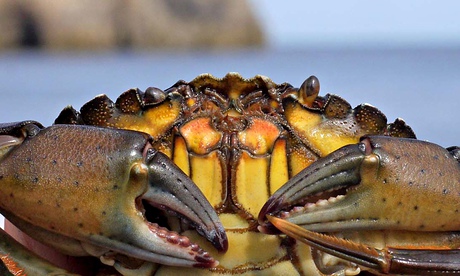
Then we spotted the bane of an angler’s life, a large shore crab, which, given half a chance, would nibble bait from hooks. I picked him up, spanning his carapace between fingers and thumb, as a child learns to do to avoid a nip from those claws. A pointed abdomen, folded under the body, identified him as male.
He was angry, blowing bubbles, waving his claws and legs about like an automaton in defiance. But he was lucky too. A herring gull happened to be patrolling the beach, armed with a beak that could smash his shell with a single blow.
I stood at the edge of the rocks and threw him out to safety into deeper water, just as an incoming wave lapped over my shoes, completing the time honoured rock-pooling experience.
Phil Gates @seymourdaily