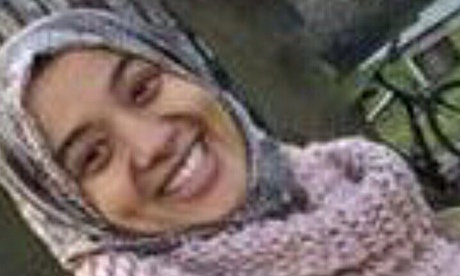
The warning signs were clear months before British medical student Lena Mamoun Abdel Gabir left for Syria to volunteer in Islamic State-controlled areas – if anyone had thought to look.
Between pictures of flowers and cupcakes, jokes about Nutella and getting married, a Twitter account, apparently run by the 19-year-old, had followed Isis-supporting accounts, re-tweeted her support for the Charlie Hebdo killers, and, last August, shared a video by a radical cleric hugely popular with European and North American jihadists.
The content was deceptively dull, a lecture on whether Muslims should vote in council elections. The real message was the desire to share the thoughts of Palestinian-American preacher Ahmad Musa Jibril. He has been identified as the leading online cheerleader for foreign jihadists in Syria, according to a pioneering academic study published by King’s College London, exploring how radical preachers inspire and guide British and other western Muslims who go to fight.
Jibril’s video should have made an unusual choice for the daughter of two prosperous doctors, brought up in an idyllic Norfolk village, educated at a private school and, according to her former headteacher, a straight-A student.
“She was ferociously bright, engaged and focused on her academic studies,” said Chris Staley, headteacher of Wisbech Grammar. “She was a regular in the hockey team throughout her time here, was a form representative, sat on the pupil council and was a member of the student voice. Her desire to help others was clear to see for those who taught her.”
Gabir went on to study medicine in Khartoum, where she stayed with her grandmother and was ostensibly devoted to her university studies, but appears to have been gradually radicalised. The Sudanese government is trying to crack down on extremism, but it is believed about 100 fighters have left there for Syria and Iraq, and one Salafi group declared its support for Isis nearly a year ago.
It appears that Gabir, and about 10 other medical students who travelled to Syria at the same time, frequently attended meetings close to the university with an extremist preacher who, sources claim, impressed on them the importance of supporting Isis with their medical expertise.
“You can get radicalised online but you still need one-to-one contact and this guy seems to be that particular contact,” said Hara Rafiq, managing director of the London-based Quilliam Foundation thinktank.
By the time the link to Jibril’s lecture was posted last August, Gabir’s embrace of extremist views was apparently worrying her parents, according to the tweets on @lenaalinglingg. “You know times are rough when… your mum keeps referring to you as da3ish (Isis),” a tweet on 22 August read, using a common Arabic name for Isis.
But it is still a teenage timeline; full of fretting about what to do with holiday time back in the UK, after a warning that window-shopping is un-Islamic, frustration with relatives who want to talk about marriage, and tributes to Nutella. The other Twitter accounts followed include now-discredited Isis champion @ShamiWitness, and the @VeiledByChoice account, which has the Isis flag as its backdrop – but also The Economist magazine, comedian Frankie Boyle, and the lighthearted @ThingsAKidSaid.
Gabir’s father, an orthopaedic surgeon who raced to the Turkish border when she went missing, said neither he nor his wife had accused their daughter of having radical views and said the tweets were not hers. “Lena’s Twitter account has been hacked since the beginning of last year and she said she is not using it,” her father, Mamoun Abdel Gabir, told the Observer.
He is currently based near the Turkish border with parents of most of the other missing children, who are mostly British but also include an American, a Canadian and two Sudanese citizens. One of the parents, who did not want to be named, said they had not been monitoring their children’s lives online because they trusted them: “They are adults, we don’t check their Facebook accounts.”
One group that might have raised suspicions if the parents had gone looking is the innocuously named Islamic Cultural Association, a group “liked” by several of the 11-strong group that travelled to Syria from Khartoum medical school. Gabir, on a Facebook page that has since been taken down, was among those who subscribed. A page for the medical university branch includes inspirational quotes and religious commentary in both English and Arabic, suggesting it was aimed not just at students who grew up in Sudan, but a diaspora that had been educated in English abroad and come back for medical studies.
The Facebook page for the Khartoum university branch regularly posts radical content, including quotes from Michigan-based Jibril, as well as other controversial clerics, including former al-Qaida propagandist Anwar al-Awlaki, a US citizen who was killed by a drone strike in Yemen in 2011. While Jibril is not a member of Isis or a recruiter for the group, the King’s College study said he belongs to a “set of new spiritual authorities” who have the largest followings among foreign jihadists.
“Humans sin. Idiots show off about it,” one of his 30,000 followers wrote on 21 February. The @lenaalinglingg account has been quiet since then.