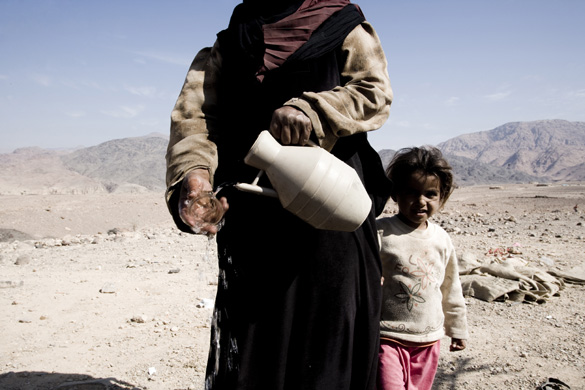
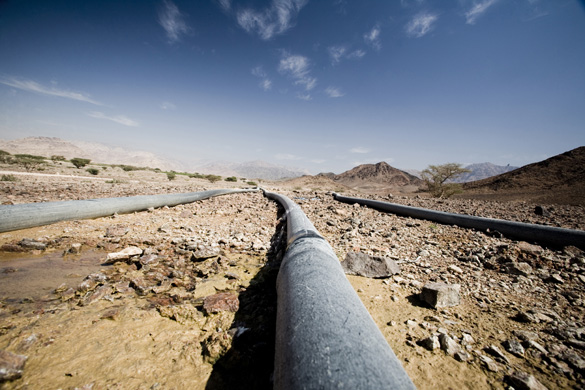
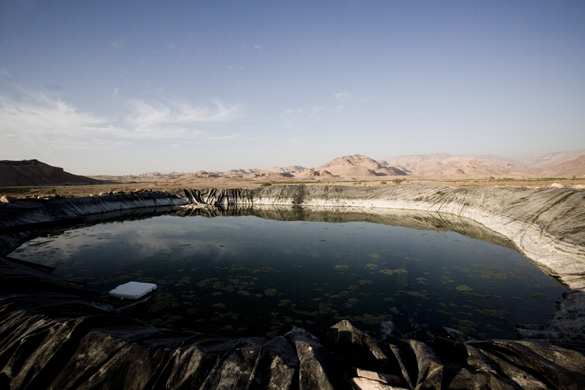
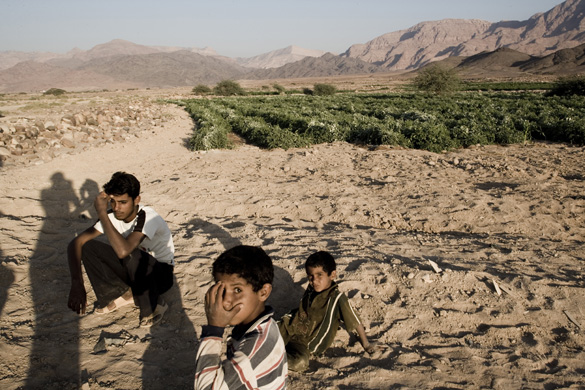
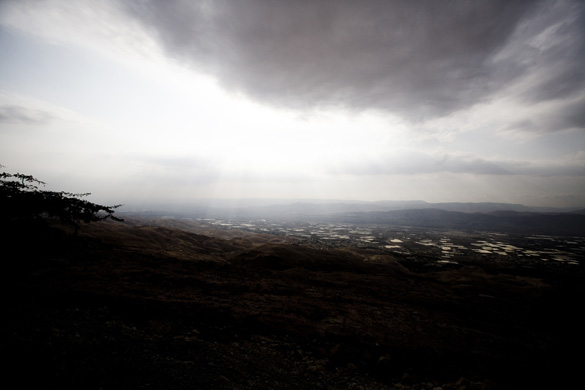
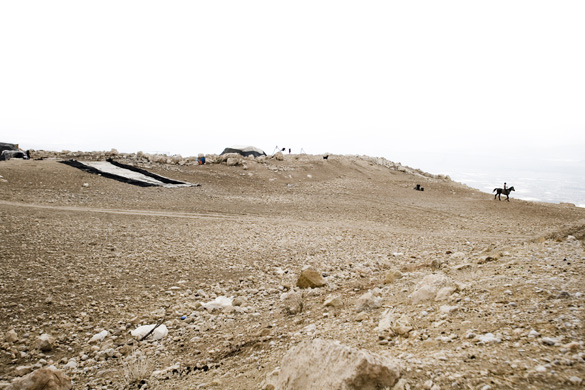
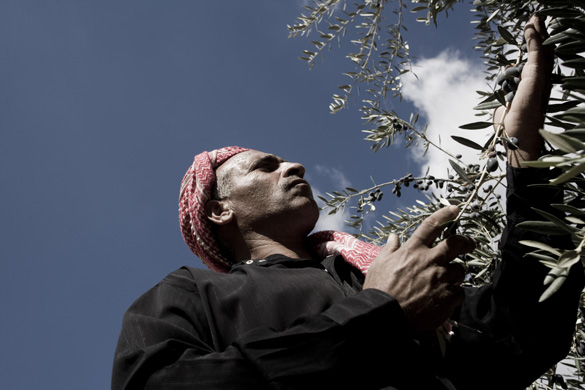
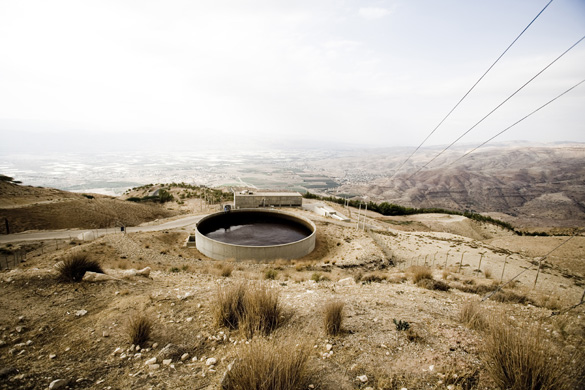
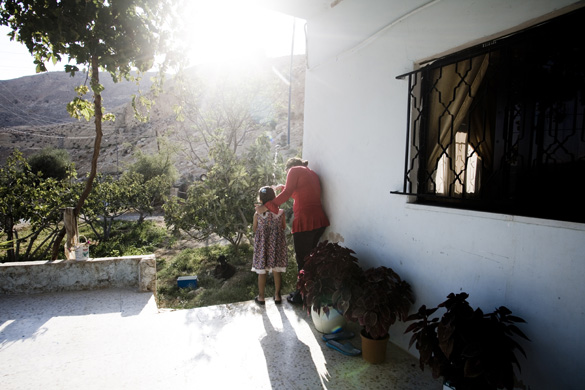
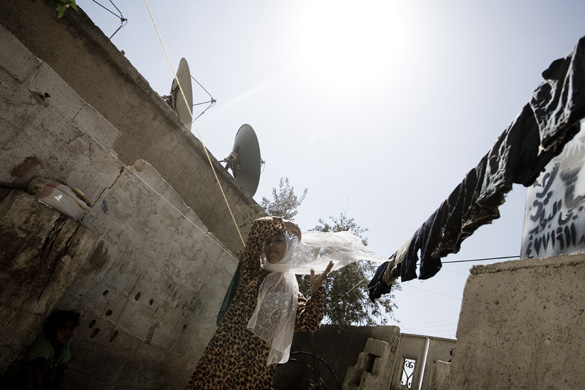
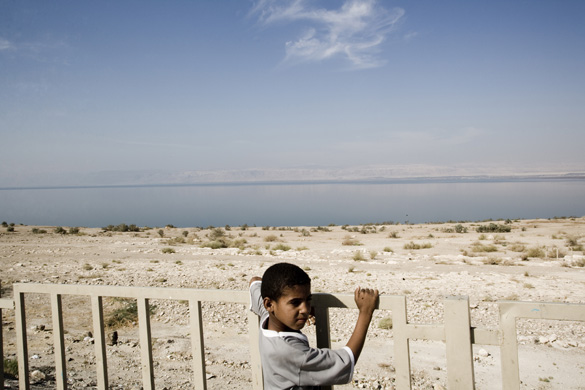
A Bedouin mother washes a glass for her daughter in Wadi Faynan in Jordan, one of the world's driest areasPhotograph: Matilde Gattoni/Matilde GattoniDesert Bedouin who survive in the valley have laid pipes down the dry stream bed to suck what is left of the spring, in order to irrigate fields of tomatoes they have scratched out of the dry soilPhotograph: Matilde Gattoni/Matilde GattoniThe reservoir that feeds water to the farms and people of the Wadi Faynan desert. According to members of the community, good rains now arrive less than every other yearPhotograph: Matilde Gattoni/Matilde Gattoni
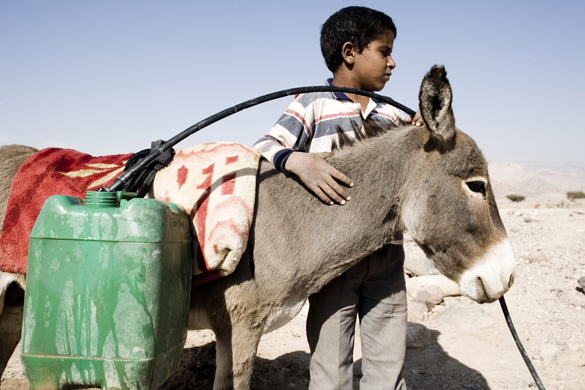
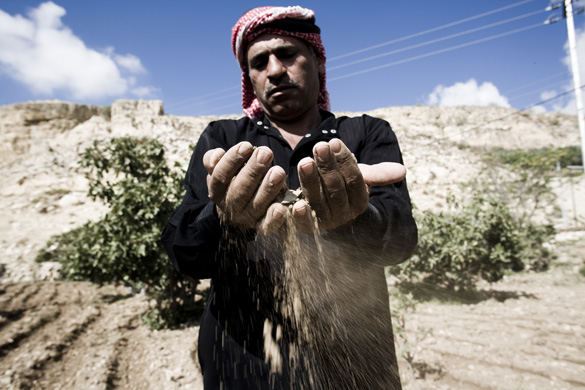
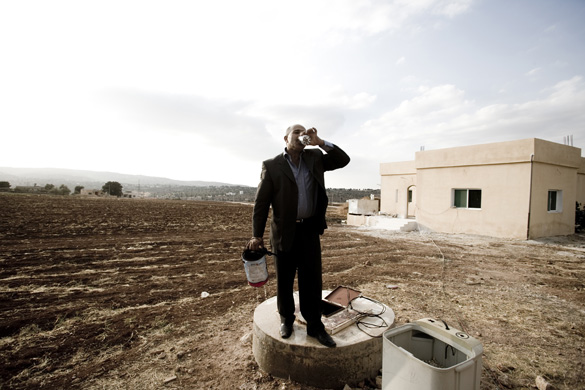
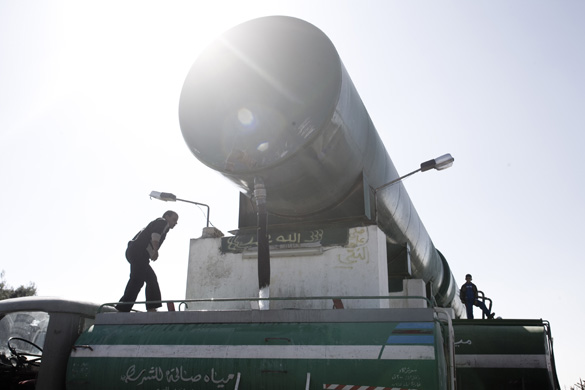
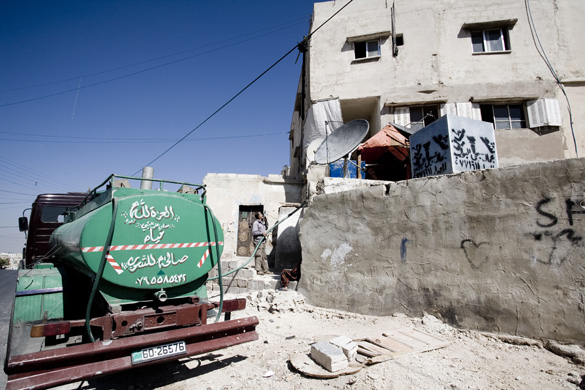
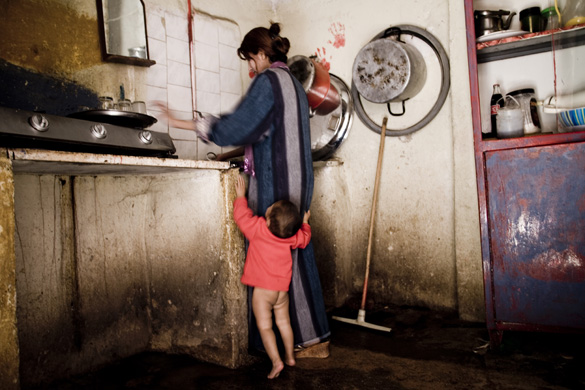
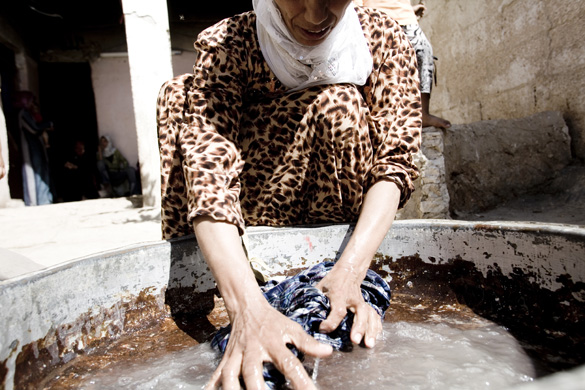
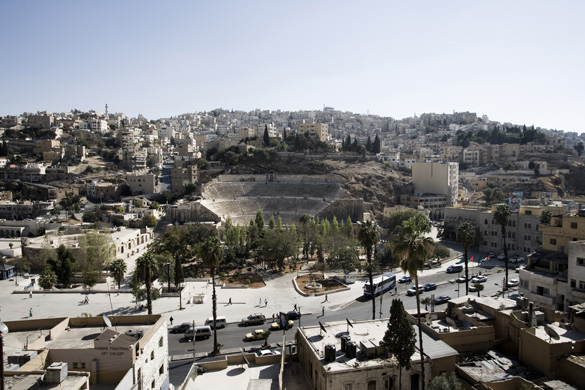
Families in Wadi Faynan collect 15 litres of water each day per person from the pipes running though the desert. Like other world communities, they are paying the price for thousands of years of exploitation of the environment Photograph: Matilde Gattoni/Matilde GattoniA child siphons off the water from the pipes in Wadi Faynan. Lack of water is blamed for many of the world's most distressing crises: millions of deaths each year from disease, malnutrition and chronic hunger, keeping children away from schools that offer hope of a better life Photograph: Matilde Gattoni/Matilde GattoniA farmer in grabs the dry dirt with his hands in Iraq al-Amir, Jordan. As the population keeps growing and getting richer, and global warming changes the climate, experts are warning that unless something is done, billions more will suffer lack of water – precipitating hunger, disease, migration and ultimately conflictPhotograph: Matilde Gattoni/Matilde GattoniEngineer and local farmer Sameeh al-Nuimat tests the water at the Care permaculture project in Salt, Jordan. In a bid to avert this catastrophe, politicians, economists and engineers are pressing for dramatic changes to the way water is managed, from tree planting and simple storage wells, to multibillion dollar schemes to replumb the planet with dams and pipes, or manufacture freshwater from sewers and the seaPhotograph: Matilde Gattoni/Matilde GattoniFarms next to the Jordan river. Communities around the world have been forced to tap rivers, lakes and aquifers, sometimes millions of years old, far beyond the limit at which they can replenish themselvesPhotograph: Matilde Gattoni/Matilde GattoniNomadic Arab Bedouins situate their tents close to the Jordan river for fresh water. Only a small portion of Bedouin can still be regarded as true nomads; many have settled down to cultivate crops rather than drive their animals across the desertPhotograph: Matilde Gattoni/Matilde GattoniSalah Al-Mherat grows olives, figs and lemons on his farm in Iraq al Amir. The UN says individuals need five litres of water a day to survive in a moderate climate, and at least 50 litres a day for drinking, cooking, bathing and sanitationPhotograph: Matilde Gattoni/Matilde GattoniFrom the Jordan river to Amman there are eight reservoirs that allow the water to come up from the valley to the hillsPhotograph: Matilde Gattoni/Matilde GattoniA water tanker fills up at the water station outside Amman in Jordan. It delivers vital supplies of water to families in different areas of Jordan between one and seven times a weekPhotograph: Matilde Gattoni/Matilde GattoniIn Amman, a family of 14 people receives 2,000 litres of water once a week. The water is pumped out of the mobile water tanker into an outside tankPhotograph: Matilde Gattoni/Matilde GattoniSalah al-Mherat's daughters wash their hands at their home in Iraq al-Amir. The tap water is connected to a tank on their rooftop. The family receives a weekly distribution of 4,000 litres of water for eight peoplePhotograph: Matilde Gattoni/Matilde GattoniThe children of the families that receive the water in Amman are washed twice a month. One billion people on the planet do not have enough clean water to drink, and at least two billion cannot rely on adequate water to drink, clean and eat – let alone have enough left for naturePhotograph: Matilde Gattoni/Matilde GattoniClothes are washed on the day that water arrives in the town Photograph: Matilde Gattoni/Matilde GattoniA woman in Amman wipes her brow as she hangs out washing in the intense heatPhotograph: Matilde Gattoni/Matilde GattoniThe view over Amman, with water tankers on the roofs of homesPhotograph: Matilde Gattoni/Matilde GattoniThe Dead Sea that runs along the west coast of Jordan. Though its climate offers year-round sunny skies and dry air with low pollution, the surrounding area has less than 100mm mean annual rainfall and a summer average temperature between 32C and 39CPhotograph: Matilde Gattoni/Matilde Gattoni
Sign up to read this article
Read news from 100’s of titles, curated specifically for you.