Is war genetically driven?
Yes, by man’s why-chromosome.
Jennifer Horat, Lengwil, Switzerland
• The impulse to go into battle may be fuelled by high levels of testosterone, but war itself is created out of fanaticism, competition, territorial disputes and imbalance of power.
Ursula Nixon, Bodalla, NSW, Australia
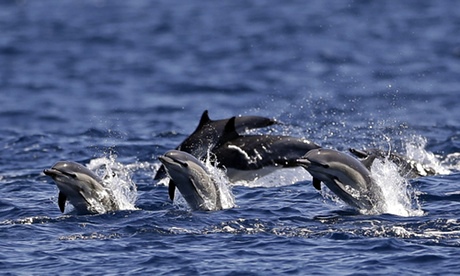
• Absolutely. You’ve never seen warring butterflies, dolphins or manatees. Can you even imagine two armies of spineless earth worms battling it out for a piece of dirt?
Terence Rowell, Dartmouth, Nova Scotia, Canada
• The war between the sexes surely is genetically driven.
Reiner Jaakson, Oakville, Ontario, Canada
• Generally, not genetically.
Harvey Mitchell, Castlemaine, Victoria, Australia
• Not if, as Einstein says, “God is subtle but not malicious”.
Richard Orlando, Westmount, Quebec, Canada
Time for generation hashtag
We had an X generation, a Y generation … How will we define the next generation.
iPeople?
Joan Dawson, Halifax, Nova Scotia, Canada
• Why not Alpha? That will not rock any boots and will give us 23 generations of time to think what to call the one after Omega.
Dick Hedges, Nairobi, Kenya
• Having exhausted the alphabet, perhaps we can now eschew such meaningless definitions.
Lawrie Bradly, Surrey Hills, Victoria, Australia
• Generation #.
Jim Neilan, Dunedin, New Zealand
• Hopefully they will be defined as the R for resilient generation and also will be A for adaptable as they face the combined challenges of climate change and population growth. They will need to be both to live well on this fragile earth.
Margaret Wilkes, Perth, Western Australia
• We shall have to resort to the final three letters of the Norwegian alphabet: Æ, Ø and Å.
Robert Coates, Harøy, Norway
• In light of binge drinking, generation AA might be appropriate.
Philip Stigger, Burnaby, British Columbia, Canada
Smartly staying out of trouble
What’s the difference between someone who’s brilliant and someone who’s a genius?
A brilliant person knows how to get out of a difficult situation; a genius knows how not to get into it.
Vipen Sawhney, Saskatoon, Saskatchewan, Canada
• Maybe the brilliant share the same dazzling intellect, but never sweat and are content to merely glow.
Gerald Garnett, Kaslo, British Columbia, Canada
Embracing change
Why do governments think they have to change things?
• Because things are not what they used to be.
John Black, Nanaimo, British Columbia, Canada
• It is we, the people, who clamour for change. Governments rarely change anything, but they keep us quiet by pretending they will.
Edward Marks, Brunete, Spain
• I bet no one thought the deck chairs on the Titantic were ever arranged properly, either.
Donna Samoyloff, Toronto, Canada
Any answers?
We love a beautiful blue sky. So how did blue come to mean depression?
Terence Rowell, Dartmouth, Nova Scotia, Canada
What if it isn’t what it is?
John Ashworth, Gibsons, British Columbia, Canada
Send answers, and more questions, to weekly.nandq@theguardian.com