Editor’s note: This story is the first in a series of articles from Canada’s top social sciences and humanities academics. Click here to register for In Conversation with Myriam Denov, Feb. 25 at 1 p.m. ET. This is a virtual event co-hosted by The Conversation Canada and the Social Sciences and Humanities Research Council of Canada.
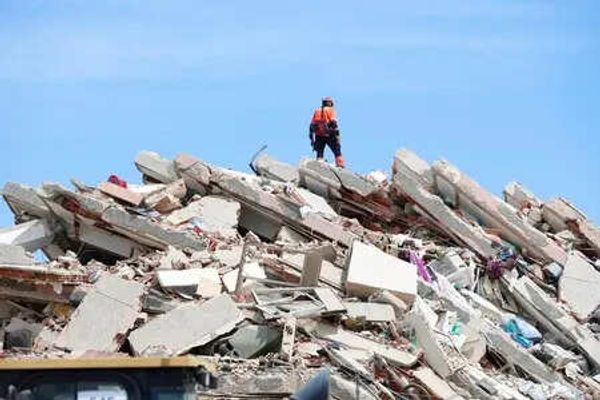
From Gaza to Ukraine and from Sudan to Myanmar, war rages across the globe, exacting its gravest toll on those least implicated in the violence: children. Today, an estimated 520 million children worldwide — or one in six — live in conflict zones. Yet even when fighting subsides and peace agreements are signed, violence doesn’t always end. War’s impact endures.
Northern Uganda provides a case in point. During the decades-long conflict from 1987 to 2006, the Lord’s Resistance Army (LRA), led by Joseph Kony, was formed to overthrow the Ugandan government and became well-known for the atrocities and war crimes it committed against civilians. The LRA abducted an estimated 80,000 children into armed conflict — a tactic meant to terrorize communities and swell the LRA’s ranks.
“Rose,” for example, was just 14 years old when the LRA abducted her from school in the mid-1990s. For eight years, she was held captive, forced to fight, coerced into a so-called “marriage” with an LRA commander and subjected to relentless abuse, including sexual violence. Her daughter, Grace, was born of that violence. Grace spent her early childhood in LRA captivity amid brutality, hunger, bombardment and displacement.
When Rose courageously escaped the LRA with Grace after eight years in captivity, they returned not to support but to rejection. Their community viewed them with fear and suspicion. Grace was stigmatized at school, within her extended family and in the wider community, branded “Kony’s child” after the rebel leader. Without stable housing and repeatedly displaced, Grace was forced to leave school and sell goods in the marketplace to support her family.
One day on her long rural walk to the market, the unimaginable happened. Grace was raped, later learning that she was pregnant as the result of the rape. In 2018, and still a teenager, Grace gave birth to Alice, a third-generation child whose life has already been shaped by a war that officially ended years earlier.
War does not end with ceasefires, but is transmitted across generations through stigma, violence, poverty and social exclusion. And despite their inherent connection to conflict, children born of war remain largely invisible in post-conflict discussion and justice efforts.
The war after the war
Sexual violence has long been used as a weapon of war. In recent years, the world has begun to acknowledge its devastating consequences for survivors, including physical injury, psychological trauma, economic marginalization and social exclusion. What remains far less visible are the intergenerational legacies of these crimes, particularly for children born of wartime sexual violence.
My ongoing research with children and youth like Grace shows they often face challenges strikingly similar to those of their mothers.
Many struggle to feel they belong, either within their families or their communities. They are frequently subjected to stigma and rejection. This stigma takes the form of being labelled “violent,” “dangerous” or “rebel children,” who are said to be cursed with “bad spirits” within their families, communities, schools and peer groups. This makes it difficult to develop a secure belonging and identity.
These children are also more likely to experience family and community violence and to encounter barriers to education, health care, land, inheritance, employment and legal rights.
Grace described the hostility she continues to face — and how the violence does not necessarily stop with the second generation — in stark terms:
“Life is hard here because people stigmatize us … they have turned their hate against us. In my family, they hate those of us who were born in captivity. My uncle beats us and said he would kill us. He doesn’t want rebel children, Kony children, at home … I know my child will face stigma. As long as my family is not willing to accept me, I believe they will reject my child as well.”
Rose also fears that Alice will one day inherit the same stigma, echoing Grace’s concerns:
“I feel it is possible my grandchild may be stigmatized because of my daughter’s past. They will say, ‘You see this beautiful child? Her mother was born in the bush.’”
For these families, war has not ended, it has simply changed shape. As one young man in my research who was born of sexual violence during wartime put it: “The war that we are now faced with is stigma.”
How resilience is passed down
And yet violence and devastation are not the whole story. Recognizing intergenerational harm does not mean reducing these families and their lineage to trauma alone.
Across generations and alongside profound loss, there is also resilience, resolve and an unyielding determination to build a different life.
Children born of war in northern Uganda are acutely aware of the sacrifices their mothers made to keep them alive. One young man recalled his mother’s escape from the LRA, carrying him through the bush while evading armed fighters, surviving on stolen cassava and refusing to leave his side even when confronted by death. “She held my hand,” he said. “She never left me.”
These memories of protection and survival are not just recollections of pain, they are sources of strength. Many children draw on them to imagine a future not defined solely by violence. Despite poverty, ostracism and ongoing marginalization, Grace spoke with clarity about what she wants for Alice:
“I want my child to be a doctor. I will support my child in every way possible to achieve this dream.”
This capacity to endure, adapt and hope is not accidental. It reflects what I have described as intergenerational resilience — the ways families transmit strength, meaning and survival strategies across generations, even in the aftermath of extreme violence.
Like a family heirloom, this resilience is forged through collective experience and memory. It equips young people with tools to confront adversity and reframes resilience not as an individual trait, but as a relational and intergenerational process rooted in family bonds and care.
What recognition makes possible
Too often, children born of war are reduced to dehumanizing labels in the countries where the war/genocide has occurred, often referring to them as “children of hate” or “bastards.” Such portrayals obscure both the violence that produced their marginalization and the extraordinary capacities they demonstrate to survive it.
If we continue to treat war as something that ends when peace agreements are signed, we will fail generations of children like Grace and Alice. Post-conflict recovery efforts, transitional justice processes and humanitarian responses must reckon with the fact that war’s harms are cumulative and intergenerational. This requires the meaningful inclusion of children born of war in reconciliation processes, reparations, community sensitization efforts and formal recognition in inheritance and citizenship law.
Read more: Why Canada must step up to protect children in a period of global turmoil
This also means addressing stigma as a form of ongoing violence, ensuring access to education, employment and legal rights for children born of war and recognizing them not as symbols of past atrocities, but as rights-bearing individuals with futures worth investing in.
As one young participant who is part of my ongoing research in northern Uganda declared, reclaiming a narrative so often denied to them: “We are the light that came out of darkness.”
Intergenerational harms are not unique to northern Uganda, they are unfolding wherever war engulfs children today. And if we are serious about ending war’s toll on children, we must listen — and act accordingly.

Myriam Denov receives funding from the Social Science and Humanities Research Council of Canada, and the Canada Research Chair Program.
This article was originally published on The Conversation. Read the original article.