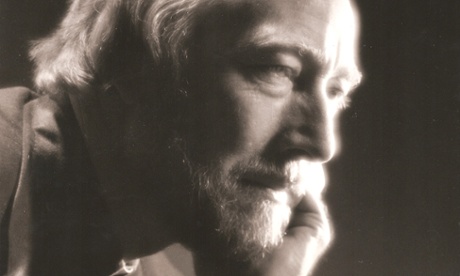
My friend Peter Bridges, who has died aged 89, was an architect, a priest and three times an archdeacon. His work on ecclesiastical architecture was influential in changing the traditional view of the church as wholly for sacred use and more towards it being a space also for secular use, seven days a week.
Peter was the son of Winifred and Sidney Bridges and was born in Tooting Bec, south London. He went to Raynes Park grammar school, leaving in 1941. He was a talented artist, and after his service in the RAF, in 1947 he went to the School of Architecture, Kingston-upon-Thames. He worked on prefabricated buildings and ecclesiastical designs in Salisbury before becoming a lecturer in the Nottingham School of Architecture in 1954.
What seemed a change in direction in his career led to his training at Lincoln for the Anglican priesthood and his appointment as parish priest at Gadebridge in Hemel Hempstead. But he did not cease to be a practising architect.
Peter was involved in proposals for church buildings in Hemel and in Welwyn Garden City that were too radical to be realised but nonetheless influenced others. His design for a Welwyn Garden City church on a square plan with the altar on a diagonal axis under a hyperbolic paraboloid roof received a good deal of attention from followers of the new liturgical movement. The academic focus for changes in the approach to church buildings was the Institute for the Study of Worship and Religious Architecture at Birmingham University, where Peter became the first research fellow.
When his Birmingham fellowship and appointment as university chaplain concluded, Peter took up a lectureship at Aston University. Frequent requests for advice about church buildings led Peter to set up an architectural practice with a fellow lecturer at Birmingham, Martin Purdy. Their work involved designs for new church buildings and planning proposals for Dawley, Shropshire – later Telford new town – for Redditch, Skelmersdale and a Congregational church at St Helens. Peter proved adept at dealing with the colossal legal, cultural and personality problems associated with ecumenical schemes. Work on socio-religious studies elsewhere in Europe and in British new towns led to Peter’s role in church planning, including as chair of the New Town Ministers’ Association (1966-1972).
A change in career arose in 1972 with the government’s proposals for a third London airport and new regional city at Foulness, Essex. The Bishop of Chelmsford reacted to these plans by inviting Peter to become archdeacon of Southend, with the aim of responding to the large-scale planning proposal. When Foulness was cancelled, Peter, stranded, accepted the post of canon theologian at Coventry Cathedral, where he worked as archdeacon. He later became archdeacon of Warwick.
Peter became chairman of the Painting and Prayer Retreat movement (1984-90) and was adviser on spirituality for the Coventry diocese. In his retirement, Peter moved with his wife, Joan Penlerick, to Romsey in Hampshire.
He is survived by Joan and their sons, Jonathan and Martin.