It’s only the first couple of weeks of 2015, but the year may as well be over: with the 2016 presidential and congressional elections looming, Republicans are pushing full steam ahead on economy and jobs in an attempt to improve their chances at capturing the White House next year.
There is one problem: to win, Republicans have to paint Obama’s tenure as a bad time for the economy and jobs. That might prove difficult. Currently, the number of Americans who are positive about the US economy outweighs that of those who negative about it – but just slightly, 49% to 45%, according to Gallup. And everyone, it seems, is bullish about America’s job creation capabilities in 2015.
From small businesses to CEOs to regular Americans, optimism is increasing for jobs growth in 2015. There is a good reason for that – for six straight months in 2014, growth exceeded 200,000 jobs a month.
Last year, the unemployment rate dipped below to 5.9%, a rate not seen since July 2008.
Yet those numbers don’t tell the full story. There is more to an economic recovery than optimism and a low unemployment rate. Americans are still struggling with low wages, with paychecks at roughly 1995 levels.
Skeptics argue that a large portion of those jobs are low-wage, part-time jobs that do little to help the families that struggle to make ends meet. In November, 6.7 million Americans worked part-time; 2.3 million of them wanted full-time work but couldn’t find it.
Almost 4 million of them had part-time schedules due to unfavorable business conditions and decline in seasonal demand.
The trend is likely to continue, according to employer surveys. One in four employers plan to hire more part-time workers in 2015, found CareerBuilder, a 6% increase from 2014. But American workers don’t need part-time jobs – they need full-time ones.
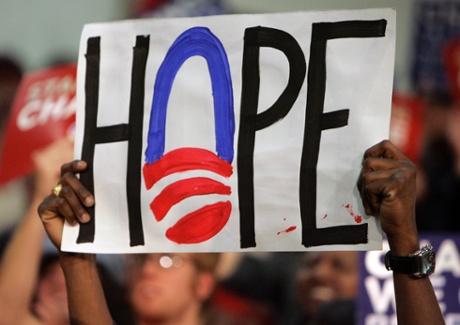
Small business optimism has also recovered.
According to Gallup’s survey of over 600 small business owners, more than a quarter of them will be hiring someone in the next year.
Just 8% say they will have to let people go. Additionally, 71% of business owners expect that 2015 will be kind to them and that their financial situation in 2015 will be “very good or somewhat good”.
Yet some pessimism persists in the top echelon of corporate America. American CEOs predict that 2015 will see weak economic growth – according to the most recent Business Roundtable CEO outlook survey, gross domestic product will grow by 2.4% this year. Investments will drop by 5.8% and sales by 1.3%, they predict.
The only bright spot is that 40% of CEOs expect their companies will increase employment in the next six months, and not all the jobs will be part-time or disposable.
About 36% of employers plan to hire full-time, permanent employees, according to CareerBuilder’s forecast for 2015, which surveyed 2,192 hiring managers.
More employers, at 46%, plan to hire temporary contractors, and only half of them expect that these workers will transition into full-time, permanent hires.
Even average Americans appear to be bullish on jobs.
More than a third of Americans think that now is a good time to find a quality job; at 36%, that number is back to its pre-recession level, says Gallup.
The number of optimists has been quite volatile in 2014, going from 26% to 35% earlier in the year, then back to 30% in November before ending up at 36% in December.
Optimism was especially strong among those who were employed: 45% of them thought December was a good time to hunt for jobs.
Only 27% of those unemployed thought December would be so fruitful.
One of the ways to judge if the optimism about the job market is having a practical effect is to look at the number of people leaving their jobs in hopes of finding a better one. In November of this year, about 838,000 people left their jobs; a year ago that number was 890,000. More people are staying put at the jobs they have.

Then again, numbers can’t explain everything.
Take President Obama’s remarks on the economy delivered at Northwestern University in October. The president loves to sprinkle his speeches with statistics that reinforce the narrative of an economic recovery. They are the same statistics that fuel the growing optimism.
“When I took office, businesses were laying off 800,000 Americans a month. Today, our businesses are hiring 200,000 Americans a month. The unemployment rate has come down from a high of 10% in 2009, to 6.1% today,” Obama said at the time.
Yet the numbers lack some context that many economists consider important.
Another explanation for the drop in unemployment in some states could be that workers are giving up on the job search, points out David Cooper of the Economic Policy Institute. And while national unemployment dropped below 6% in November of last year, some states were not so lucky.
The Bureau of Labor Statistics (BLS), which tracks jobs, suggests that fewer Americans will be working over the next seven years as baby boomers continue to age. This means the percentage of working Americans will, because of demographic trends, grow more slowly over the next seven years no matter what policies Congress puts in place. The BLS suggests that the labor force is projected to grow 0.5% per year from 2012 to 2022, compared with an annual growth rate of 0.7% from 2002 to 2012.
“Only five states – Colorado, Michigan, Minnesota, North Dakota and Ohio – have achieved their pre-recession unemployment rates; 19 states still have unemployment levels above 6%, and five states still have unemployment rates above 7%,” writes Cooper.

“As Americans, we measure our success by something more than our GDP, or a jobs report,” he said later in that same speech.
“We measure it by whether our jobs provide meaningful work that give people a sense of purpose, and whether it allows folks to take care of their families. And too many families still work too many hours with too little to show for it.”
In November, 7.5 million Americans had two jobs. About 576,000 more Americans took on a second job to help provide for their family. In 2013, more than 1.5 million Americans were earning a minimum wage of $7.25. Another 1.76 million were earning less than that because they were students or tipped employees.
These workers, too, have reasons to maintain a slightly optimistic outlook for 2015. Tired of waiting for Congress to act, over 20 states raised their minimum wages this year.
These are baby steps and will have minimal impact on the lives of low-wage workers. In 2013, Americans were earning the same pay as they were in 1995. The slow wage growth is the key sign of the fact that the US economy has yet to really recover.
“The weak labor market of the last seven years has put enormous downward pressure on wages. Employers don’t have to offer big wage increases to get and keep the workers they need. And this remains true even as a jobs recovery has consistently forged ahead in recent years,” point out staff at Economic Policy Institute.
“It will take wage growth of at least 3.5% to 4% for workers to begin to reap the benefits of economic growth – and to achieve a genuine recovery from the Great Recession.”
It’s good to be optimistic, but without higher wages, millions of Americans will continue to be left behind.