When people think about World War I, they usually picture muddy trenches, artillery barrages and the soldiers who fought across Europe. In schools and colleges, the war is often taught through the lens of battles, military strategies, famous generals and the treaties that reshaped the world. Far less attention is given to the civilians who helped people survive the devastation. Among the most overlooked were thousands of American women who crossed the Atlantic to aid France's youngest victims. Between 1914 and 1921, they cared for orphaned children, rebuilt schools, organised relief programmes and helped communities recover from the destruction left by war. Their efforts touched the lives of hundreds of thousands of children, yet their story remains one of the least-known chapters of the Great War.
A forgotten World War I army of 25,000 American women
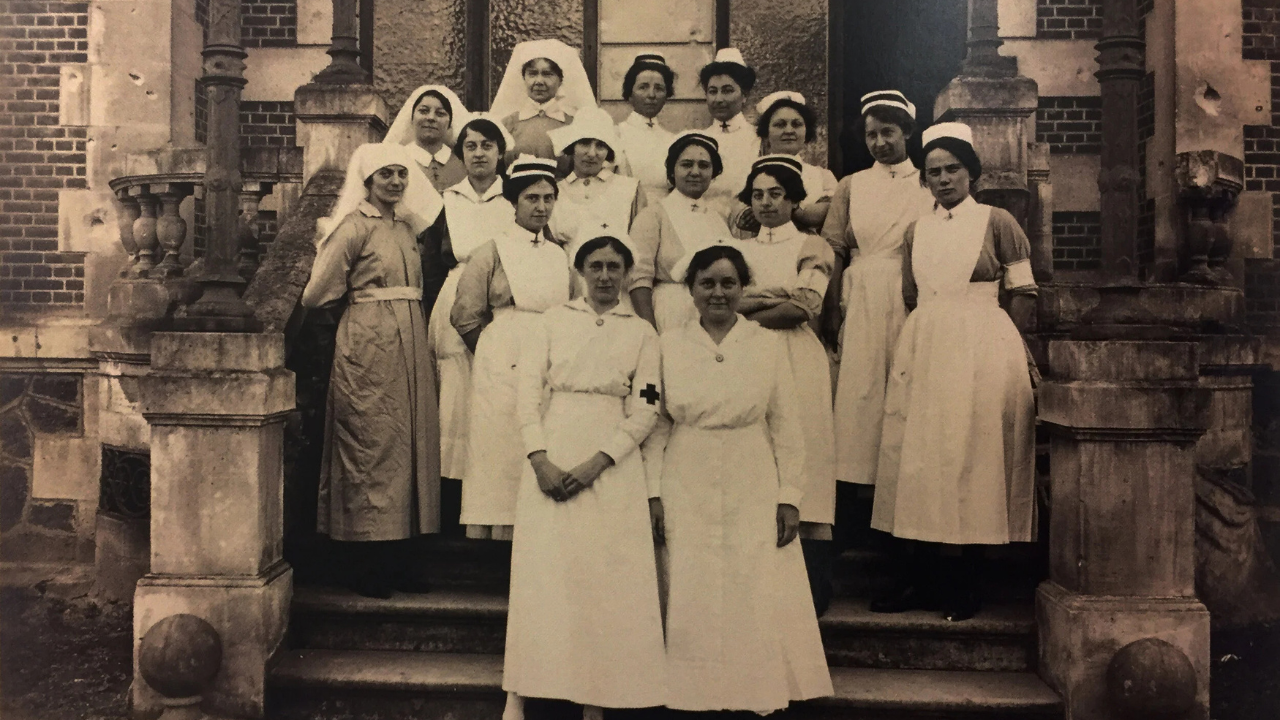
During World War I, around 25,000 American women travelled to Europe to support both military and civilian relief efforts. Many worked as nurses through organisations such as the Women's Overseas Hospitals and the American Women's Hospitals in France. Others served as doctors, ambulance drivers, stenographers, radio operators and telephone operators.
In 1918, the US Army Signal Corps sent 223 female telephone operators, later known as the "Hello Girls", to France to help maintain military communications during key operations.
For many women, wartime service offered opportunities that were rarely available at home. At a time when women in the United States were still fighting for voting rights, overseas work allowed them to take on leadership roles and demonstrate their capabilities far beyond traditional expectations.
While some focused on helping wounded soldiers, others turned their attention to a humanitarian crisis that received far less attention, the suffering of children.
France's forgotten child crisis
The First World War devastated large parts of northern and eastern France. Entire towns were reduced to rubble. Farms were abandoned and families were torn apart.
Hundreds of thousands of French fathers never returned from the front. Many children were left facing poverty, hunger and displacement. Some lost one parent. Others lost both. Countless families struggled simply to survive.
While historians have extensively documented military campaigns, the experiences of children affected by the war have often remained in the background.
By 1915, American philanthropists recognised the scale of the crisis and began creating programmes specifically designed to protect France's youngest victims.
The women who became mothers to war orphans
One of the earliest efforts emerged through the Committee Franco-American for the Protection of the Children of the Frontier.
The organisation established 28 Franco-American colonies that sheltered orphaned and displaced children from France and Belgium. The colonies were staffed by French nuns but depended heavily on American donations and volunteers.
Among those who served were Alma A. Clarke, a former student of Bryn Mawr College, and Erica Thorp de Berry, granddaughter of poet Henry Wadsworth Longfellow.
Their responsibilities extended far beyond providing meals and shelter.
They cared for sick children, supervised lessons and offered emotional support to youngsters traumatised by war. They tucked children into bed, read stories, sang songs and tried to create a sense of normality amid uncertainty.
Though the colonies cared for roughly 800 children, they represented one of the earliest large-scale international humanitarian efforts focused specifically on child welfare during wartime.
The campaign that helped 300,000 children
The largest programme began in 1915 with the creation of the Fatherless Children of France Society.
Founded by French industrialist Émile Deutsch de la Meurthe, the organisation encouraged Americans to sponsor children whose fathers had been killed in the war.
The children were not adopted in the traditional sense. Instead, American sponsors contributed $36.50 annually to support them.
The idea resonated across the United States.
Schoolchildren, church groups, factory workers and wealthy families all participated. In Alabama, workers reportedly donated part of their wages to support French children. In Fairbanks, Alaska, a ten-year-old boy named Teddy Brown insisted on giving 75 cents a week to help a child he had never met.
The campaign grew into one of the most ambitious humanitarian efforts of the era.
Between 1915 and 1921, around 300,000 French children received assistance through American sponsorships. Women organised fundraising drives, managed correspondence, recruited donors and kept the programme running on both sides of the Atlantic.
For many children, the support meant food on the table, access to education and protection from extreme poverty.
Mobilising America for France
The success of these initiatives depended heavily on women volunteers across the United States.
They organised charity fairs, public events and fundraising campaigns that connected ordinary Americans to families thousands of miles away. Many appeals reminded citizens of France's support during the American War of Independence and highlighted the legacy of the Marquis de Lafayette.
The movement attracted support from people of all backgrounds. Communities that had never seen France firsthand became invested in the welfare of French children.
By the end of the war, helping France's children had become a national humanitarian cause.
Rebuilding shattered communities
The work did not stop when the fighting ended.
After the armistice, American women remained in France to help rebuild communities devastated by years of conflict. One of the most influential organisations was the American Committee for Devastated France, founded by Anne Morgan, daughter of financier J.P. Morgan, and Anne Murray Dike.
Operating from the Château de Blérancourt, the organisation brought together around 350 French-speaking American women.
Among them were future nursing pioneer Mary Carson Breckinridge and suffragist Lucile Atcherson Curtis, who later became the first female member of the US Foreign Service.
Their mission focused on restoring daily life. They helped rebuild schools, reopen community facilities and support families struggling to recover from the war.
Bringing books, milk and hope
Children remained at the centre of these efforts.
Under librarian Jessie Carson, the American Committee for Devastated France established children's libraries in former war zones. One of the first reading rooms opened in Vic-sur-Aisne in 1919, introducing many children to books at a time when educational resources were scarce.
The organisation also tackled infant mortality.
In several devastated regions, poor nutrition left many mothers unable to feed their babies adequately.
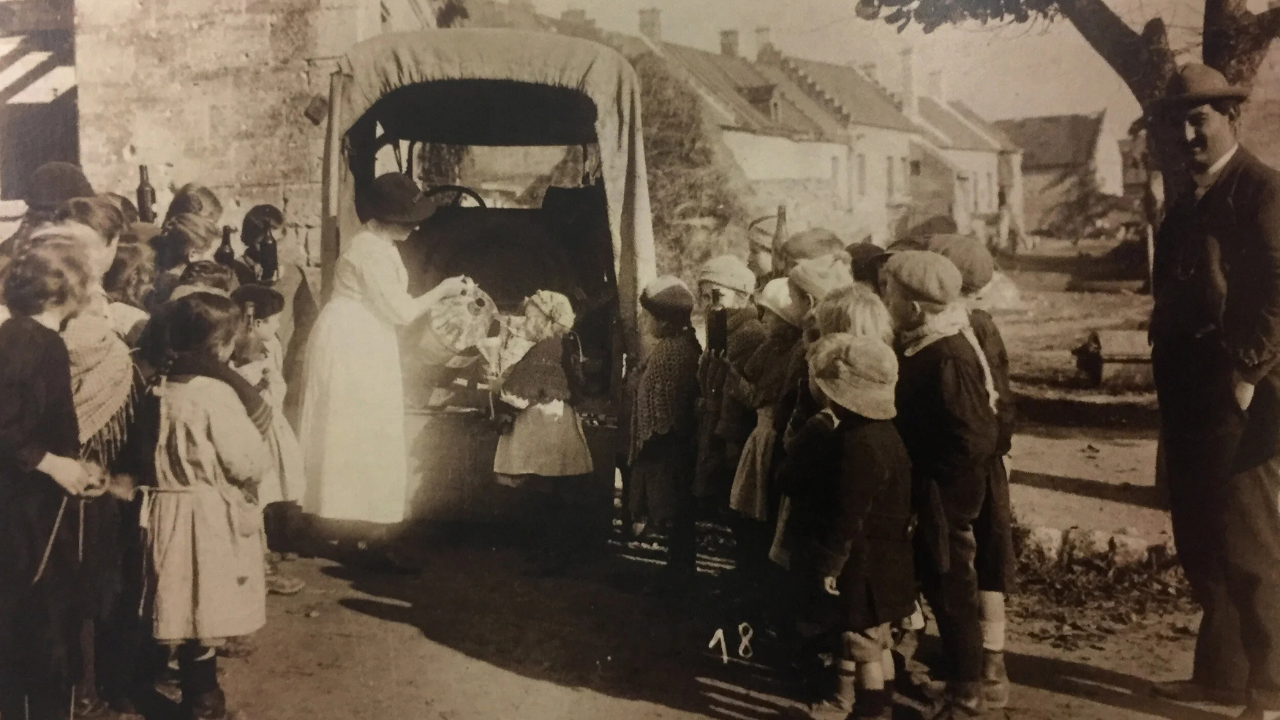
American-funded programmes supplied cows to local communities and organised milk distribution centres.
In Verdun, volunteers arranged milk deliveries for infants. In Reims, American women helped establish a "Drop of Milk" centre dedicated to infant care and nutrition.
These practical measures improved health outcomes and gave families a better chance of rebuilding their lives.
Anne Morgan's glimpse into a ruined France
The women who served in France left behind remarkable accounts of what they witnessed.
Among the most vivid were the letters of Anne Morgan. Writing from northern France after the war, she described a landscape transformed by destruction. In one account, she observed that a person could travel for hours through the region and see little but ruins.
Her correspondence also reveals how the horrors of war lingered long after the fighting ended.
In a letter dated April 30, 1919, Morgan described an unsettling incident that occurred after volunteers had repaired a schoolroom in the village of Camelin.
"We had proudly repaired a room to be used for the school at Camelin, when the Mayor came in and told us that in the brook, just outside the door of the school house, the head of a Boche had appeared in the water, as the brook had washed away the covering of soil that was over the body."
The episode highlighted the reality facing relief workers. Even as schools reopened and children returned to classrooms, the scars of war remained visible everywhere.
A story history largely forgot
The history of World War I is often told through armies, treaties and battlefield victories. Yet France's recovery also depended on people who never carried weapons.
Thousands of American women helped children survive hunger, poverty and displacement. They organised orphan colonies, managed sponsorship programmes, rebuilt schools, opened libraries and improved healthcare in devastated regions.
For many French children, these women became caregivers, teachers, protectors and sources of hope during years of uncertainty.
More than a century later, their contribution remains largely absent from popular histories of the war. Yet their work affected hundreds of thousands of lives and helped France recover from one of the darkest periods in its history.