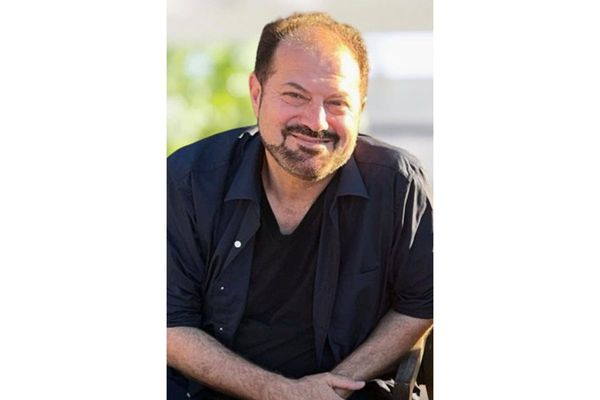
Rugby’s greatest pioneers do not always hail from the most obvious postcodes. In Latvia most people follow ice hockey and basketball and view rugby as a minority pastime for ‘crazy people’. There are only five clubs and 500 active players, including women and children. The story of Uldis Saulite is one of extraordinary perseverance against overwhelming odds.
Back in his native city of Jelgava, the young Uldis did not play the game until he was 16. Naturally big and strong, he soon caught the eye of a couple of former Latvian internationals, one of whom gave him the money to pay for the late bus home from training he could not otherwise have afforded. He grew steadily fitter and found rugby an enjoyable release from his day job as an apprentice carpenter.
Shortly after Uldis had turned 21, a Latvian referee based in Russia advised him that a club side in Siberia called Enisei-STM were trialling new players. Enisei are based in the city of Krasnoyarsk, where winter temperatures routinely dip to minus 40C. Something inside Uldis still fancied trying his luck 5,000km east on the banks of the icy Yenisei river. On 2 January 2001, in the depths of a typically harsh Siberian winter, he arrived in Russia to pursue his dream.
The early days were predictably tough. The club’s forwards coach ran a hotel and allowed him to stay rent free in exchange for basic chores but Uldis’s rudimentary skills were not deemed good enough to earn an immediate contract. In just his second practice session he accidentally broke a first-team lock’s collar-bone, which endeared him even less to his new team-mates. He stayed put only because “I didn’t want to return to Latvia as a loser”. In order to discover the true depth of his resolve, the club’s captain subsequently challenged the Latvian incomer to a fight. The latter’s blunt refusal to back down convinced the squad it might be wiser to keep their 20 stone, 6ft 6in new recruit onside.
It still took six months before he received his first wage packet, which was seven times smaller than his carpenter salary in Latvia. “I wanted to play professional rugby so badly that it didn’t bother me at all.” In his first year of pro rugby he also lost 12kg in weight but his committed displays at lock or No8 began to win over his Russian doubters. He also put his body on the line internationally for Latvia, once turning up to represent his national team despite recently-broken ribs. Rather than letting his country down, Uldis strapped himself up with a chunk of old bed mattress, had a pain-killing jab and played on. Back in his native Latvia they nicknamed their hero The Siberian Bear and took immense pride in his exploits.
Finally, in 2010, the big man’s big break materialised. Never having had an agent he had struggled to attract interest from overseas clubs but the French side Bordeaux Begles urgently needed someone as injury cover. Swapping the gloom of Siberia for the vineyards of south-western France had its attractions – until disaster struck. Major surgery was deemed necessary to correct a long-standing back problem and his Bordeaux pipedream evaporated into the Russian air. Now the wrong side of 30, he had no choice but to remain in Krasnoyarsk. One day, with the temperature at -44 degrees, he recalls his shoes almost cracking in the cold.
Seven years on he is still there, now aged 37 and operating in the second row. He remains a significant set-piece presence, not unlike Victor Matfield in his latter days as a Springbok. Because of club commitments – he also married the club president’s daughter – Uldis has not appeared for Latvia for three years but has played 28 times for his national team, contributing eight tries. His Enisei contract is almost up but he is adamant he has another good year of club rugby left in him. He also remains one of only two Latvian professional rugby players – the other is Enisei’s 36-year-old scrum-half Jurijs Baranovs – and those familiar with Latvian rugby’s youth system reckon it will be decades before they produce anything remotely resembling another “Bear”.
And the lessons of this chilly Baltic tale? There are probably three. For a start, we should all raise our pre-Christmas glasses to anyone propelling the game of rugby beyond its traditional frontiers. Next year will see the release of a documentary film made by Raimonds Rudzats, an enterprising Latvian sports journalist and broadcaster, based on his country’s oldest and most successful rugby club called Miesnieki, which translates as “Butchers” in English. The film is called The Gentlemen’s Code and aims to explain rugby spirit and values to a sceptical audience. If you watch one film about Latvian rugby next year, make it this one.
The story of Uldis should remind us, too, of the inspirational characters from smaller rugby nations too often overlooked in the rush to venerate more famous names. Last but not least, it shows there can occasionally be serendipity in sport. This Friday night Enisei-STM have a European Challenge Cup pool game in France. The opposition? Bordeaux-Begles. An excited Uldis, at last, is reaching his promised land, his dream of one last overseas contract still flickering. “Who knows – maybe someday,” he told a friend at the weekend. “The hope dies last.” Remember Uldis next time anyone says rugby no longer breeds inspirational characters.
Saints are losing faith
Few in the Northampton area will be overly shocked by Saints’ decision to part company with their director of rugby, Jim Mallinder, after a decade in charge. Saints’ supporters had already started to vote with their feet; the paltry crowd of 8,105 at Franklin’s Gardens for Saturday’s ruinous home defeat by Ospreys was not entirely down to the wintry weather. On BBC Radio Northampton it was even reported that a spectator in a wheelchair gave the England captain Dylan Hartley a pithy verdict as he headed down the tunnel. A late flurry of scoring and some more bad luck with injuries in key positions cannot mask the fact Saints have now lost their last eight games in the Premiership and Europe. Mallinder has guided the club to Premiership title success and a European Cup final but many Saints fans lost the faith some time ago.
One to watch
The most spectacular European performance last weekend was undoubtedly La Rochelle’s free-flowing demolition of Wasps. It was a bit like watching the great French international sides of yesteryear: mountainous forwards, backline runners on fast forward, devil taking the hindmost every time they had the ball. Do it again at the Ricoh Arena this Sunday and those currently celebrating Coventry’s installation as the UK’s city of culture in 2021 will be served up a glorious aperitif.