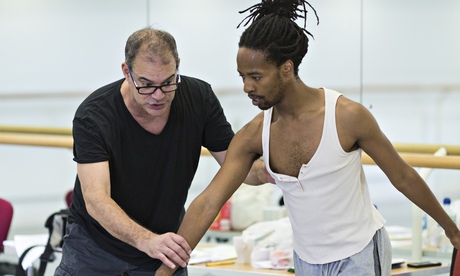
A couple of months ago I asked whether choreographers need editors and whether dance, like literature, might benefit from having some kind of inbuilt system of feedback, comment and control. It became clear that this was a question that others were asking. And a few weeks later, it was taken up by Rambert in their offer of a public debate.
The panel that Rambert put together was made up of three artistic directors who are also practising choreographers: Mark Baldwin from Rambert, Christopher Hampson from Scottish Ballet and Sharon Watson from Phoenix. There were also two producers, Alistair Spalding and Emma Gladstone (artistic directors and chief executives of Sadler’s Wells and Dance Umbrella respectively); Paul Hoskins, the music director of Rambert; Roberto Casarotto, recently appointed director of Balleto di Roma; and Peggy Olislaegers, director of Dutch Dance festival and a peripatetic choreographic adviser and dramaturg.
The discussion covered a spread of views about the politics and practice of dance-making and the kinds of editorial intervention that might be either desirable or possible.
Alistair Spalding spoke for the majority in arguing that interventions were best at the planning stage, when choreographers were still researching and developing ideas. Changes are much harder to implement at a later stage, not only because dance-editing is a far more expensive process than editing text, given the studio time and dancers involved, but as Mark Baldwin pointed out, it can be hard to change the structure, spacing or pacing of one section of dance without affecting the whole work.
But if changing a finished dance work can feel, as Baldwin put it, like being asked to unscramble an egg, most people agreed that some form of support and intervention are still necessary throughout the course of a work’s creation. And it was significant that, while some of the directors and producers on the panel were cautious about the tact they should exercise, some of the younger choreographers said they would welcome a more robust process of editing and feedback. Both in the panel discussion and the informal chat session afterwards, it emerged that several choreographers relished the idea of a tough editor figure to help them clarify their ideas. One or two spoke privately of how lonely it could be in a studio without help.
But where do young independent choreographers go for help? If they aren’t working in a building like Rambert, with access to a professional adviser like Olislaegers, or attached to a company like Scottish Ballet, where Hampson is developing a structured support system, what kind of professional feedback is available to them?
By the end of the panel discussion, it felt overwhelmingly as if these were questions that the dance profession needs to consider.
Many British companies and institutions are already working hard to meet funding requirements and to stretch their already thin resources. But even so, it may be that the funding of larger dance organisations should be made more strictly contingent on a wider sharing of those resources. It may be that companies like Rambert could do even more than they already do, in offering time and mentoring to outsiders as well as to their own resident or associate choreographers.
Another crucial source of feedback that’s lacking from dance is the preview performance. In commercial theatre it’s the norm for productions to get as many preview shows as it takes for them to be ready for a full-paying public. Yet for choreographers, this is a rare luxury. Of course, money is tighter in dance than in theatre, and given the typically short runs of dance productions it’s harder to set aside any kind of preview period. Yet we ought to be able to figure out the finances of giving new works at least one or two preview shows. It’s precisely because money is so tight that we need to the kinds of support systems and safety nets to ensure that new works are as good as they can possibly be.
As things stand, we’re leaving too many choreographers to find their footing on their own.