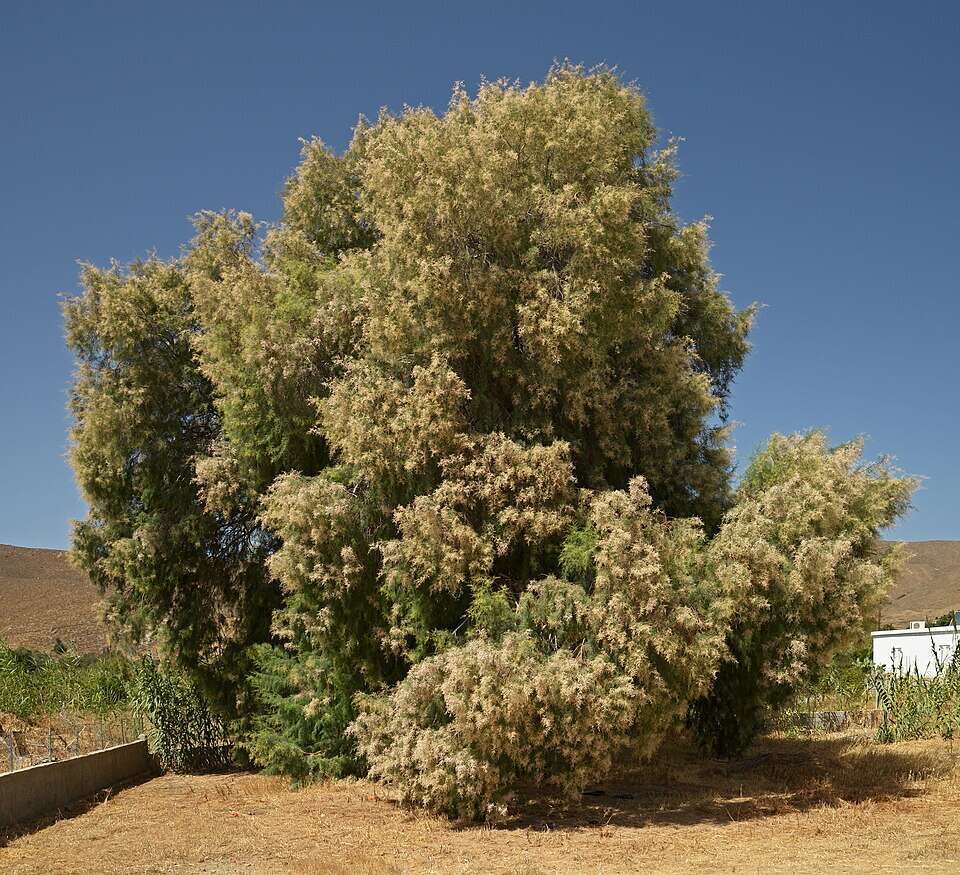
For most of the nineteenth century, tamarisk was viewed as a reasonable answer to environmental problems in the USA. By introducing tamarisk from Eurasia, Americans used this durable plant for riverbank stabilisation, soil erosion control, and creation of windbreaks on dry lands. Drought resistance, capability of living in saline soils, and heat tolerance made this plant popular among American land managers in the Southwest.
Get breaking news anytime, anywhere. Download the TOI app now!
However, over time, tamarisk became a widely criticised invasive species in the country. Historical analysis suggests that this change in attitude toward tamarisk may have been driven by a combination of ecological and non-ecological factors.
From a useful introduction to ecological villain
Tamarisk was first introduced into the United States during the 1800s as an ornamental plant before government agencies began promoting it for erosion control and land reclamation. Throughout the late nineteenth and early twentieth centuries, it was deliberately planted along rivers, irrigation canals, and railway lines because of its ability to thrive in dry, unstable environments.
Historian Matthew K. Chew argues that the perception of tamarisk changed dramatically during the mid-twentieth century. As water shortages became an increasing concern across the Southwest, scientists and policymakers began searching for explanations behind declining river flows and growing environmental degradation. Tamarisk, which had already spread extensively along many waterways, became an easy target.
The research describes this process as the "monstering" of tamarisk, a gradual transformation in which the shrub was portrayed as a primary cause of ecological problems rather than one element within a much larger environmental system. Scientific reports, media coverage, and government publications increasingly described the plant as an aggressive invader responsible for consuming enormous quantities of groundwater and replacing native cottonwoods and willows.
Chew's study suggests that this narrative often overlooked the historical role humans played in creating conditions favourable for tamarisk. Large-scale dam construction, river regulation, irrigation projects, livestock grazing, and altered flooding patterns significantly changed riparian ecosystems, allowing tamarisk to establish itself more successfully than many native species. Rather than invading untouched landscapes, the shrub frequently colonised habitats that had already been heavily modified by human activity.
What modern research reveals about tamarisk
While the shrub can indeed dominate disturbed riverbanks and compete with native vegetation, studies have shown that several claims surrounding its environmental impacts were overstated or lacked sufficient evidence.

One of the most debated issues concerns water consumption. Tamarisk was widely believed to consume far more water than native riparian trees, leading to expensive eradication programmes aimed at conserving water resources. However, research by Nagler and colleagues published in Restoration Ecology found that mature tamarisk often uses water at rates comparable to native cottonwoods and willows when growing under similar environmental conditions. This finding suggests that removing tamarisk alone may not produce the significant water savings that were once expected.
Modern ecological studies also note that tamarisk has become part of some ecosystems. While it can decrease the diversity of flora in heavily infested regions, the dense growths of tamarisk can serve as a habitat for certain birds, such as the endangered Southwestern willow flycatcher that has adapted to breeding in tamarisk when native vegetation no longer exists. These findings have led many scientists to view tamarisk as only one factor in broader ecological change.
Efforts to physically remove tamarisk have also evolved. Starting in 2001, U.S. agencies released a specialised insect, the saltcedar leaf beetle, as a biological control agent to defoliate the shrub without chemical herbicides. According to the U.S. Geological Survey, the plant had already spread along most major southwestern rivers, including the Colorado, Rio Grande, and Gila, by the 1960s, largely after upstream dam construction altered natural flooding patterns in tamarisk's favour. The beetle programme has reduced tamarisk canopy cover in several trial areas, though scientists caution that removal without restoring native flood cycles can simply open the way for other invasive weeds to take hold.
Now, scientists look at tamarisk as one of the results of environmental changes due to changed river systems, climate change, and long-term land-use activities by people.
A more balanced approach to invasive species
Tamarisk provides an excellent example of how scientific thinking develops. At first, appreciation for the shrub stemmed from the needs and issues of the nineteenth century, when the problems of erosion and soil stabilisation were prevalent. Future generations, faced with water shortages and environmental degradation, viewed the very same species completely differently.
Eradicating invasive plants such as tamarisk is no longer the only goal many conservationists pursue. Instead, efforts are made to restore natural rivers, native vegetation, and solve the issue of disturbances, which make the environment vulnerable to invasions. Many projects of this kind include the eradication of tamarisk accompanied by the restoration of native trees – cottonwood and willow – and healthy floodplains.
Effective conservation depends not only on identifying invasive species but also on understanding the environmental changes that allowed them to flourish. As ecological research continues to advance, the tamarisk debate demonstrates the value of evidence-based management over simplistic explanations for complex environmental challenges.