Sport therapy has been around for decades. Perhaps synonymous with the sports massage, the work of healing through sport has outgrown its roots in professional sportsmanship recovery and into the wider world of physical therapy.
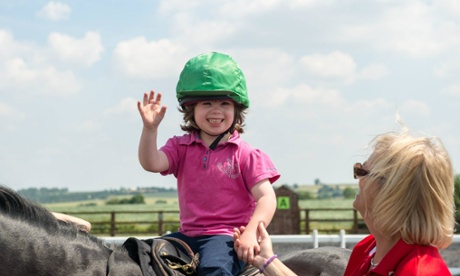
Horse riding is unusual in this sense as it is both a sport and a therapy in its own right. The physical and psychological benefits of riding have been recognised for many years for those with all kinds of disabilities. Central to the physical therapy is the three-dimensional movement of the horse, which strengthens the rider’s core muscles - so vital in improving mobility, posture, coordination and balance.
The charity Riding for the Disabled Association (RDA) helps 28,000 children and adults with disabilities, using the therapeutic power of horses. RDA has been carrying out its life changing activities for over 40 years.
The RDA is just one charity who have received funding to change young lives through sport from BT Sport’s The Supporters Club, an initiative which raises money through its sports-fan subscribers. To date The Supporters Club has raised over £4m and has provided grants to almost 30 charities like the RDA in the UK and around the world, all of whom use sport in a number of ways, including as therapy, as a hook to get young people from disadvantaged backgrounds into education or training, or as an educational tool to teach teens in Africa about HIV/Aids.
Using sport to engage young people has grown as a practise over time. And whilst organisations such as the RDA have been around for over 40 years, the use of horse riding has remained fairly unchanged – until now.
You wouldn’t expect to find innovation and technology tucked down a dirt track behind empty BBC White City buildings in west London, but it’s here, in the quiet horse riding haven of Wormwood Scrubs. Wormwood Scrubs Pony Centre is one of a handful of RDA groups who have invested in a state of the art mechanical horse, unveiled by TV presenter and well known equestrian fan Clare Balding.
It’s this mechanical horse, and its unique technology that is bringing horse riding therapy to many more young people with disabilities.
Mechanical horses were first introduced to the UK in the 1990s by Racewood Equestrian Simulators, following demand from injured jockeys who wanted to maintain their training whilst injured, in a structured and predictable environment. From there, the technology has continued to evolve into the sophisticated models used today.
A mechanical horse looks like, and simulates a real horse, with various sensors throughout its frame. Sensors on the saddle check the rider’s weight distribution, movement and posture, whilst those on the head and neck monitor use of the reins. Leg sensors help the rider control the horse’s pace and direction. Ahead of the horse is a screen not dissimilar to the screens one sees on a Wii, which displays information about the horse, the ride and movement, and also run tests and can play back the ride. Importantly, the simulator requires the same muscles as when riding a real horse, making it an ideal tool for horse riding sports therapy.
“Having had a ride on the mechanical horse at Wormwood Scrubs I was amazed how sophisticated and responsive the technology is,” said Clare Balding. “You can really see the benefit they can bring to both novice and experienced riders. They are a great way to introduce someone to the experience of riding, and because the movement is so similar to the real thing they provide the same physiotherapy benefits as being on a horse.”
The 3,000 horses and ponies at work in RDA are the cornerstone of the charity’s activities, but the additional support of the mechanical horse can make a big difference in helping to increase capacity at groups like Wormwood Scrubs – where waiting lists can be a real issue. Mechanical horses don’t need feeding or rest, and they can be used by riders of all sizes and weights, making them suitable for use throughout the day and for a wide range of riders.
They are also useful in specific therapeutic cases, where a person’s condition might rule out riding on a real pony. This might be where someone is very unbalanced, or can’t sit upright unaided. Sometimes it can be useful for a rider to warm up on the mechanical horse, allowing time for leg spasms or muscle tightness to be relieved before moving on to a real horse for the remainder of the session.
Similarly, a mechanical horse can be used by those with autism to enjoy horse riding therapy without the unpredictable nature of a live animal, or where a rider may have behavioural problems associated with their disability and may be prone to shouting or uncontrolled limb movement, which may spook a real horse.
“Having a mechanical horse means our groups can work with children we may not have been able to before,” says Bea Pike, project manager at Wormwood Scrubs, and qualified osteopath.
“The benefits go beyond physical therapy - children using the mechanical horse gain confidence, and it’s a very positive form of treatment. For many children, being on a horse - including the mechanical horse - doesn’t feel like treatment as they are with other young people, in a very different sort of environment to hospitals or other venues where treatment might usually be administered.”
Mechanical horses aren’t cheap – at over £50,000, the RDA groups have to do a lot of fundraising to secure one. The mechanical horse unveiled at Wormwood Scrubs came from months of fundraising and was in part funded by a grant from The Supporters Club. Further funding from The Supporters Club to the RDA will help RDA groups across the country, supporting front line volunteers and helping to purchase more specialist equipment to enable disabled young people to take part in horse riding.
Content on this page is paid for and provided by BT, sponsor of the technology and innovation hub.