De Beers’ Snap Lake Mine, located approximately 220km northeast of Yellowknife in Canada’s Northwest Territories is the diamond company’s first mine outside of Africa.
The Aquatic Effects Monitoring Program
To ensure this arctic mining project was managed in a responsible way, an Aquatic Effects Monitoring Program (AEMP) was developed and instituted before the site officially opened in July 2008.
AEMP focuses on monitoring water quality, plankton, sediment quality, benthic invertebrates, fish health, fish tissue chemistry, and fish community. These annual programs help De Beers understand and mitigate any impact mining activities may have on Snap Lake or the downstream environment.
“Monitoring the quality of the water and the health of the ecosystem of Snap Lake is important to ensuring the water remains safe to drink and the fish safe to eat,” says Alexandra Hood, environmental permitting superintendent for Snap Lake Mine.
“In winter, that means going out in temperatures below -40C and having to shovel through nearly a metre of snow and drilling through over a metre of ice to collect water samples.”
Monitoring environmental impact
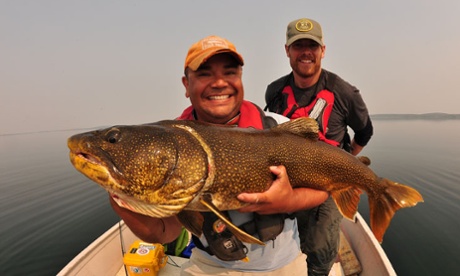
In the summer of 2014, a fish population monitoring program took place in Snap Lake and two additional lakes were used for reference and comparisons. Data collected is used to monitor potential changes in fish populations associated with the Snap Lake Mine.
The research team used gill nets to collect 460 fish from the three lakes. When compared to the reference lakes, the numbers of lake trout and round whitefish appeared higher in Snap Lake. Slight variations were observed in the size and age of both lake trout and round whitefish among the three lakes.
Results indicated the composition of the fish community in Snap Lake, which includes arctic grayling, burbot, lake chub, lake trout, longnose sucker and round whitefish, did not appear to change between initial sampling in 1999 and 2014. The data will be included in continuous monitoring of the lakes in the future.
And it’s this continued effort that is key to responsible mine management. Making sure that we look after the environment and the ecosystems where our sites operate is paramount to both Anglo American and De Beers.
More from the Anglo American partner zone:
- New desalination plant at Chilean copper mine eases water pressures in hydro-stressed region
- World Toilet Day: what business can do to improve global sanitation
- Forging a new path for mining: the development partner framework
Content on this page is paid for and provided by Anglo American, sponsor of the social impact hub