Officers dragged a teacher out of daycare in front of children. Traumatized high schoolers were “beat up” by officers before they arrived homeroom. Thousands of students have been marked absent.
Donald Trump’s sweeping immigration enforcement operations have interrupted schools in communities across the country and put families, teachers and administrators on edge as they brace for agents showing up on campus.
Parents have also been arrested near schools in at least 10 states so far this year, according to a review of incidents from The Washington Post. School attendance plummeted in Chicago and Charlotte, North Carolina, in the days after the Trump administration surged Immigration and Customs Enforcement and Customs and Border Protection agents into the Democratic-led cities.
Immigration agents have also fired tear gas, joined car chases and shot at least one person in areas nearby schools, prompting campus lockdowns and alarm among students, their parents and school staff.
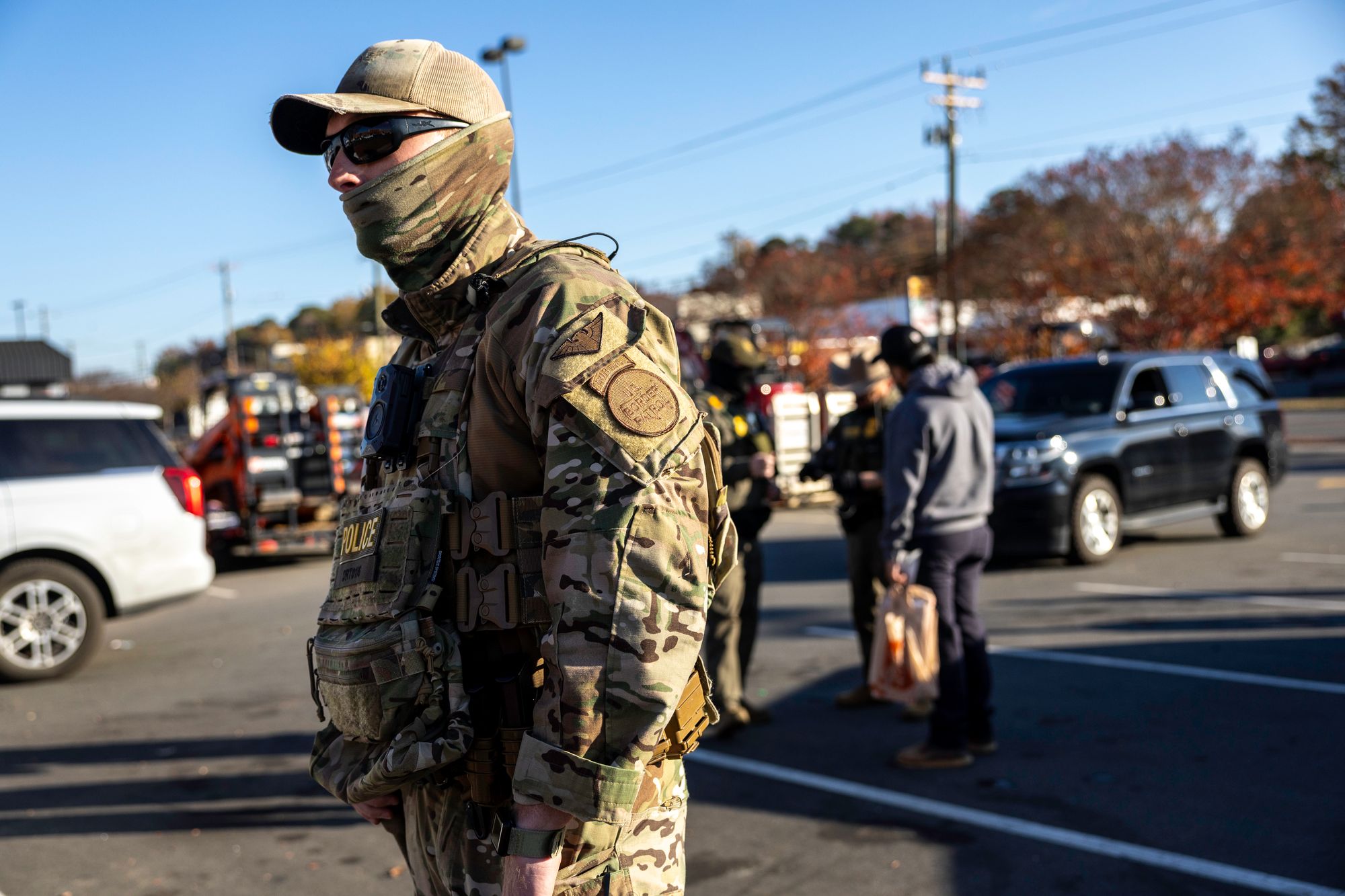
After taking office, the Trump administration abandoned previous policy to prevent enforcement operations near so-called “sensitive” areas such as school campuses. Homeland Security has repeatedly stressed that schools are not being targeted in the operations, but ICE and border patrol officers have been blitzing neighborhoods close enough to schools to derail schedules with fears that student enrollment will drop entirely, according to educators speaking to the newspaper.
“Taken in total, this enforcement activity is injecting chaos and trauma in the lives of children regardless of their immigration status,” more than 70 Democratic members of Congress wrote to Education Secretary Linda McMahon last week. “It is undeniable that it will have a harmful and lasting impact on whole communities of school aged children.”
Last month, another group of Democratic senators blasted the administration’s “alarming lack of care or regard for the health and wellbeing of children, particularly by conducting unfocused, inflammatory operations within close proximity of school grounds.”
Teachers are reporting anxious, depressed and scared students who worry that their parents might be arrested, while school administrators and teachers unions have distributed protocols for interacting with federal agents.
Volunteer groups of parents are also patrolling nearby campuses to keep on the look out for federal officers, while students themselves have walked out in protest of the raids.
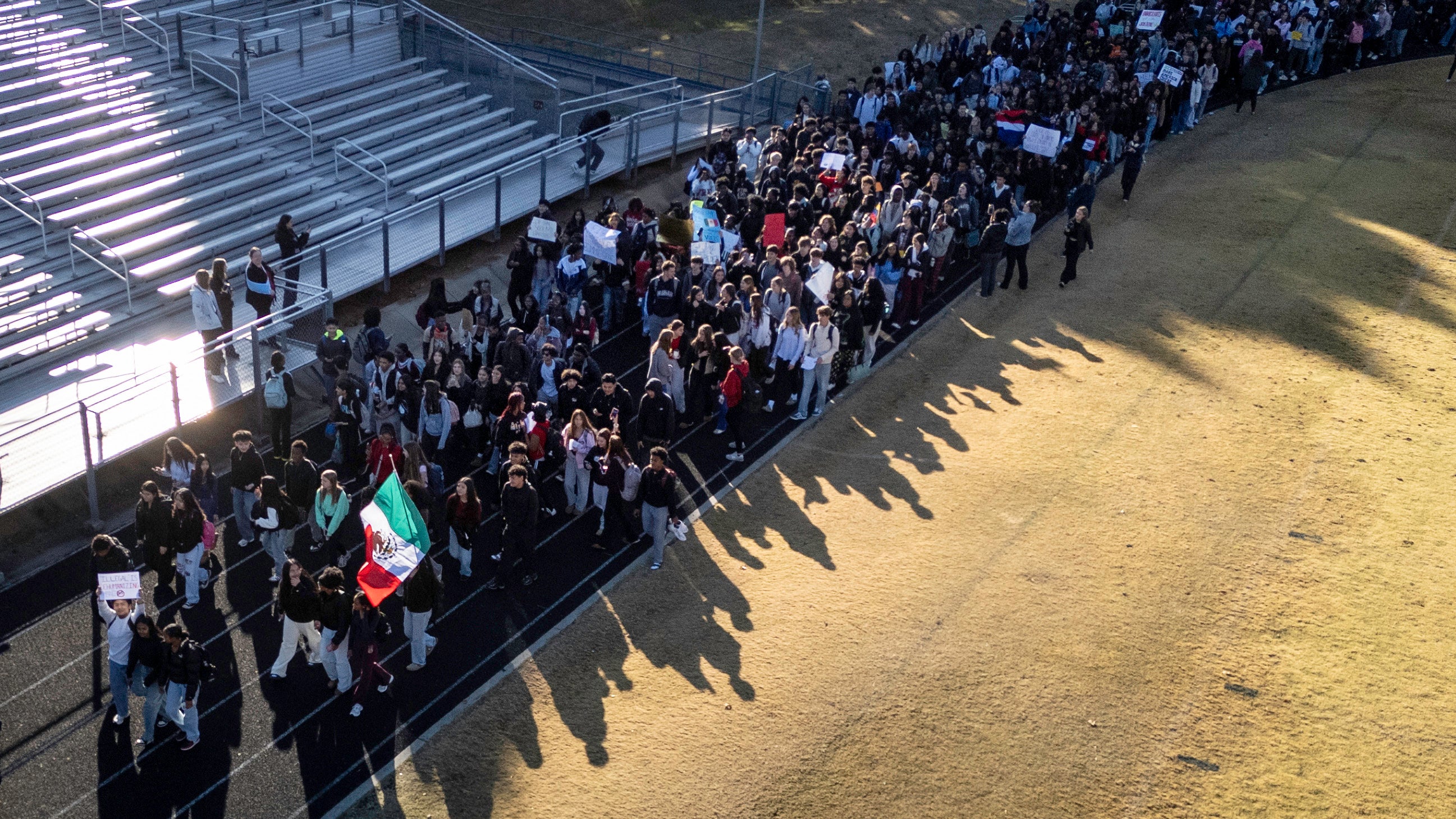
In Charlotte, roughly one in five students was absent across the district over the last week as ICE and border patrol surged into the city. Members of the Charlotte-Mecklenburg Association of Educators reported “heartbreaking stories” of their students arriving on campus, according to union president Amanda Thompson.
“A child arriving with a handwritten tag saying ‘I am a US citizen.’ A parent messaging the school saying, ‘My child is carrying their passport today to school,’” Thompson said during a recent board meeting.
“From what I've seen in the last couple of days, the atmosphere in our schools has felt different, almost like a quiet tension hanging in the air,” added Providence High School senior Lucy Silverstein. “Some hallways that are normally loud and full of life have felt unusually still.”
Charlotte-area middle school teacher Justin Parmenter, who wrote signs for his classroom reading “You belong here!” in English and Spanish, told The Washington Post that “people know that schools are not safe just because they’re schools.”
Federal agents arrested more than 250 immigrants in Charlotte within a week during the administration’s latest blitz. Following the first weekend of arrests, roughly 30,000 students were absent in the Charlotte-Mecklenburg school district.
Last week, 20 of Parmenter’s 22 homeroom students were in attendance — up from nine earlier in the week, he told the newspaper. “Trauma doesn’t just go away on its own,” he added. “Even though in some ways we will ‘get back to normal,’ I think a lot of the uncertainty and fear will persist.”
Roughly one in four children in the United States — about 16 million kids — have at least one immigrant parent, according to the Urban Institute’s most recent analysis of Census data. Another 2.5 million children are immigrants themselves, according to the report.
The landmark Supreme Court decision in Plyler v Doe effectively blocked schools from turning away kindergarten through 12th-grade students based on their immigration status. But Republican state lawmakers in states such as Oklahoma and Tennessee have proposed legislation that would require school districts to report undocumented students, charge them to attend school, or deny enrollment altogether.
Increased enforcement could also negatively impact physical and mental health outcomes among children in immigrant families, according to health policy and research group KFF.
But the tension on school campuses over ICE arrests extends beyond immigrant families, with interruptions from nearby arrests and other enforcement actions threatening their health and wellbeing, KFF found.
Decreased enrollment and chronic absenteeism after spikes in immigration enforcement could lead to decreases in school funding under plans that rely on attendance-based models to determine how funds are distributed to districts, including in states like California and Texas, which have the largest shares of school-aged children living in immigrant families.
In Texas, a middle school for newly arrived children recently closed because it no longer had enough students — news that the White House celebrated as “proof the Trump agenda is delivering.”
BBC ‘not institutionally biased’, says ex-journalist who wrote impartiality memo
Trump latest: President ramps up threats against Democrats
Trump’s Truth Social rant warns SCOTUS over ‘serving hostile foreign interests’
Peace deal or not, this must be Europe’s next move to counter Russian aggression
Four in 10 Republicans say Trump is sugarcoating prices and the one cost killing them
President quietly ignores Canada tariff increase after fury over Reagan ad