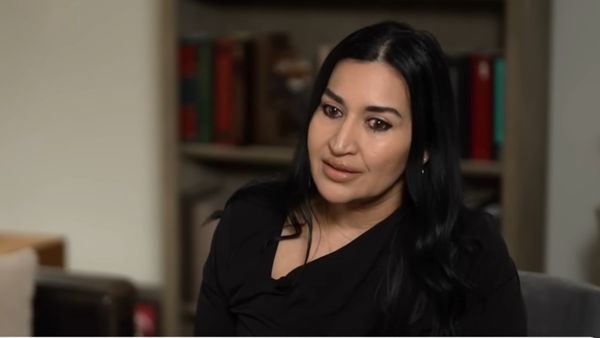
As the UN Secretary-General Ban Ki-moon’s special adviser on post-2015 development planning, Amina J Mohammed has worked on a wide variety of projects. Recently, Karen Newman sat down with Ms Mohammad to get her insights on the critical challenges facing the UN in transitioning from the Millennium Development Goals to the post-2015 agenda.
How will the transition be made from the Millennium Development Goals to the post-2015 agenda? What are the key differences between the two agendas?
In the past, governments would commit some resources to the development agenda as a trade-off to development areas like health and education for women. This time, sustainable development is our core business. But capturing that growth cannot happen without people and the planet. For me, as a practitioner, and having served in government using funds to leverage domestic resources, I realized that if a finance minister is not fully aware of the agenda, then we will not achieve it. The government brings their vision and the ministers of finance must manage the resources for achieving it.
It is really important that we understand how we will implement this important collaboration and maintain the momentum. Only an integrated set of actions can lead to concrete outcomes – and real results in terms of protecting our planet, improving people’s lives and reducing inequalities.
The other important thing is universality, which goes beyond the North-South paradigm that we had before. The concept of ‘leaving no one behind’ has real implications for strategy setting and making sure that plans are responsive to the different people’s needs. In areas such as health, there are some regions that require primary health care while others need secondary referrals. Other countries may require assistance with issues like non-communicable diseases. The difference is thinking in an integrated manner about the needs of different stakeholders.
You mention that this is a universal agenda that will require all actors, including the private sector. How and why should businesses be interested in this new agenda?
Business is made up of people seeking to put products to use in the marketplace and get a return on them. I think all of us are trying to be productive members of society, whether individually, as part of public service or as part of business.
Business has already proven to be a necessary and vital part of growth. It is not feasible to achieve this agenda without business. Being the drivers of the future economy, we will need to have responsible businesses, through checks and balances, and find partnerships to build and mobilize the domestic resources we need in order to exit official development assistance, which has been a big issue on the development agenda.
Countries have to grow and they will with emerging businesses. To help catalyse new partnerships, the UN Global Compact has brought together different businesses at the country level. Other entities like the UN Foundation and various chambers of commerce are also central to the process. At the UN, ECOSOC and the GA are also very active in the process, working to ensure maximal engagement of both public and private participants.
Some large corporations get it. But how do you encourage other private sector companies to rethink ‘business as usual’?
The first step is to have a conversation about the challenges looking at issues such as unemployment and migration. I remember a businessman saying to me once, “Don’t talk to me about the poor and how many are starving. Talk to me about my daughter and how this affects her, and then you will get my attention.” It’s about truly understanding how people and businesses are wired and how to get them onboard.
Saying, “You need to do this because it’s good for people” will not work. Instead, we need to contextualize the issues and discuss the challenges and the role that businesses can play in making the world a better place for us and our families. You will not continue to make money or be safe unless we are all part of this. Businesses need to understand their key role in mitigating this risk we are in. The next step is once businesses understand how much is to be gained in emerging markets, showing them how to reduce the risk.
So, how do we make companies think about this new agenda and investment? What do you see as some of the constraints for the private sector’s exploration of developing markets?
For me, there are three places where business can come into the fold. The first is conflict prevention – investing at scale making prosperity inclusive and promoting an environment that will be more conducive to sustainable development. We need to make sure that businesses get involved, but ensuring right up front commitment and real investments in making this brown field get greener. Often the challenge is the need for basic infrastructure, so we need to attract businesses that will make better partners, explore better access to funds, develop financing instruments and promote an understanding of private equity to get long term financing for infrastructure. Further, multilateral development banks need to get on board.
Secondly: conflict. Being in conflict is often a decision of parties beyond us involving countries and the UN Security Council. Business and services can be productive in these areas on the humanitarian side, but that’s often feeding the symptom and not getting to the root cause of poverty. Although a lot of good is done here, many challenges remain.
The third is investing in post-conflict. This may mean working in broken systems with little or no infrastructure, or where people’s lives have been shattered. Post-conflict communities need support in order to become part of a thriving and productive workforce with the right skillset. This is a different part of private sector involvement involving partnering with government, communities and people.
But this also implies a real opportunity – especially when things have been destroyed – to rebuild greener and to develop new ideas and innovations. For example, we could explore solar power and rethink the way we design our buildings. It’s much more of an opportunity than trying to green London or New York.
Might companies be reluctant to be first movers into these markets?
We need to find incentives not based on perceptions but through conversation asking “What would attract you? What would it take to get you to take the risk of investing in this region?” Often, the discussion we have with businesses going into fragile economies is about the enabling environment. But why wouldn’t we find a way to get large companies to share some of this risk, while we have so many small businesses managing in non-enabling environments already? In order to share the risk we need to link nationals with multinationals and make the opportunity attractive-this will be a key element to more inclusive business.
We need to think about creating instruments and bringing companies together for collaborations and to develop markets that benefit everyone.
There is a sense of urgency, but we are not in a hurry to fail. The step-by-step development of markets needs to be robust and sustainable, and won’t happen with a quick fix. Making this happen within 15 years presents a challenge, but is absolutely possible.
What have you seen in terms of companies coming together and innovating during this process?
Through the World Economic Forum and the High-Level Panel that the Secretary-General convened, we have seen businesses taking up the challenge and looking at their supply chains. Companies like Unilever, Ikea, and Volvo, among others were saying, “How can we do this better?”
We have seen companies coming together on issues such as transportation and road safety demonstrating that if safety issues are not taken up, there could be serious damage to health. Companies are focusing much more on the full value chain and recognizing where women are excluded including access to inputs and inclusive finance.
They are also stepping up and advocating for women, especially in recognition that time after time, the most important person in the value chain is often a woman.
So as we manage this transition, what are you and you team most encouraged by?
I am most encouraged by people coming together and discussing what we can do together instead of asking for a prescription like before.
I am encouraged to find member states opening up a transparent and inclusive process. UN agencies are working together beyond their mandates, which is difficult considering their funding. And yet all these people are coming together and we have 17 very ambitious goals – that’s something we should celebrate!
We must acknowledge the fact that it is member states – basically diplomats – who are forging the development agenda. We are not there yet. We have to hit the ground running at the three big events: Financing for Development conference in July, the Framework for Development in September and the Climate Change agreement in December.
It’s also the first time we have a generation that remembers what it means to work on issues related to poverty. But it is also the last generation that will have an opportunity to forge a meaningful agreement on climate change issues.
Launched at the United Nations, the Business Call to Action (BCtA) is a global alliance hosted by the United Nations Development Programme headquarters in New York. Follow: @BCtAInitiative
Content on this page is paid for and provided by Business Call to Action, sponsor of the role of business in development hub.