
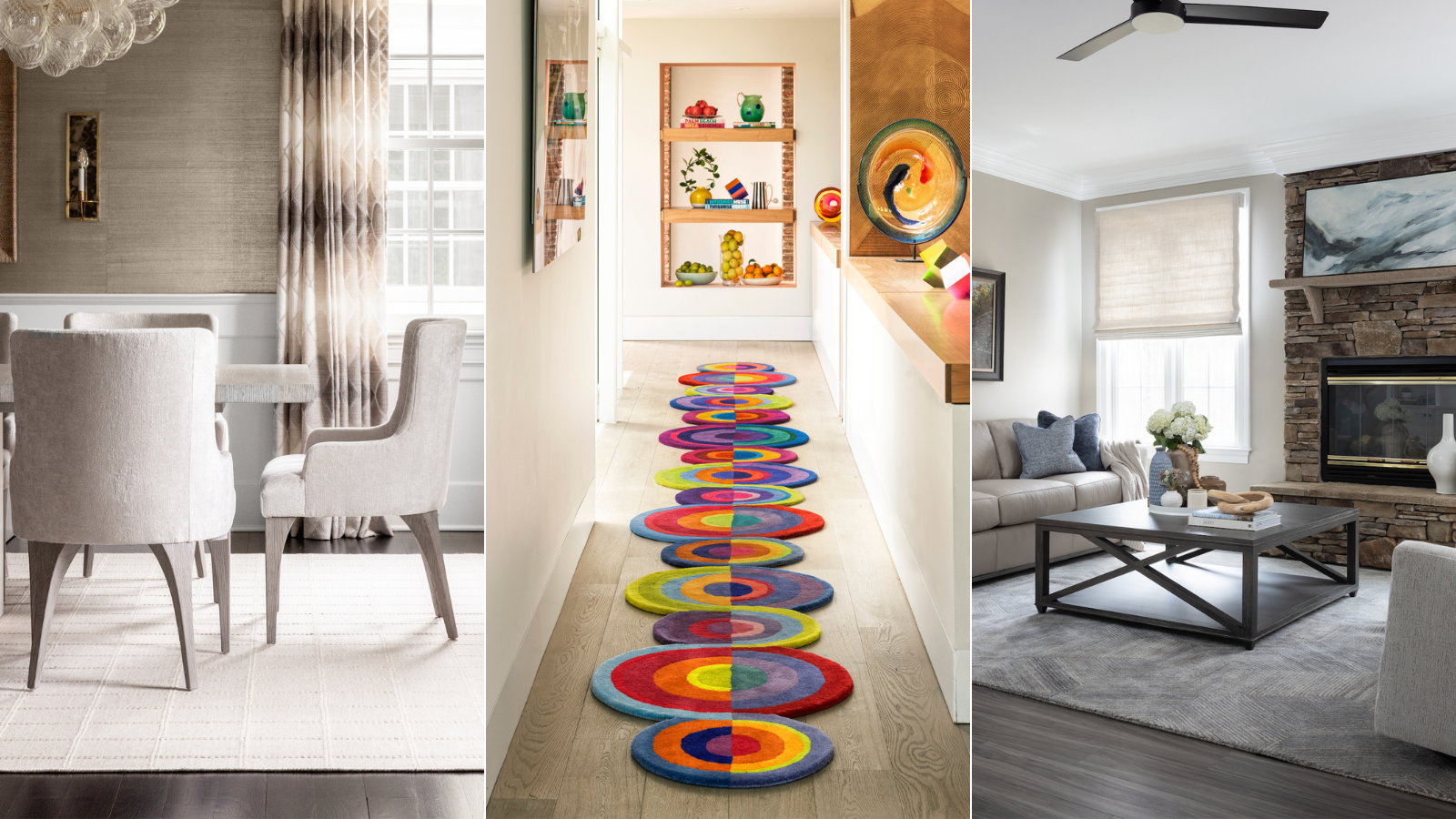
Whichever part of your home you’re choosing it for, it’s essential to select the right rug size. A rug of the wrong dimensions will detract from the room’s style, can fail to do the job you want it to, and it might even cause a trip hazard.
Its color, texture, and what it’s made from are all important decisions when you’re choosing a rug, but the right size means it will be aesthetically pleasing as part of the room’s design, help zone the space, and provide comfort underfoot.
Whether you’re shopping for a dining room rug, living room rug, or rug for another area, this expert guide will provide all the size information that’s necessary to make a great choice.
The ultimate rug size guide
There are both aesthetic and practical reasons to get the size of bedroom rugs, kitchen rugs, and the rest right, but you might be surprised at how often it goes wrong.
‘Where do we see homeowners make a mistake most often? The rug size,’ says Sarah Thurston, principal designer at Tusk Home + Design.
So you can avoid following in their footsteps, the guide below has all the size details you need.
Dining room rugs
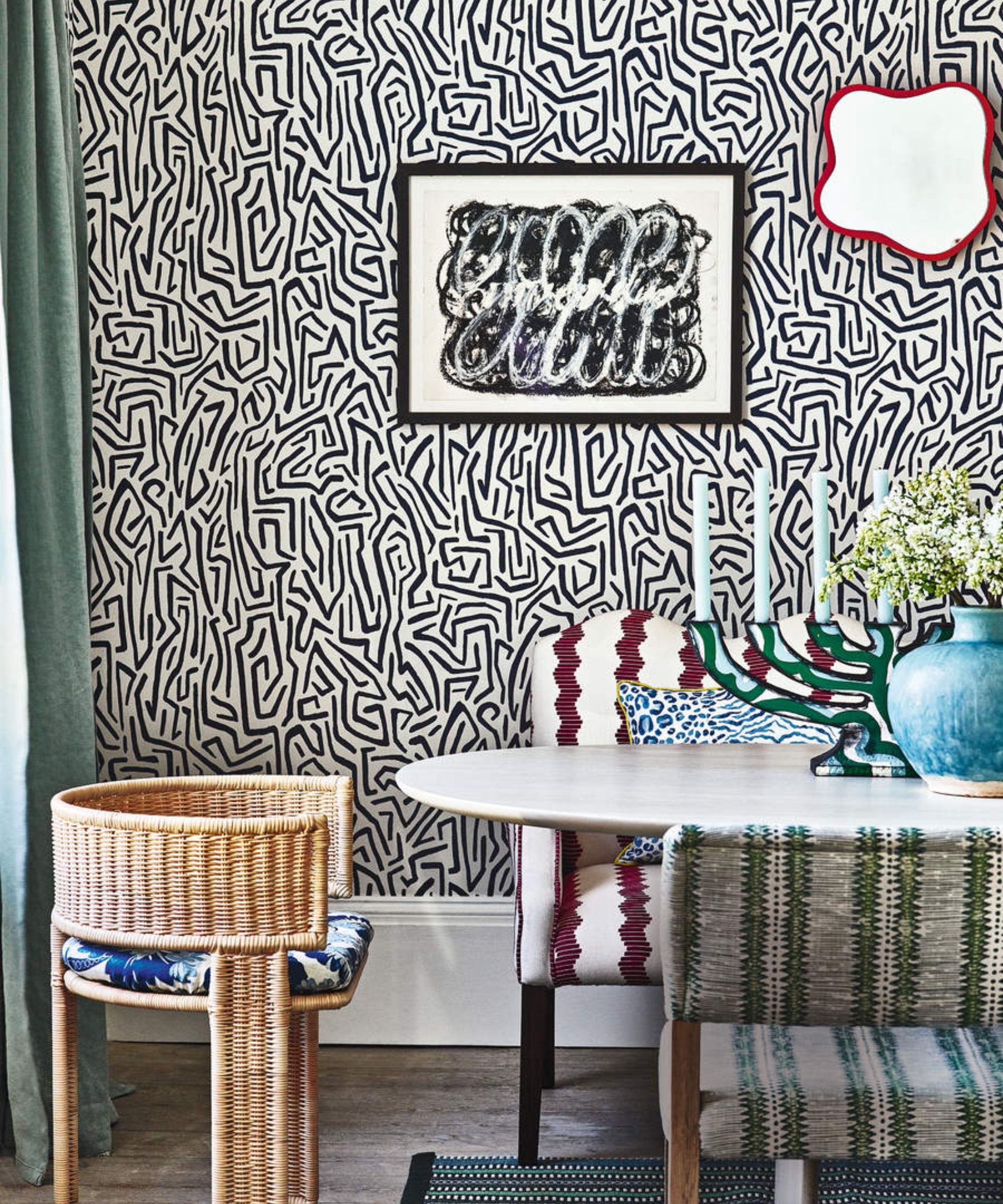
Choosing the perfect dining room rug equals getting the size right as well as the design. ‘In a dining room, we allow 24 inches past the edge of a table as a minimum,’ says Sarah Thurston.
Why the generous expanse of rug? ‘For a dining room, you will want to have enough space around the table to account for the table and the chairs to pull away from the table completely and still stay on the rug,’ explains interior designer Stacey Dobrovolny, owner and principal designer at Two Navy Lane. ‘I like to leave approximately 18 to 24 inches around the entire table for the chairs,’ she recommends.
‘Make sure you keep in mind the scale of the space and other furniture pieces as well,’ she continues. ‘If the space is larger, you might opt for a little larger rug than the norm making sure you do not go right up against items such as a buffet or sideboard.’
Living room rugs
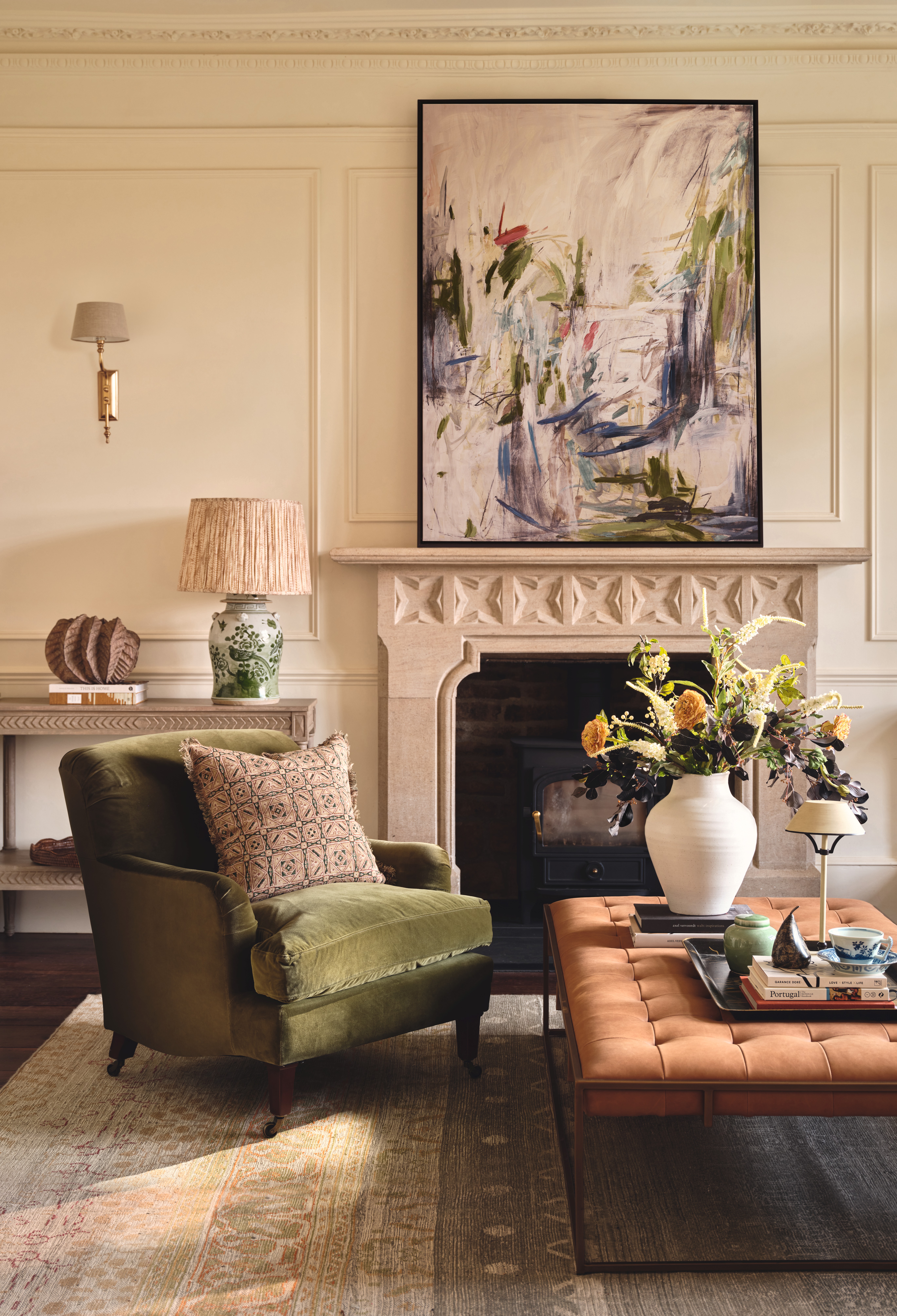
There are alternatives to consider when selecting rugs for living rooms.
‘In a living room, you have the option to border the entire room leaving anywhere between 8 to 24 inches of a flooring bordered around the space,’ says Stacey Dobrovolny. ‘This approach requires a completely custom rug to be measured, cut, bound and installed by a custom rug company. They will make allowances for items like floor vents as well.
‘For an area rug, I like to leave a sofa or chair partially on the rug if it has four legs,’ she continues. ‘If the sofa is a plinth base, I will put the entire sofa on the rug. Depending on your living room size, the rug size in a space like this could be anywhere between an 8 x 10 foot up to a 12 x 15 foot rug.
‘There are times when I will put all of the furniture on the rug and this has to do more with the room size itself. If it is a very large room and has vaulted ceilings, for example, I will want a much larger rug to ground the space visually.’
Rugs in open plan spaces
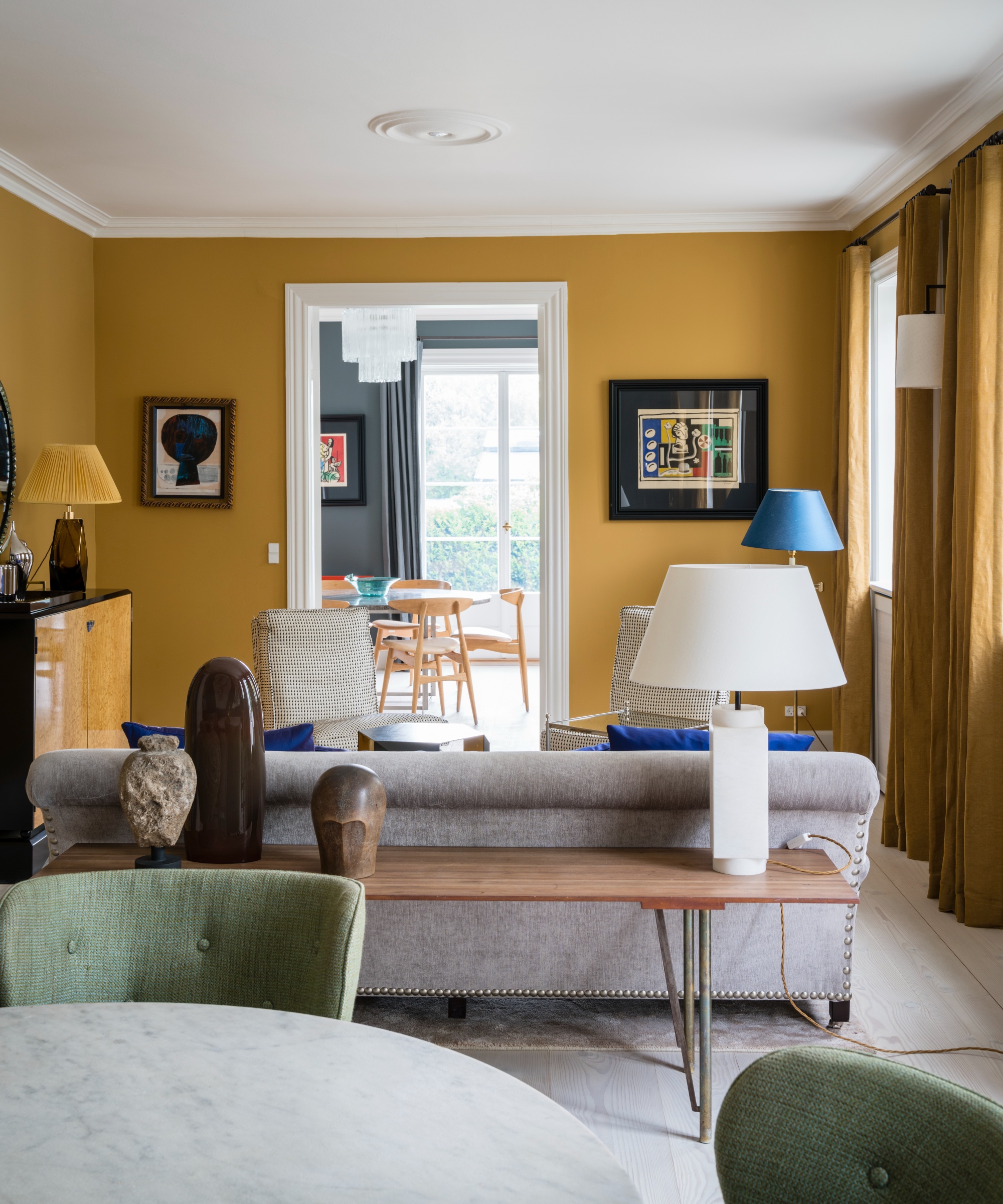
In open-plan living designs, a rug can zone the seating area. The key to getting the size right? Scale it to the furniture group.
‘In the case of the living room above we opted for a rectangular rug in a large enough size so that all of the furniture sat on the rug,’ explains Jack Fhillips of Jack Fhillips Design.
‘It is an open plan to the dining/kitchen but the rug anchors and defines the sitting area.
‘We worked on this rug titled “Glacier” with Olivia Andonian of POM RUGS at the NYDC,’ he adds. ‘She helped us select just the right color poms to customize it and create this beautiful design.’
Kitchen rugs
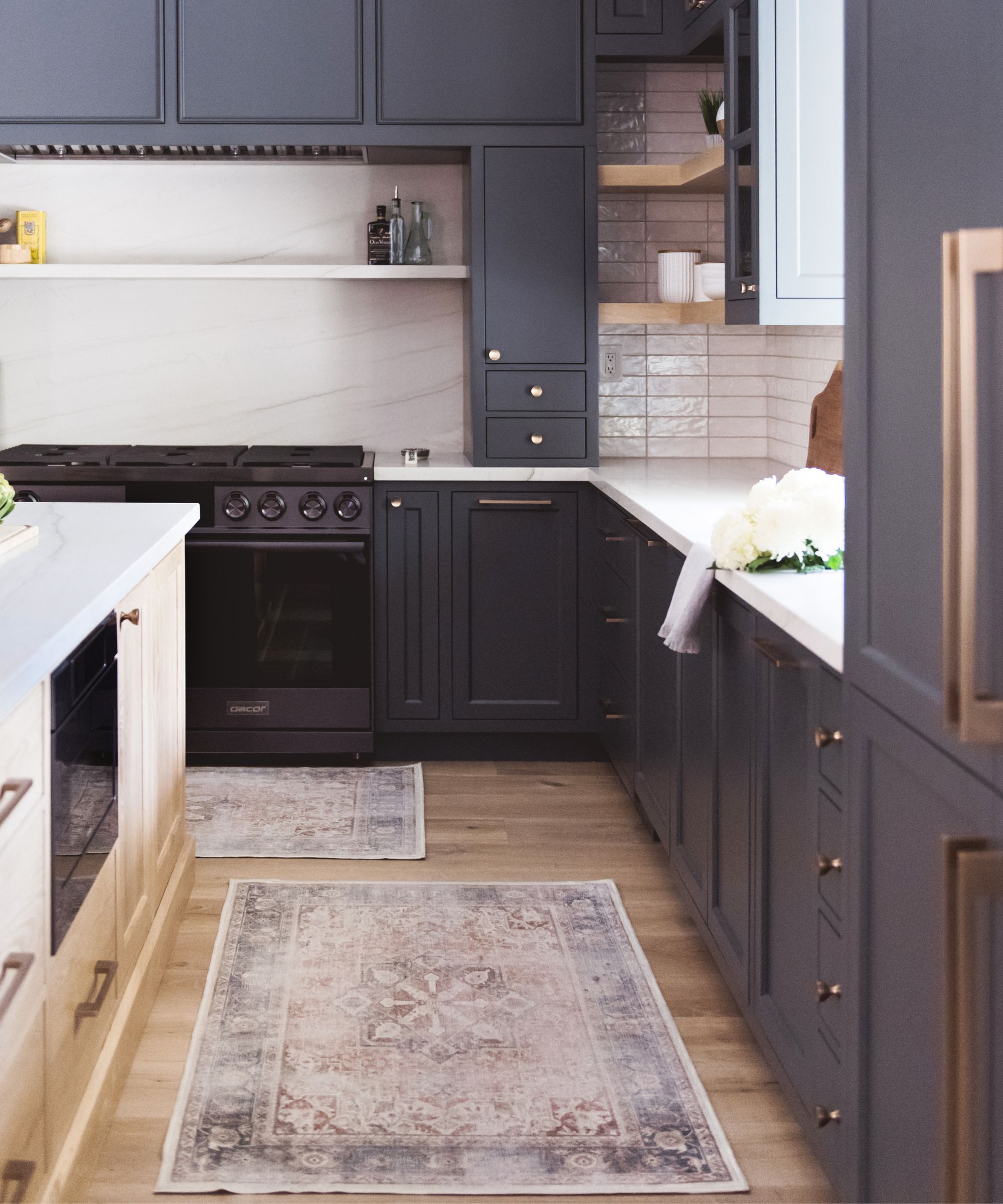
For the kitchen, a runner rug can be a great solution, and it should be sized to the area.
‘In a kitchen, runners are often utilized to protect the hard surface where one stands and works like at the sink, as well as adding some softness and color,’ says Jack Fhillips.
‘The size of the rug in a kitchen can range depend the work area size.’ Note that you may need more than one rug here. ‘Sometimes there are two sinks and two runners/rugs are needed,’ he says.
Rugs for entryways and narrow spaces
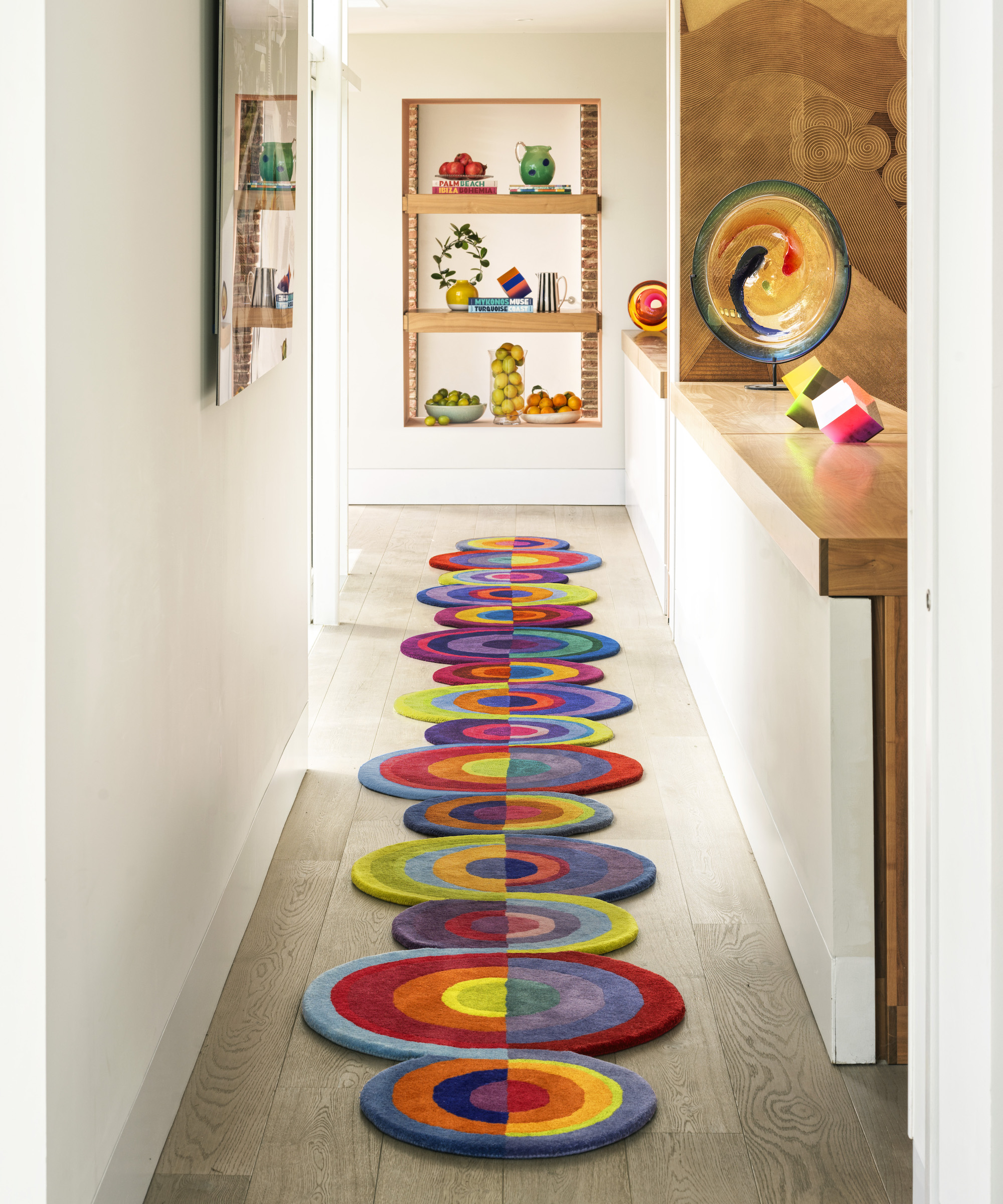
Don’t miss the opportunity to introduce an entryway rug – and you can follow the same size rules for other narrow spaces, too.
‘Your hallway, corridor or any narrow space within your home (kitchen, bedside, walk-in closet, etc) may seem to just be a transitional area, but they are important visual links, connecting one space with another and turning separate spaces into a harmonious home,’ says colorist and artist Sonya Winner. ‘These areas are often overlooked, and we consider this to be an interior design mistake. A runner rug can completely transform these disregarded spaces by adding a pop of color or a pattern.'
‘When it comes to choosing a runner for one of these areas, there are a few rules to follow with regards to size. Firstly, there should always be flooring showing around the runner’s borders. We recommend that for example a 39 39-inch wide space, the ideal runner would be around 32 inches.
‘In terms of the length of the runner, make sure it is long enough, so that it doesn’t look lost, floating or unfinished.’
Bedroom rugs
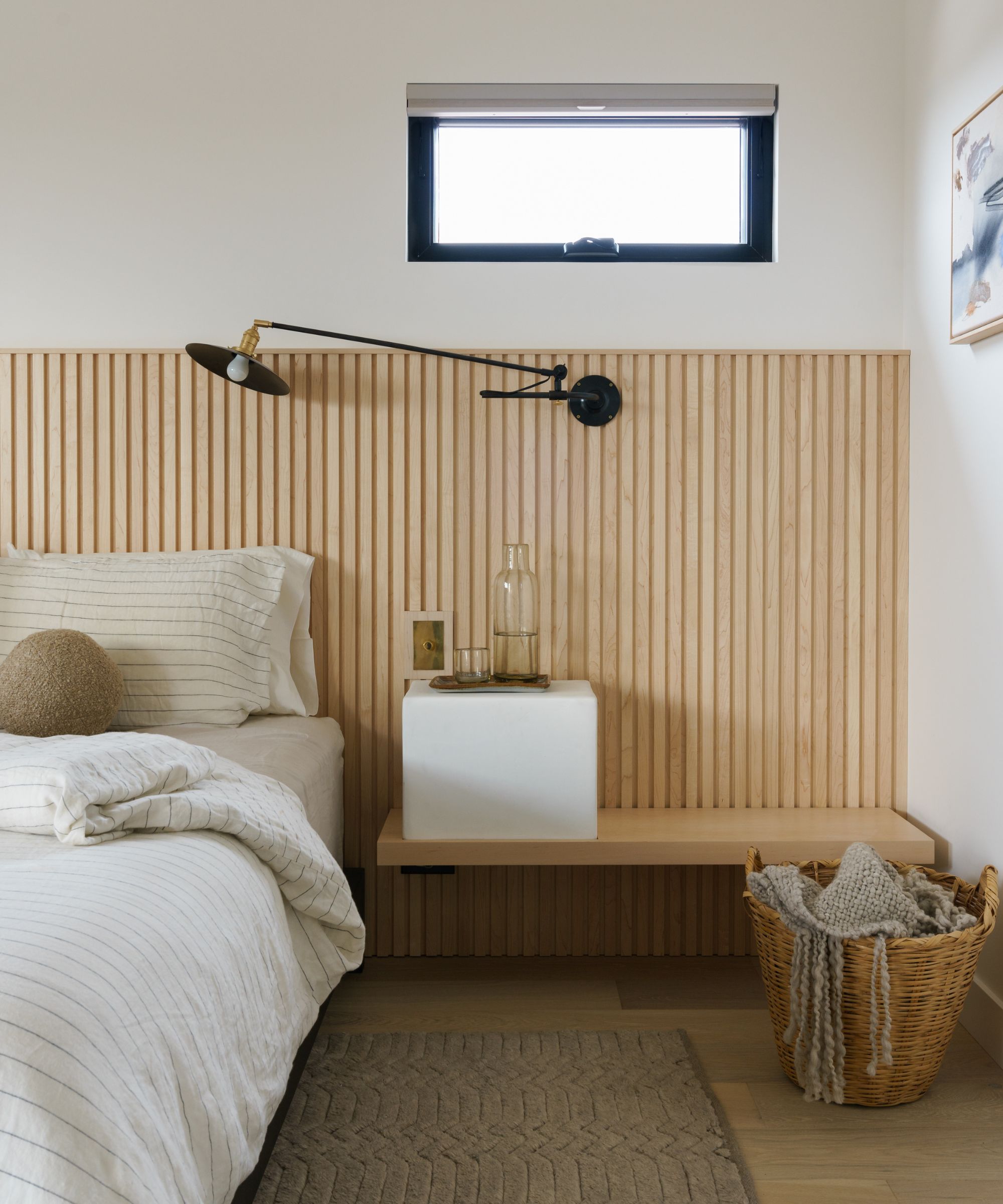
In the bedroom, rug size should depend on the look you prefer as well as the size of the bed.
‘Most people who want rugs in the bedroom like to step on the rug when they get out of bed,’ says Jack Fhillips. ‘I like to place a rug close to the bedside tables with just an inch or two of space between them, allowing the rug to extend from the sides and foot of the bed to allow a pathway with rug underfoot (as much as the room will allow). It’s always nice to expose the flooring around the perimeter of the room as well,’ he adds.
Stacey Dobrovolny loves the look of having a rug on the lower third of the bed. ‘This allows it to break up the floor, introduce some pattern and can give some visual interest to the space. For a king bed, I like to use an 8 x 11 foot rug and for smaller queen guest room bed, you could even use a 5 x 8 foot,’ she suggests.
Don’t forget to think about rug shape as well as size. ‘To prevent the rug from feeling out of place, ensure that the lines and shapes of the rug do not contradict the lines of your space,’ says Sonya Winner. And if you’re layering rugs, follow the size rules so the top one complements the rug below beautifully.