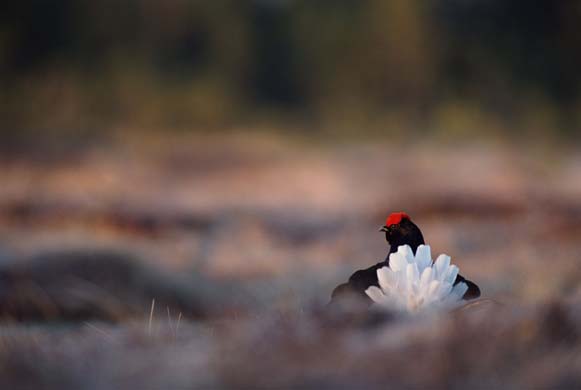
"Lek" is a Swedish word that describes the collective mating display of grouse at a traditional site. The exaggerated posturing of the competing cocks is pure testosterone-fuelled machismo. By turns ludicrous and magnificent, it is one of those wild spectacles you must see.
Where and when: Between Newbiggin and Langdon Beck, Northumberland, Feb-Apr Photograph: Roine Magnusson/National Geographic/Getty
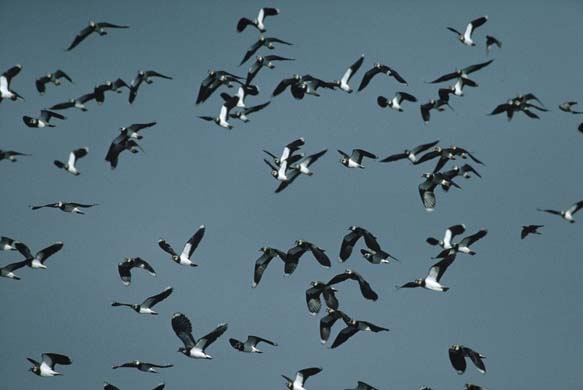
The display of this dark-green-and-white plover is one of the most passionate and moving sights of the British countryside. The male's looping sky dance has a crazy intensity, while its soft-toy squeaking song was once the sound of childhood for anyone brought up near open fields.
Where and when: Leek (Staffordshire) to Hartington (Derbyshire), Apr-June Photograph: Piet Munsterman/ Foto Natura/Getty
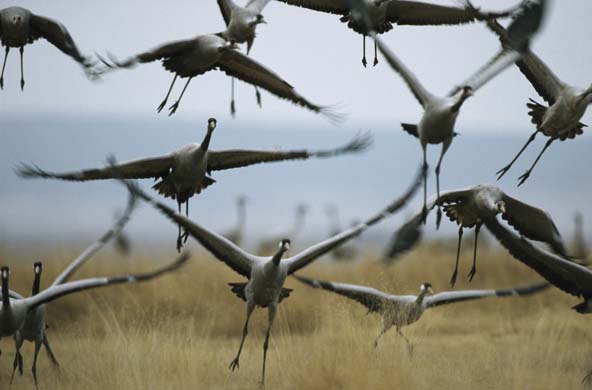
More than 450 years after they were hunted to extinction in Britain, a tiny nucleus of these magnificent birds re-established itself at Hickling, Norfolk - the very spot where the species was last captured in 1543.
Where and when: Sea Palling to Martham, Norfolk, all year Photograph: Klaus Nigge/Getty
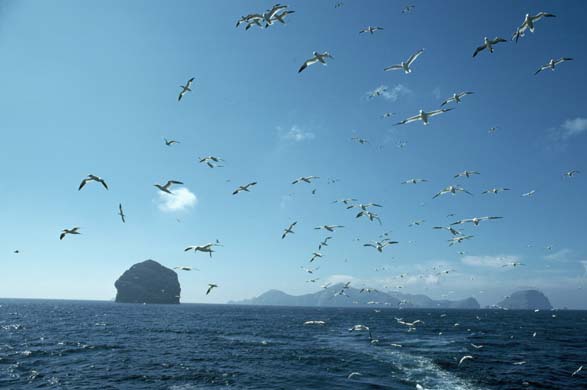
The island of Hirta in this remote Scottish archipelago gets my vote as the most extraordinary and most impressive wildlife landscape in Britain. An almost overwhelming abundance of breeding seabirds - puffins, fulmars, skuas, and these gannets - against a backdrop of cliffs and stacks, rank it among the world's special places.
Where and when: St Kilda archipelago, Outer Hebrides, Scotland, spring Photograph: David Paterson/Corbis
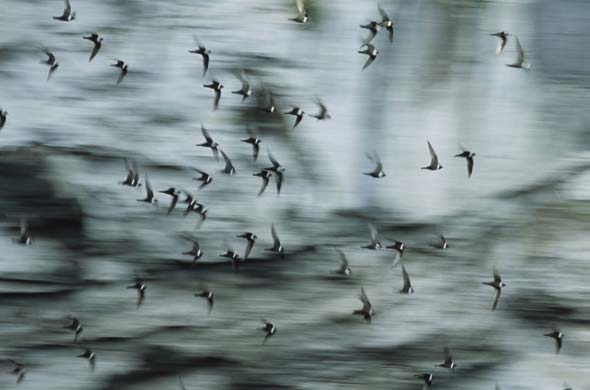
Because they feed in higher air space than swallows or martins, swifts have been able to feed and breed in inner cities when aerial pollution has long banished the others. For some unknown reason, just prior to their departure for Africa, swifts congregate in larger flocks above the rooftops.
Where and when: Most English or Welsh cities, July-August Photograph: National Geographic/Getty
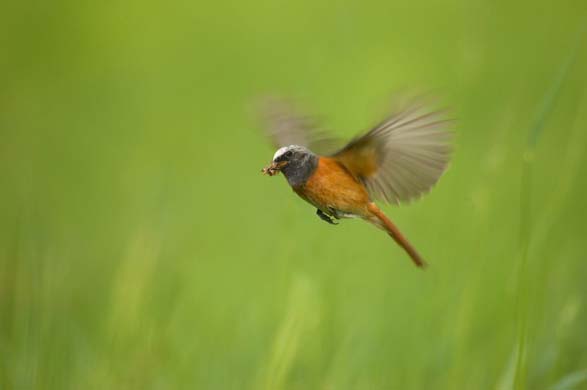
The gnarled trees and winter-scorched grass of the Derbyshire Dales seem utterly bereft of life in March. Yet within eight weeks the hawthorn is foaming white and green, and the woods are home to three of our most beautiful migrant birds - the pied flycatcher, redstart (pictured) and wood warbler.
Where and when: Dove, Goyt or Wye valleys, Derbyshire, late April-June Photograph: Getty
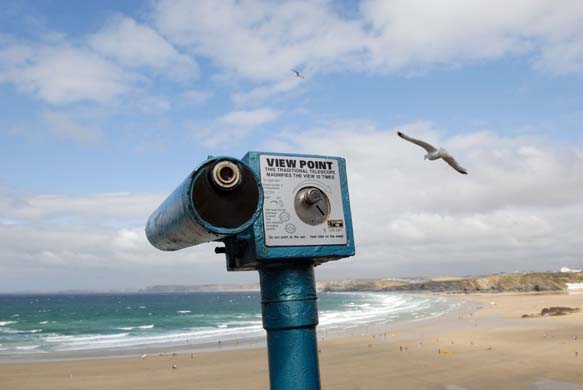
Largely for bird aficionados, sea watching involves sitting for long hours, one eye jammed to a telescope, as seabirds stream past just offshore - shearwaters, petrels, skuas, auks, terns and gulls pass in their thousands.
Where and when: Pendeen and St Ives, Cornwall (also Filey Brigg, Yorkshire, Portland Bill, Dorset) August-October Photograph: Peter Denton/Getty
,-801.jpg)
With voices like Tibetan throat singers and intelligence comparable with primates, ravens are always doing or saying something interesting. At Newborough they collect in one of the world's largest raven gatherings, which has been an object of scientific study for years.
Where and when: Newborough Forest, Anglesey, north Wales November-February Photograph: Michael Quinton/Minden Pictures/Getty
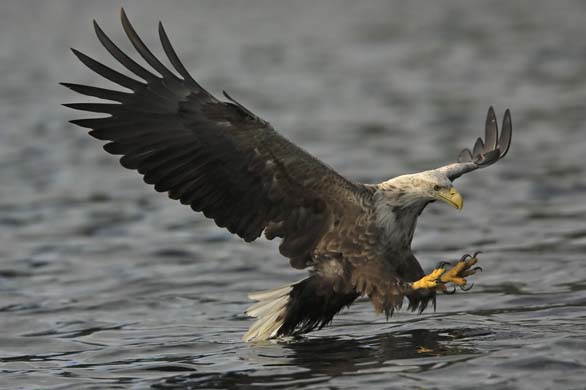
Its barn-door-sized wings make this our largest, most impressive bird of prey. The species' ongoing rarity, despite a successful reintroduction campaign, has also converted the second-largest of the Inner Hebrides into a site of pilgrimage for birdwatchers.
Where and when: Lochs Spelve, Don or na Keal, year round Photograph: Winfried Wisniewski/Getty
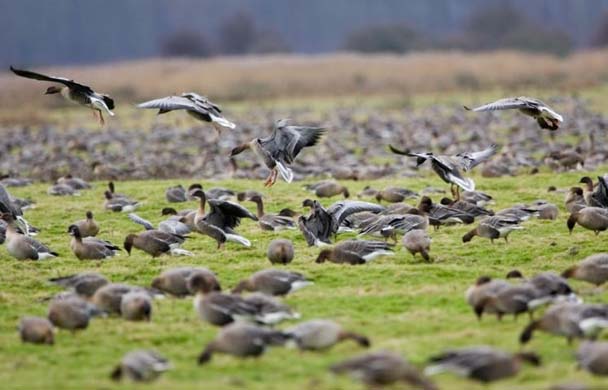
It now seems hard to believe that in 1912, when the great nature writer WH Hudson saw 4,000 pink-footed geese at Holkham, he described it as one of the great spectacles of English nature. Today it is routine to see roost flocks there involving more than 10,000 birds. On some winter evenings the figure can rise to 90,000.
Where and when: Hunstanton to Wells-next-the-Sea, Norfolk, Nov-Feb Photograph: Tim Graham/Corbis