Local authorities in the UK often have to compete to recruit social workers. Debate is ongoing as to the merits of this, but we also need to look at the global picture.
The practice of “poaching” social workers across national boundaries has long been practised by developed countries who can afford to offer enticements, both financial and in career development.
As social work grows across the world we have a responsibility to ensure that we do not drain developing countries of an essential resource that will make for sustainable community development. Social workers have a crucial role in rebuilding communities after disasters, crises or conflicts.
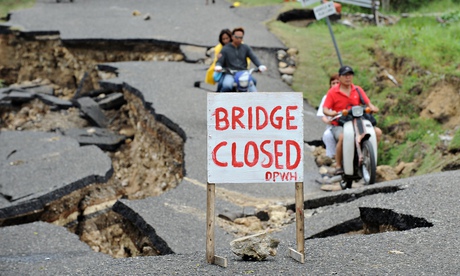
In the west, social workers tend to work with individuals and families, and are now increasingly re-discovering community work. By contrast, in developing economies social work has had to respond to typhoons, earthquakes, tsunamis, civil unrest and wars. We are all responding to demographic change, migration and living longer.
Northamptonshire county council is currently undertaking a recruitment drive in India. A local authority in London, recognising an increasing Kurdish population in their area, has recently targeted Turkey for social workers to join their teams. At the International Federation of Social Workers (IFSW), where I am president, we know that our Turkish colleagues are working well beyond their capacity with thousands of displaced persons fleeing conflict and persecution in neighbouring countries.
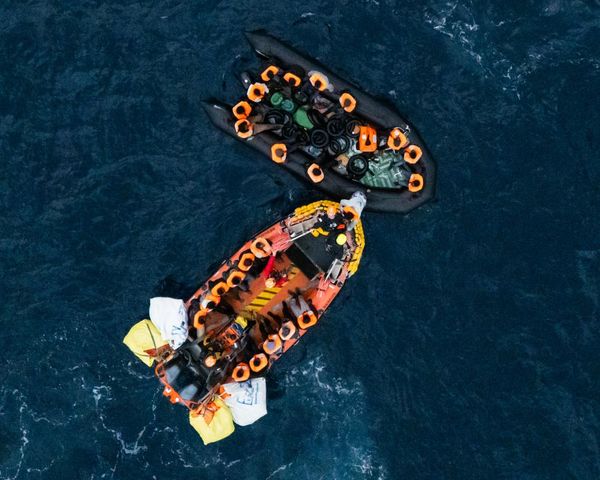
If help is not available locally people will travel to live in peaceful surroundings, even if that means leaving their homeland far behind. People do not use clandestine routes to safety unless they have to; that journey is often precarious and dangerous in its own right. Fear drives the risks people will take.
It is time to ask ourselves if we are working strategically and effectively with issues that affect local communities in the UK but which stem from global problems. The social work profession, especially managers, must recognise that we have to reflect on the challenges of international social work.
We need to work out how we can learn from each other, recognise that resources are needed in developing countries as much as in the west, and understand that we have a responsibility to sustainable development across the world. When we take precious resources – such as social workers – to meet an immediate need in the UK, we are adding to people’s need to flee from persecution, poverty, destitution and destruction elsewhere.
We must lift our eyes above the immediate crisis and look to some of the systemic roots. One of the core skills of social workers is to see beyond the immediate problem and help individuals and governments understand the complex matrix in which we seek to make positive steps forward in sustainable social development.
In the British Association of Social Workers there is a recognition that social workers who trained outside of the country have their own journey to make and help is being developed to help professionals in transition.
While we describe social work as a global profession, because we all adhere to the same ethics and aims, the way we are trained in each country is still very different. This is influenced by the different legal and cultural structure on which we are then expected to work. When we as individual practitioners choose to step out of the jurisdiction and culture, our basic skills in working with people may be the same but the structures in which we have been trained are very different.
Social workers at the IFSW general meeting in Melbourne in July voted to develop a policy on out of country assessments, recognising that local knowledge is a key component of a good social work assessment. Through IFSW we can work together to share knowledge without decimating communities of much-needed resources. We can do this through events like the IFSW European Conference in September 2015, building international networks, linking social workers across the world, building trust with each other, and by creating solidarity with colleagues in Asia, Africa, Europe, Latin America, as well as our English speaking colleagues in North America, Australia and New Zealand.
It is time we put global social work into practice – we have much to learn from each other.
Ruth Stark MBE is president of the International Federation of Social Workers
Read more stories like this:
• Nepal’s government must recognise social work as a profession
• Social work in Myanmar: a slow and difficult birth
• A history of social work in Botswana – and why the future looks bleak
Why not join our social care community? Becoming a member of the Guardian Social Care Network means you get sent weekly email updates on policy and best practice in the sector, as well as exclusive offers. Sign up for free.