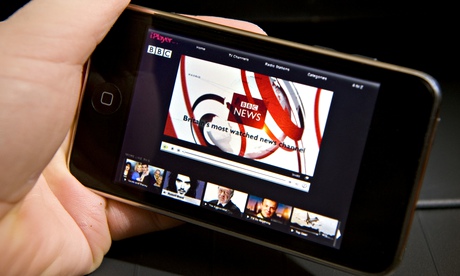
It stealthily made its way into the sitting room, usurping the fireplace, greedily demanding its own corner spot and gradually growing ever wider; an ugly addition to our living spaces we had all learned to live with. Until now. For the first time, the number of UK homes with a television has fallen, with ownership dropping from 26.33 million households to 26.02 million between 2012 and 2013, according to media regulator Ofcom.
It would be jolly to think that this was a kind of revolutionary reaction to the traditional autumn onslaught of Strictly, The X Factor, I’m a Celebrity … and the bladdy Apprentice – an advent reality-TV endurance test that leaves viewers not so much counting down the days until Father Christmas arrives, as until Simon Cowell disappears – but the reality is more complicated. While the television might be making an exit from our homes, the content is not necessarily leaving with it.
Instead we’re consuming it in different ways: according to Ofcom, nearly 1 million homes have broadband but no telly, while in the past 18 months BBC iPlayer requests from tablets or mobiles have risen from 25% to 47%. So long, enormous great box in the corner … and hello an evening on the sofa with your iPad.
The question is: does it matter? We should celebrate that content is being made by a more diverse group of people as the traditional barriers to broadcasting are broken down – the rise of the YouTube superstar reflects the way young people are changing how content is produced and consumed, and challenging the legitimacy of broadcasters to create and moderate it. But should we also mourn the apparent shift away from TV as a communal activity?
For those who revel in the delights of Sandy and Sandra singing along to The X Factor, the Siddiqui family discussing astrophysics, or June gently chiding Leon about his biscuit intake, the importance of telly as something we watch together has been underlined by Channel 4’s Gogglebox. That the boozy commentary of Steph and Dom still unites us as an audience reinforces TV viewing as a communal activity, to be discussed and giggled at with other people. Whether, of course, those people need to be in the same room is something else entirely.
You don’t have to be ancient to remember when possession of the remote control was the source of great family resentment: when you were forced to watch University Challenge as a child because the only alternative was your homework, and your sister was monopolising the landline; when Christmas involved a great deal of planning and negotiation to ensure you didn’t miss the Top of the Pops Christmas Special or get stuck watching the Royal Institution Christmas Lectures while your dad shushed you constantly.
People tend to get misty-eyed about the times when there were five (or even just four) channels and everyone in the family had their own video tape. But let’s be honest – often it was just a pain in the bum. My dad and I weren’t having detailed conversations about the Christmas lectures – let’s sum them up as “Do we have to watch this? It’s boring”, “Go and write your thank you letters then”, “I’ll just stay here thanks”. Freed by a tablet or smartphone I’d have been able to watch loads of tutorials on early 90s make-up, and my dad could have discussed physics with people who were actually interested.
There can be a real joy in physically viewing things together – I wouldn’t want to watch the annual Downton pantomime without family and a big glass of something delicious, and binge-watching a boxset with your partner or housemates is pure joy – but as we’ve developed new ways of watching programmes, we’ve also developed new ways of discussing them. A weird set of manners around boxsets and catch-up has been established – no discussing the end of Breaking Bad or the latest episode of Game of Thrones until you’re sure everyone around the table has seen them, for instance – and we’re happy to relive the important bits of telly, and pick them over at a later date. We understand spoilers. We understand that different people consume at different rates. That means a more fragmented entertainment landscape, but we’re still joined in our enthusiasm.
We still make time to watch the really special telly as it’s broadcast or made available: the Christmas Day Doctor Who will still be something many of us watch as families, whether live or through iPlayer. And if everyone else has their iPads out watching something else? There’s Twitter, forums and blogposts to allow us to discuss shows as they’re broadcast.
Our conversations and expectations around entertainment have changed. From Serial and Zoella to House of Cards and Sherlock, we still unite behind great content. Of course we’ll lose something socially from not sharing that live experience, but we might also gain something – not to mention the aesthetic joy of ditching the telly from the living room.
Saying that, I don’t think I’ll be moving mine just yet – an iPad screen has yet to match the beast in the corner for viewing experience, regardless of the content.