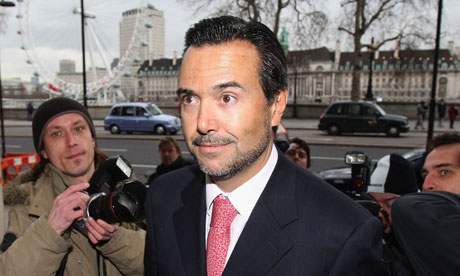
How banks position their results presentations always makes interesting reading. According to António Horta-Osório, after nearly a year as chief executive and several months on stress leave he has established the longer-term strategy for Lloyds Banking Group.
It is deep into the presentation – after provisions of £1.4bn for restructuring charges, £800m for so-called insurance business volatility, £175m for German insurance litigation and a whopping £3.2bn for expected payment protection insurance rebates – that investors realise the banking group lost £3.5bn.
The first line of the RBS statement said the bank had an increase of 11% in group operating profits to £1.89bn. But after £1.3bn of restructuring and disposal charges, £850m of expected PPI rebates and £1.1bn of sovereign debt impairment, the bank actually posted a massive loss.
This is the fourth year we have watched banks claim improvements in their core areas – and then turn round and tell us there is still garbage inside their businesses that needs to be written off.
For the layman, operating profits are key indicators of the health of a business. As long as a company has the income to cover one-off losses – or sufficient capital tucked away to absorb these losses – the business can, in theory, continue to run another year and make more money.
Of course, chief executives and boards don't like to have to tell shareholders they need to write down high levels of legal liabilities and restructuring charges, let alone do so for several years in a row.
The strategy for most new chief executives is to fully audit and find the rubbish lurking in their businesses – then clear it off their books as soon as possible.
In the case of Horta-Osório, he announced early in his tenure that he would write-off PPI repayments and the restructuring charges one assumes were necessary for his longer-term growth strategy.
RBS's chief executive, Steven Hester, has had several years to find the bad bits and rid his bank of its financial liabilities.
Of course, banks will have to write down some sort of unanticipated expense most years. But let's just hope that Hester and Horta-Osório have finally got these big charges out of the way.