
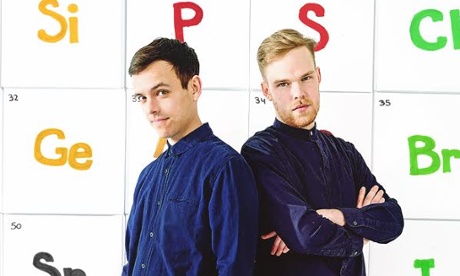
As the creators of AsapSCIENCE, a YouTube channel where we answer some of the world’s weirdest questions using science, we get asked lots of fun, fascinating, and sometimes bizzare questions. We’ve investigated whether video games can make you smarter (good news for XBox fans), how much sleep you actually need, and whether social media is changing your brain. We even solved #TheDress.
Here we have picked five of our favourite science questions of all time, which you can also read about in our book.
1. Are silent farts more deadly?
This question has probably haunted mankind since before we even knew what science was, so it is with great pleasure that, after proper investigation we can announce… silent farts really are more deadly! This is because they are likely to contain a higher proportion of sulphur, the “stink agent” in farts. Louder farts usually contain more swallowed air, which helps to dilute the smell.
2. Why do we procrastinate?
Procrastination affects nearly everyone, but why on earth do we do it? It turns out that putting off the thing you are meant to be doing is linked to how close or far away you think the results of that thing are. So, if it seems like the reward for your work is distant, you will put it off more than if you think it is coming soon. And likewise, if the punishment for not doing your homework is weeks or even years away, you are way less likely to do it than if you know you are going to be in big trouble tomorrow!
There is no one solution for this universal human problem, but one approach is to try and reward yourself at intervals whilst working – try working for 25 minutes and then rewarding yourself with a mini break or a snack.
On top of that, instead of focusing on how much you hate what you are doing, try to think positively, saying to yourself “I’m doing something great” or “I enjoy being productive”.
And on a practical level, remember to give yourself deadlines, and try to eliminate distractions.
3. Does being cold make you sick?
No-one appreciates it when their sickness-fearing parents force them to wear the hideous bobble hat their aunt Hilda knitted, “to avoid catching their death of cold:. In recent years, hat-haters have rejoiced in the increasingly popular view that being cold doesn’t actually make it more likely you will get a cold. This is logical, because colds and flus are viruses, which means that you won’t catch them unless there is a virus present. If there aren’t any viruses around then you won’t catch a cold, it’s as simple as that.
But there’s no doubt that people catch more colds in winter, and there are a few probable reasons for this. Firstly, people stay indoors more when it’s cold, and indoors is where viruses love to hang out. Secondly, the decreased humidity in winter can mean you have less pathogen-blocking mucus in your nose, so you get ill more easily. And you might get less Vitamin D as there’s less sunlight, which weakens the immune system. On top of all this, some experiments show that being cold can produce cold-like symptoms, probably because it inhibits immune response.
A good approach to avoiding catching colds when it’s cold is to still go outside, but remember to wrap up warm.
4. Could a zombie apocalypse happen?
We’re not suggesting that anyone is going to start dying and coming back from the dead, but if you are looking for a virus that induces zombie-like behaviour, you can start by looking at rabies. Rabies can be transmitted via a bite from an infected animal (or human), before travelling to the brain, where it starts causing havoc.
To create a convincing zombie virus, you could aim for a virus which moves through the body in a similar way, but which targets the brain through the olfactory nerve. This is a nerve which leads to parts of the mind which tell you when you are full, which control memory and emotion, and which impact on problem-solving, long-term memory, planning, morality and inhibiting impulsive action. A virus targeting those areas could theoretically create a super-hungry, aggressive, brain-dead being that couldn’t control their actions or recognise family and friends. So, with the right virus specificity, a form of zombies could be possible.
5. Should you use the snooze button?
Waking up is hard. Everyone likes to have “just ten more minutes” in bed after the alarm goes off… but we always wondered, does hitting the “snooze” button actually help you to wake up, or does it just make you feel more tired?
If we didn’t have to get up for work and school, our bodies would wake us up eventually when they had had enough rest, and when we had come to the end of a “sleep cycle”. If an alarm goes off in the middle of a deep sleep cycle, it can be particularly hard to wake up.
Although it might seem to be waking you up gently, hitting “snooze” when your alarm goes off can do more harm than good. When you fall back asleep, you can start a new sleep cycle, and instead of preparing to wake up your body starts heading in the opposite direction! Breaking your sleep up like this can make it feel less restorative and make you more tired during the day. As the saying goes, you snooze, you lose!
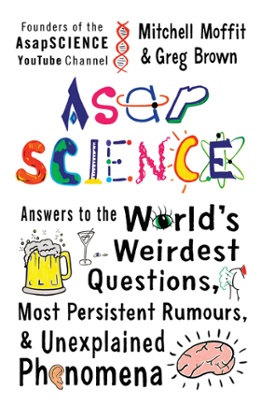
Mitchell Moffitt and Greg Brown are the creators of the AsapSCIENCE YouTube channel and the authors of AsapSCIENCE: answers to the world’s weirdest questions, most persistent rumours, and unexplained phenomena, published by Scribe.