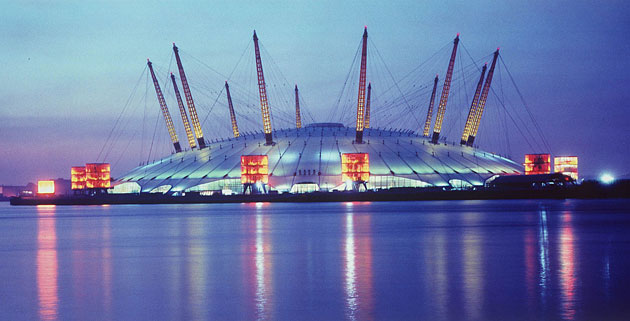
Designed by the Richard Rogers Partnership and engineers Buro Happold, this was a £45m politically-driven folly. Often compared to a giant jellyfish washed up on the north Greenwich peninsula, today this huge tent has been reborn as the successful O2. With a diameter of 365m and topping 100m, its titanic scale remains impressive [try Google Earth 51 30’05.89N, 0 00’15.93E] Photograph: QA Photos/NMEC/guardian.co.uk
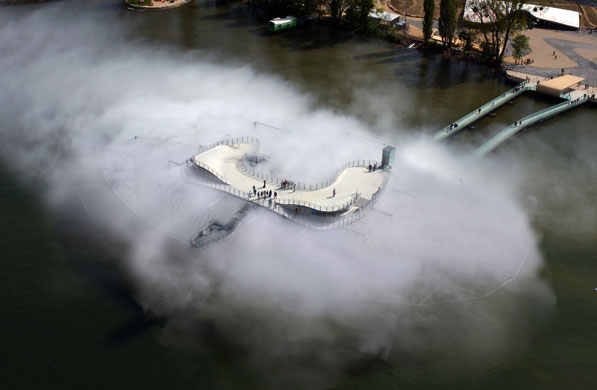
This sensational pavilion, designed by New York architects Diller + Scofidio, was the star of Switzerland’s Expo 02. A cat’s cradle of tensile steel, 20m high and 100m long, it brooded at the end of a steel and glass jetty over Lake Neuchatel. Inside, some 30,000 water jets created clouds through which mesmerised (and damp) visitors could walk, again and again Photograph: guardian.co.uk
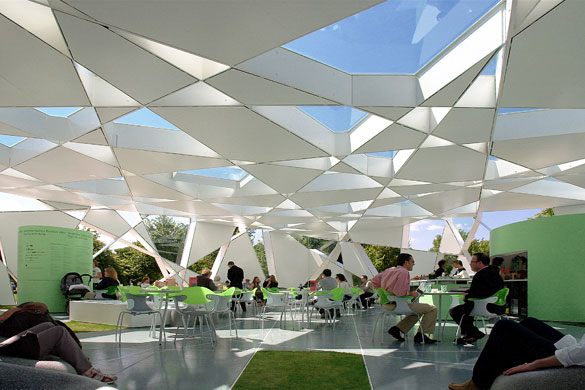
This lyrical pavilion, designed by architect Toyo Ito and engineer Cecil Balmond, was a suggestion of an architecture of the future, in which boundaries between walls, floor, ceiling, interior and exterior might dissolve. In a decade of bombast, here was profundity and simplicity Photograph: guardian.co.uk
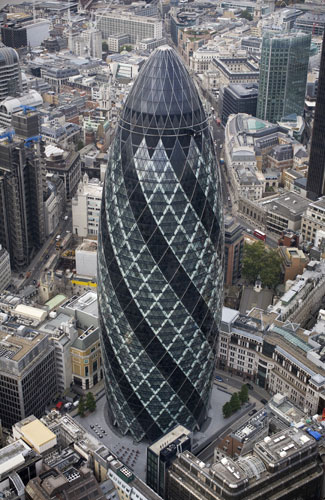
Norman Foster’s eagerly awaited tour-de-force was both admired and scorned. Most were awed by this missile-like office tower, although some thought it symbolised, all too slickly, the cocksure ambition of the City. An undeniably impressive building, its pleasures are chiefly for those who work here: the internal skygardens are impressive, while the glass-domed restaurant is one of the world’s most breathtaking new rooms Photograph: guardian.co.uk
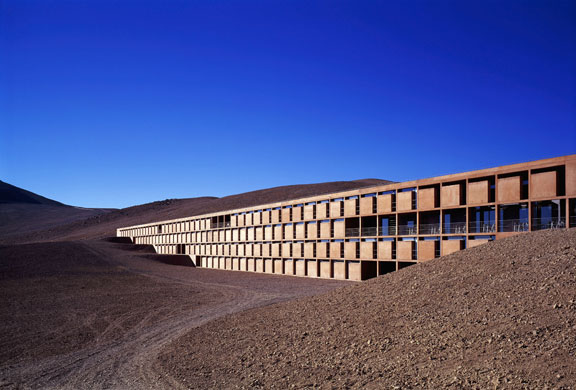

This eye-catching 80,000-seat stadium, designed by the Swiss architects Herzog and de Meuron with the Chinese artist, Ai Weiwei, was the architectural highlight of the 2008 Olympics. It consists of two buildings, one inside the other: a red concrete bowl for seating surrounded by the steel “bird’s nest”. Since the Olympics, this charismatic building has been largely redundant Photograph: guardian.co.uk

Magnificent revival of the Gormenghast-like Victorian Gothic railway terminus, now one of the world’s finest stations. Alastair Lansley led the architectural team over a decade, making this extraordinary fusion of 19th Century architecture and mind-searing engineering into the arrival and departure point for 21st century trains. The hotel and penthouse flats high in the rafters have yet to be completed Photograph: guardian.co.uk
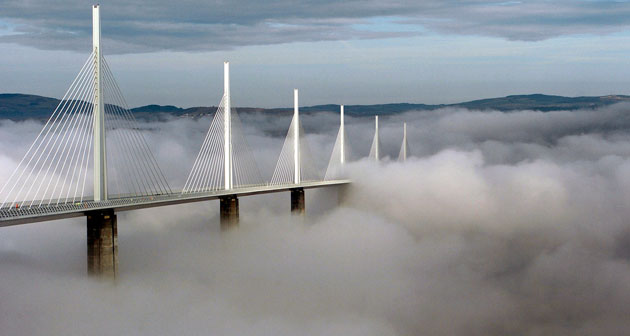
Awe-inspiring bridge carrying the A75 autoroute across the Tarn Valley in southern France. Designed by the engineer Michel Virlogeux and Norman Foster, it is best seen from the tops of the valley sides, especially when its Eiffel Tower-high pylons spear the summer clouds Photograph: Christophe Ena/guardian.co.uk
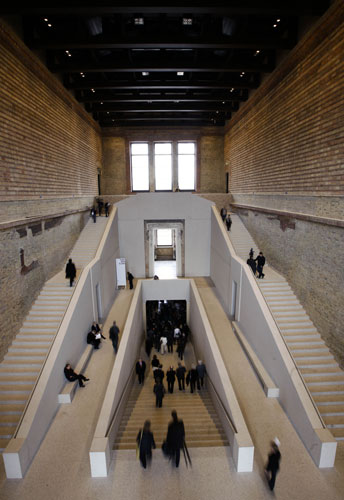
After ten years of painstaking reconstruction, this magnificent 19th Century cultural pantechnicon, closed in 1939, was reopened to popular and critical acclaim. The immensely complex and intelligent redesign was by the British architect, David Chipperfield, who has allowed the old building to breathe while fitting it out with all the new technology it needs Photograph: Markus Schreiber/guardian.co.uk
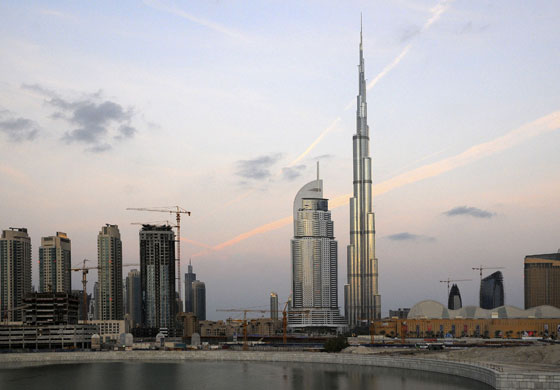
Dubai’s economy appears to implode as the Burj Dubai, the world’s tallest structure, prepares to open. At 818 metres (2,684-ft) this behemoth is the equivalent of the Empire State Building with the Chrysler Building standing on its shoulders. Designed by Adrian Smith (architect) and Bill Baker (engineer) of Chicago-based SOM, the Burj provided 160 storeys of hotel rooms, Armani-styled apartments and sky-high offices Photograph: guardian.co.uk