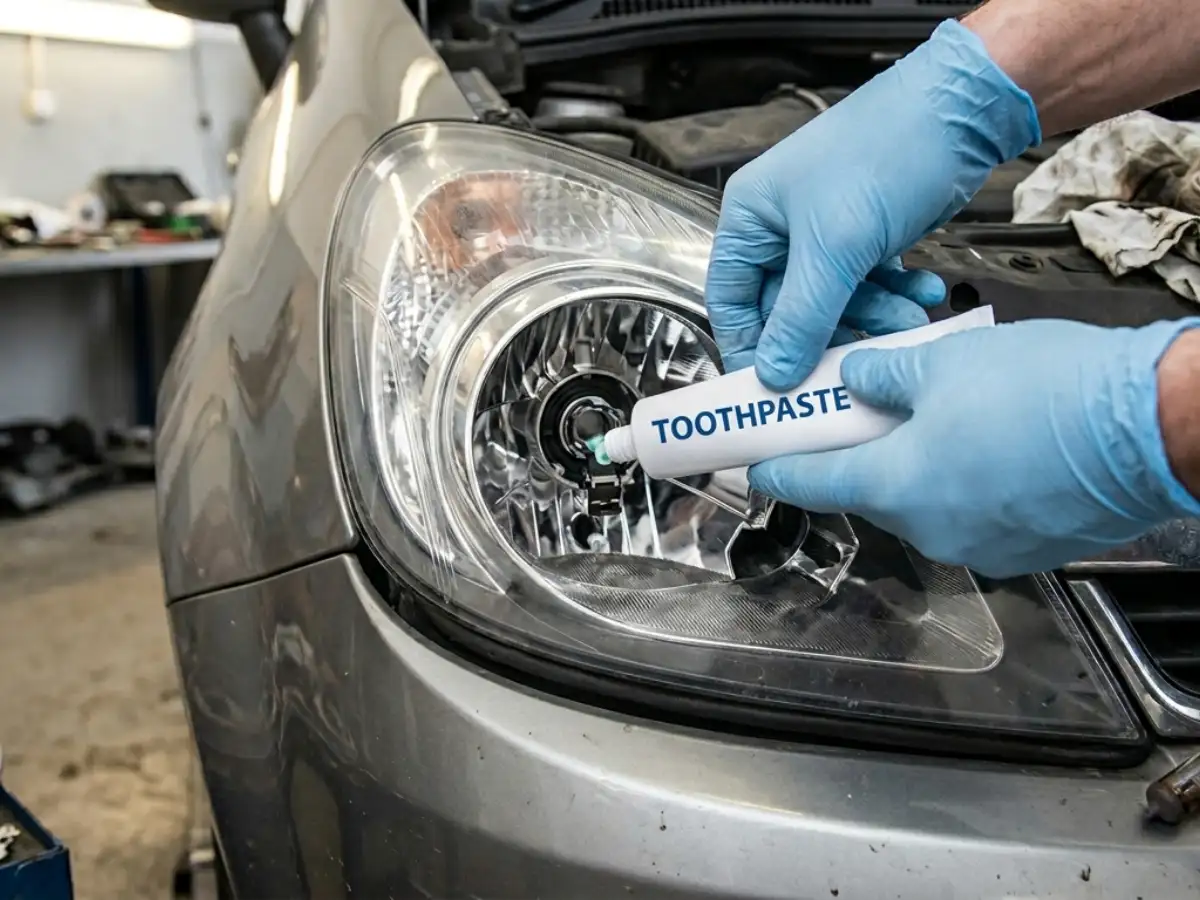
Cheap tricks abound online when it comes to repairing household products, and one such cheap trick that has been popular is the use of toothpaste to repair cloudy headlights. Using the product entails applying toothpaste to the lens of the headlight, then buffing it out to restore the headlight's original clarity in just a few minutes.
While it is easy to see how the use of such a trick is enticing since the product needed for the repair work is already available and cheap, the more important matter lies in its effect on the performance of the headlight and, therefore, the driver's ability to drive at night.
As per the American Automobile Association, damaged headlights emit only a portion of the amount of light that new headlights provide. This is a serious matter that must be kept in mind by all drivers.
Why do headlights become cloudy in the first place?
Today’s headlight covers are commonly made of polycarbonate plastics instead of glass. With prolonged exposure to sunlight, abrasion from the road, weather conditions, and oxidation, the coating eventually wears out and causes the yellowish haze on cars.
Based on Consumer Reports, the haze not only compromises the aesthetics of your vehicle but also reduces the amount of light emitted by your car. The light emitted will no longer have the focus and intensity it had when the car was new.
This is the reason why professionals repeatedly emphasize the importance of cloudy headlights as a matter of concern for safety reasons. While you can clearly see that your lights are turned on, the lack of illumination could affect your reaction time and the visibility of people and objects.
Why toothpaste became the internet’s favorite fix
It seems to make sense and appears very logical since toothpaste is made up of mild abrasives, so there is a chance of polishing certain objects. The videos showing the dramatic changes after using toothpaste contributed to the widespread popularity of the trend on social media platforms.
However, as noted by Consumer Reports, the right headlight restoration procedure involves more than just quickly applying an abrasive material. In most cases, professional headlight restoration kits use various procedures, such as removing damaged layers through sanding, polishing the lens, and finally putting protective layers on it.
This step is important because, usually, the original protective layer applied by the manufacturer has worn off in the process. Unless the protective layer is restored, the fog will soon come back. According to Consumer Reports, restoration kits work and can yield satisfying results, especially for mildly cloudy headlight lenses.
The difference between cosmetic improvement and safer driving
This is where the viral toothpaste hack often fails to capture the idea. The lens being shiny after an application is not enough evidence that it is capable of increasing light transmission to a level of providing better visibility when driving at night.
AAA reports that the biggest improvements in performance are provided by replacing headlights that have been severely deteriorated. Restoring headlights can still prove to be an effective and less expensive solution, especially for vehicles that have mild to moderate fogging.
Sometimes the state of the lens should be considered. If it is too badly oxidized, cracked, or yellowed, it might not be able to be restored easily with some homemade tricks. Overall, whether one should opt for restoration or replacement depends on many aspects, including the cost, age of the car, and other preferences.
Why this debate matters beyond social media
Another factor that could contribute to the popularity of the hack is its tie-in with the broader appeal for low-cost solutions for household problems. There's just something satisfying about using an ordinary object to resolve a pricey one.
However, the point should be made that headlights aren't mere ornaments on a vehicle but critical pieces of equipment needed for safe driving. Addressing a visibility issue as purely cosmetic would result in the development of a false sense of security. As per the information provided in the AAA fact sheet, most drivers tend to undervalue how badly degraded their headlight lamps are and what an impact this has on their nighttime vision since the degradation occurs incrementally.
And this is where this myth-busting takes precedence over just another viral hack description – what needs to be noted is not the ability of toothpaste to polish a plastic headlight for a few minutes. What matters is whether or not the fix provides sufficient clarity of view during the night.
A restoration kit can be quite useful for slightly fogged headlights. According to Consumer Reports, restoration kits may work fine if applied properly. However, if the visibility does not improve after using the restoration kit, replacing it might be the best course of action.
Ultimately, the most cost-effective solution may not necessarily turn out to be the most economical one in the long run.