Given it has been called The Greatest Story Ever Told, the temptation to retell it is understandable. Except under special circumstances, it also ought to be resisted strenuously. For every Paradise Regained by John Milton, The Monarch by Sir David Lyndsay or Behold the Man by Michael Moorcock, there are misconceived works such as Norman Mailer’s The Gospel According to the Son, Anne Rice’s Christ the Lord books and even Philip Pullman’s The Good Man Jesus and the Scoundrel Christ (Pullman was so much better at untelling the Bible than retelling it). There have been a remarkable number of fictional Jesuses in recent years – from Colm Toíbín, Naomi Alderman, Michel Faber, JM Coetzee, Jim Crace, Richard Beard (whose Lazarus Is Dead was remarkable). But that’s not so surprising given that Robert Graves, Gore Vidal, Anthony Burgess, José Saramago, Jorge Luis Borges, Mikhail Bulgakov and even Jeffrey Archer have all had a crack of this particular whip.
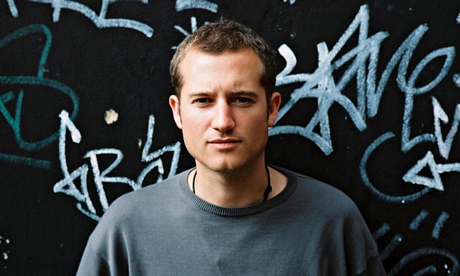
So can Jonathan Trigell, author of the award-winning Boy A, bring anything new to the table? Well, it has a few little twists and askance angles, but this is a thin and thoughtless novel in many ways, probably most interesting in terms of structure. The chapters whistle between the future and the past with the crucifixion as the turning point. Once it has happened, with the exception of an epilogue, the story is all anguish and anger. The possibilities for irony and complexity after that event seem to have eluded Trigell. When he does introduce ironic elements – one Jewish character, married to a Roman, is luxuriating in her lifestyle when, hint, hint, she mentions she is living in Pompeii – it is with more of a snort than a raised eyebrow.
The publisher promises the novel will be “controversial”, and yet the revisionist approaches to the principal characters are hackneyed. Jesus – Yeshua – is a political radical seeking to re-establish the Davidic kingdom and overthrow Rome. Peter – Cephas – is a lumbering thug. Judas as traitor is invented because “literary completeness demands it”; Pilate is Himmler in a toga; but Paul – Saul of Tarsus – is the greatest victim, depicted here as self-serving, self-regarding and self-delusional. There have been many explanations for his conversion, but the idea that he embraced Christianity because he was shunned by the high priest Ananias when he went courting his daughter is a new and banal one on me.
The bathetic tendency is evident everywhere. The Resurrection is at first just corner-of-the-eye hallucinations of the grieving. Then we get a monologue from Joseph of Arimathea who explains that the people who visited the tomb on Easter Sunday got the wrong one. It treats mystery as a locked-room mystery, with an explanation as laboured and facile as anything in John Dickson Carr.
Trigell throws in every bit of comparative theology that has been known for years, so Saul absorbs Osiris by osmosis. The pre-crucifixion parts deal with the enmity between Rome and Jerusalem, while the later parts concentrate on the divisions between James the Just and Paul, the apostle to the Gentiles: between the section of early Christianity that thought that the Mosaic law still held and the advocate of grace superseding law. But what a graceless creature Paul is – when he announces that the “thorn in his flesh” is Peter, his old frenemy, it struck me that all the weirdness, comedy, lyricism, perplexity and subtlety of the Biblical narrative had been replaced with the conventions of the cheap thriller.
At one point, we hear of Paul telling a parable – not something he was known to do. It turns out to be an old Jackie Mason joke: the believer, on a roof, during a flood, praying; three boats come along, and he rejects them all as the Lord will provide; he drowns, asks God why he didn’t send help, and the Lord replies, “well, I sent three boats”. If the novelist is in the business of creative empathy and imagining otherness, then wouldn’t it be more challenging to think of the figures from the Bible as sincere, rather than assuming that they are mad, stupid, vain and callous?
• To order The Tongues of Men or Angels for £13.59 go to bookshop.theguardian.com or call 0330 333 6846.