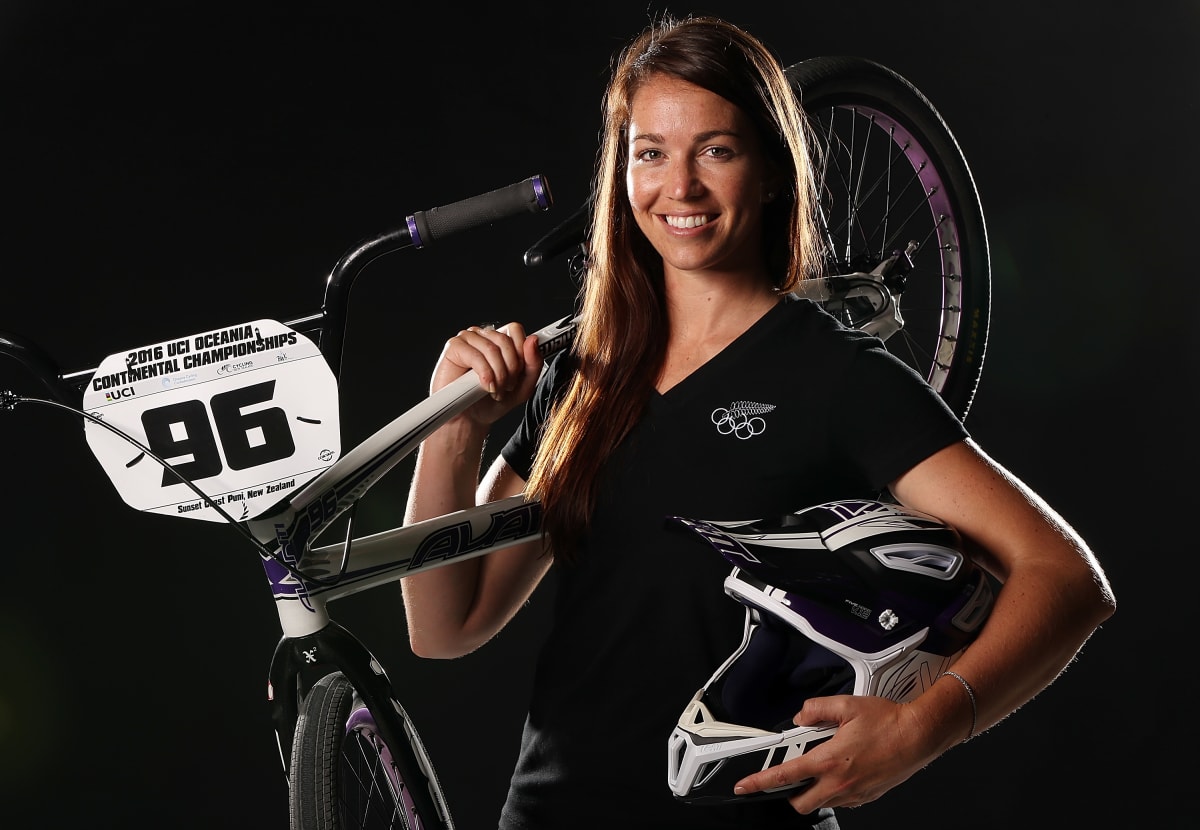
Expecting her first baby, BMX legend Sarah Walker wants to share her IVF story so other female athletes can be aware of the choices they have to start a family, before it's too late.
Sarah Walker knows she’s one of the fortunate ones.
At 33, the Olympic BMX silver medallist is pregnant with her first child. But she’s aware it could have been very different.
Walker and her husband, Vin Elliott, made a decision last year to harvest her eggs, have some of them fertilised and frozen. A back-up, in case - when they were ready to try - they struggled to conceive a child.
Through collecting her eggs, fertility specialists also discovered scar tissue throughout Walker’s uterus.
“If I hadn’t gone through that process, I probably would not have got pregnant because of the scarring,” the three-time world champion says. “I could have tried for two years after I retired from BMX and not got pregnant because of this undetected issue.”
As it was, Walker became pregnant without needing to use the frozen embryos - soon after she missed out on selection for the Tokyo Olympics.
She and Elliott learned the unexpected, but exhilarating news the day she ended a fortnight in MIQ, after she’d been presenting medals at the Tokyo Games as a member of the International Olympic Committee.

Walker wants to share the story of her pregnancy journey, because she wishes she’d been given information about the choices she could have been making earlier in her professional career.
Choices around when a female athlete should start thinking about having children, and start planning for a family.
“I wish I’d had an awareness of what was happening with my fertility, rather than at 28, discovering there’s a simple blood test that could give me a year or two to think about what to do next,” she says.
It’s a conversation she wants all sports to have with their elite female athletes, as their careers grow longer, while their chances of having children diminish with age.
“No one has ever talked to me about it,” says Walker, who’s been riding internationally since 2003, when she was 15. “Once it was ‘you’re a female athlete thinking about having a baby, so your career’s done’. But globally we’re seeing female athletes becoming mums and returning to their sport.
“The stereotype is shifting, but there’s still a real lack of information out there for women.”
***
Walker and Elliott have just arrived home for Christmas in Cambridge, having spent a week in the Southern Alps. Walker, who’s now six months pregnant, calls it their babymoon.
“It’s something I haven’t been able to do for a lot of my career. Taking a week off training to go for long walks in the Alps doesn’t exactly marry up nicely with BMX sprint training,” she laughs. She married Elliott on New Year’s Day, 2019.
Back in 2016, when she missed out on qualifying for the Rio Olympics after breaking her arm, Walker began contemplating starting a family.
“I was thinking, I’ll be 32 in Tokyo in 2020 - is that getting too old in terms of my biological clock?” she says.
Through her own research, Walker came across the Anti-Müllerian Hormone test, better known as AMH, which can predict how many eggs a woman has in reserve.
“I’d never heard of the test, and I wish that I’d heard of it much earlier,” Walker says. “It was $80 for a blood test to find out how many eggs you have in relation to your age.
“When you’re making a commitment to a four-year Olympic cycle, that’s really important information. Especially when you’re having the athlete versus family situation, having that information is so powerful.” (The cost of an AMH test today is around $100.)
Walker discovered she was in the ‘orange zone’ - the 25th centile – which meant she was likely to have a reduced ovarian reserve.
“I talked to a fertility doctor and their first reaction was ‘You need to start trying for babies now’. And I was like ‘No no, I want to go to Tokyo’,” she says.
“I just wanted to know how long I could put it off for. It was such an unusual conversation because I guess most people who go to an IVF clinic do it as a last resort - they’ve been trying and haven’t been able to conceive.
“But it was really empowering for me. On one hand, I had the information that there’s not a lot of eggs left, but at the same time I could ask ‘What are our options? What are the risks of waiting? At 32, does it mean it’s off the table or it just makes it harder?’”
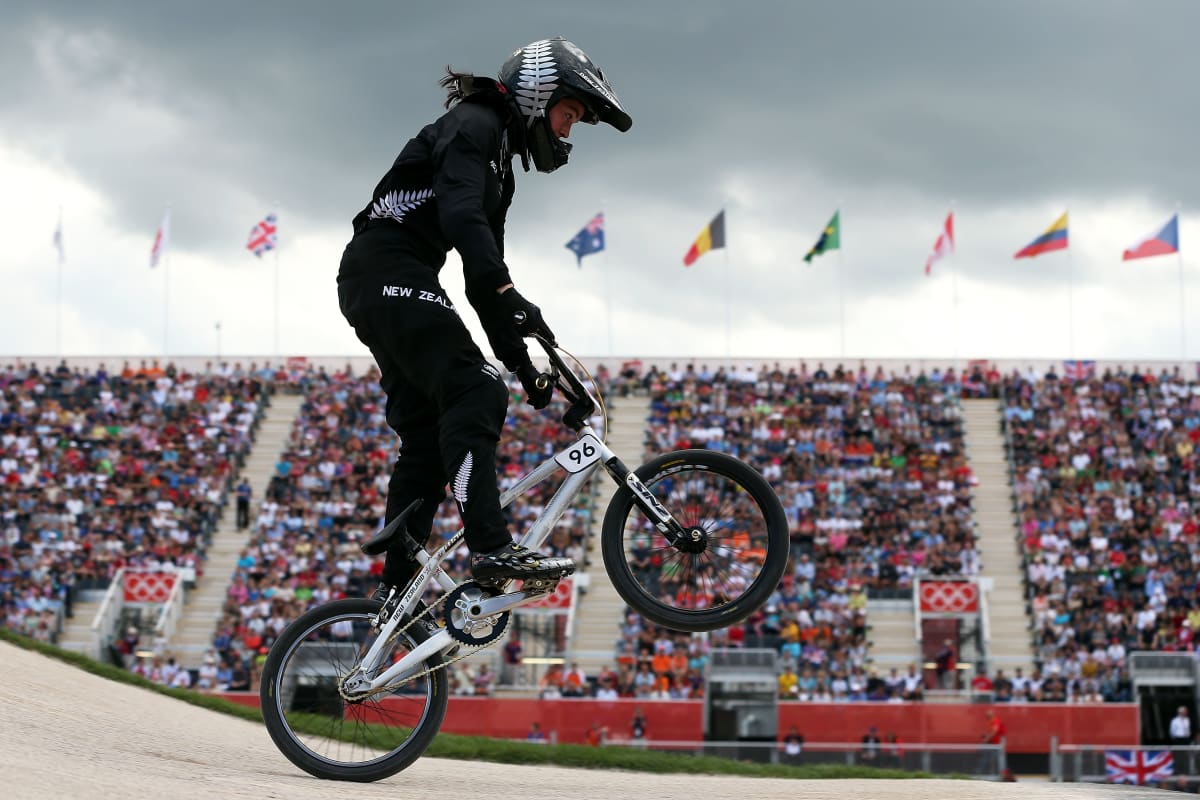
It would form part of her decision to commit to a fourth Olympic campaign.
“We took a risk – but hey, I take risks on my BMX bike every day,” Walker laughs. “I committed to Tokyo – because while the numbers said it would be harder to have a baby afterwards, it wasn’t impossible.
“I decided then I would rather have a family than win a gold medal at Tokyo. If I won a gold medal and couldn’t have a family, that would suck. I didn’t want that to be an option.”
***
It’s a phenomenon blooming around the globe – elite female athletes freezing their eggs to preserve their fertility and start their families later.
In 2019, WNBA champion and five-time Olympic gold medallist, Sue Bird, froze 10 eggs looking towards starting a family in the future (she’s engaged to US football star Megan Rapinoe). She pushed for the egg harvesting procedure to be included in the WNBA’s collective bargaining agreement.
English netballer Geva Mentor froze her eggs while she was playing in Australia, looking ahead to her life after netball.
American boxer Christina Cruz froze her eggs because she didn’t want to give up her dream of fighting at an Olympics, or give up on her dream of becoming a mother.
In New Zealand, netball, rugby and cricket are leading the way with maternity policies for their elite players. The agreements ensure paid maternity leave and support for athletes through their pregnancy, and help to return to the sport after the baby is born.
Walker is concerned other sports aren’t so proactive in informing their female athletes about fertility and menstrual health, and then supporting them if they choose to have a child.
“Having a family was important to me, so I went and found that information myself. It wasn’t something I was guided to do by High Performance Sport NZ or Cycling NZ,” she says.
“To help female athletes to have those discussions early in their careers, so they’re able to understand what their body’s doing and what their options are, empowers an athlete to make informed decisions. Rather than having a really long career and finding they can’t have children and going through that heartbreak.
“But right now, we aren’t exposed to that information unless we go searching.”
When Covid forced the year-long postponement of the Tokyo Games, Walker heard her biological clock ticking louder.
“I was like, ‘Shit, that’s another year and I’ll be 33’. After you turn 30, your egg reserves decline quite a lot each year. This was more risk than I was originally willing to take,” she says.
Walker had to find out whether going through an IVF cycle to harvest her eggs would work in with her training for Tokyo, and whether the medications used to mimic the body’s reproductive system would be on the World Anti-Doping Agency’s banned substances list.
“I didn’t think I’d have a break to do an IVF cycle. But when Covid hit, I was like ‘Let’s do this’,” she says.
Two medications used in IVF treatment, clomiphene and letrozole, are prohibited in sport, but athletes who want to go through the IVF process while they’re still competing at national or international level can apply for a Therapeutic Use Exemption (TUE).
Walker’s body responded well to the treatment, and she produced enough eggs to give the couple peace of mind.
“I learned I probably could have done it earlier, in the years between 2016 and 2020. It’s workable with your training, and it was relatively painless,” she says.
“I was transparent with my gym coach because I needed to have a light week in the harvest week. I had a day off training afterwards.”
Going through the IVF process, the specialists found the lining of Walker’s uterus was “unusually thin”, she says, and further investigation revealed a lot of scar tissue. She’s still unsure why she had scarring, but if she hadn’t had it removed, it’s unlikely she would be able to get pregnant. “Getting the IVF treatment was so worthwhile,” she says.
Walker was then able to “go all-in” with her training, trying to win the one Olympic BMX spot New Zealand had secured before Covid hit.
With travel restrictions and health risks, she decided not to head overseas to compete in the remaining Olympic qualification events – and was narrowly pipped for the ticket to Tokyo by her training partner and national champion, Rebecca Petch.
Nevertheless, Walker still went to Tokyo with her IOC role: “Handing out the medals turned out to be an incredible silver lining.” The highlights - awarding the BMX medals to friends and rivals, then presenting Kiwi paddling legend Lisa Carrington with two of her three gold medals, and trampolinist Dylan Schmidt’s surprise bronze.

There were often 14-hour days, and back in MIQ in New Zealand, Walker felt like she was going through the “post-Games slump”. As it turned out, she was suffering from morning sickness.
“It was super surprising,” she laughs, when the pregnancy test they bought at a pharmacy on the way home from MIQ was positive.
***
Since she was shoulder-tapped by IOC president Thomas Bach in 2016, Walker has been a member of the IOC’s Athlete’s Commission, where she can ensure the voices of New Zealand athletes are being heard.
As an athlete advocate, she’s determined to speak up for female athletes being encouraged to think about families early in their careers.
“Thinking about a family doesn’t mean you’re not committed to your sport. It proves you are, because you’re willing to decide how that impacts the rest of your life,” Walker says.
“We’re seeing more women coming into sports leadership roles, which I think will have a positive impact on allowing those discussions to happen.”
She believes each sporting code should advise and support their female athletes.
“There’s no maternity policy within cycling. As an individual athlete, if you get pregnant, you’re off to the side until you can prove you’re going to be good enough to come back - with little support in the meantime. Or one athlete has support, and another hasn’t,” she says.
“And I think the AMH test should be funded by HPSNZ, so every female high performance athlete can have that test if they want to.”
Although she’s about to become a mother in March, Walker has no intentions of announcing her retirement from international competition.
“I’m an older athlete and the assumptions are that I will retire now. Those questions started after I didn’t make the Games team,” she says. “But I was like ‘Let me process this first’.”
Walker admits she reinforced her love for BMX after she missed out on Tokyo, going down to the local track and riding her bike for enjoyment.
She hasn’t been able to continue to ride – she had bleeding at week 15 of her pregnancy when her placenta was in the wrong spot – but she knows she still loves the sport. And she’s in no rush to make a decision on her future.
“Post-Olympics, you see pressure on athletes to commit to the next cycle, or stop altogether. You’re either all in or all out,” Walker says.
“Why can’t they have a season off or have more time to decide? For me, the focus isn’t on the financial support I may or may not get, it’s about my passion for the sport and whether I want to commit to training through to Paris or not. Maybe I will, maybe I won’t.”
Maybe a baby will help her decide.