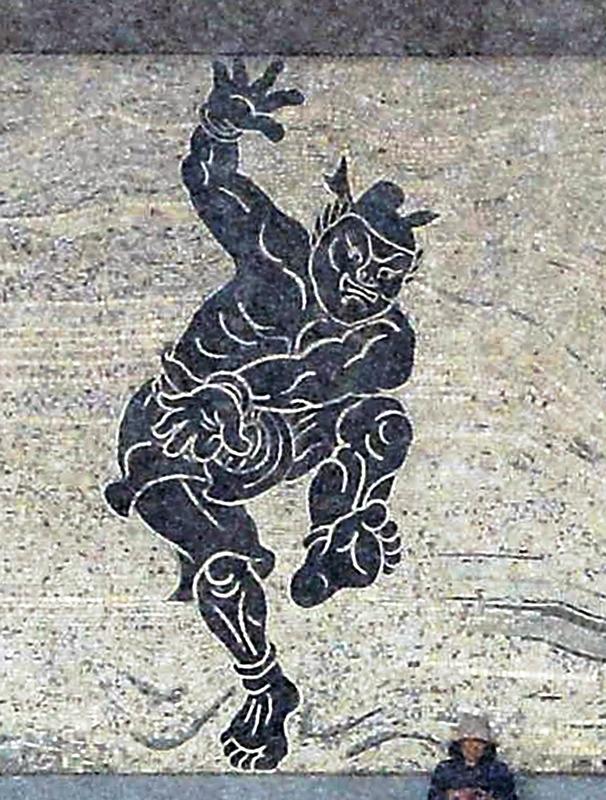
What is the origin of sumo, which is said to have a history of 1,400 years? There is a myth referred to in "Chronicles of Japan," a history book compiled during the Nara period (8th century).
At around the time when Emperor Suinin ruled, believed to be sometime in the first half of the fourth century, there was a man called Taima-no-Kehaya, who boasted about his strength, living at a place then called Taima in Yamato-no-kuni (Yamato Province), present-day Taima, Katsuragi, Nara Prefecture. Kehaya used to always boast, "I want to fight someone strong even at the risk of my life."
Emperor Suinin, who happened to hear his words, ordered his subordinates to search for possible contenders and found that there was a powerful man whose name was Nomi-no-Sukune who lived in Izumo-no-kuni (Izumo Province), which is present-day Izumo, Shimane Prefecture. Emperor Suinin immediately sent for Sukune and had the two great men fight on July 7 in the seventh year of his reign.
The showdown between the two developed into a mortal struggle, including an exchange of kicks, and Sukune kicked and fatally broke Kehaya's hip bones and ribs, thus winning the long fight. As the winner, Sukune was given Kehaya's domain and from then on served under Emperor Suinin. This bout is said to be the origin of sumo, and Sukune has been worshipped as the founder and god of the sport ever since.
In Kamezawa, Sumida Ward, Tokyo, the Nomi-no-Sukune Shrine is dedicated to him. Before each Tokyo Grand Sumo Tournament is held -- three times a year -- senior officials from the Japan Sumo Association and others hold a ritual at the shrine. It has become customary for new yokozuna in succession to perform the dohyo-iri ring-entering ritual on the grounds of the Nomi-no-Sukune Shrine.
Thus, the face-off between Sukune and Kehaya remains deeply etched in the traditional origins of sumo. And because it was held on the 7th day of the 7th month of the lunar calendar, "sumo" is also used as a reference to autumn in haiku.
When it comes to historical fact, rather than myth, there is likewise a description about sumo in "Chronicles of Japan" from the 7th century. It said that in order to entertain the envoys dispatched by Paekche, an ancient kingdom of Korea, Empress Kogyoku, who reigned from 642 to 645, had summoned sumo wrestlers to hold bouts on July 22 in the first year of her reign. This episode is introduced as the "first sumo-related news article based on historical fact," which the association officially acknowledges at the beginning of the chronological table of an abridged history of grand sumo.
-- Miki is a sumo expert.
Read more from The Japan News at https://japannews.yomiuri.co.jp/