Back in the Nara period (710-784) to the Heian period (794 to the late 12th century), sumo wrestlers wearing mawashi belts were obliged, when stepping in front of the emperor, to decorate their heads with flowered hair accessories. Big, powerful guys wearing flowered hair accessories might have looked imbalanced, but I believe they must have had a tremendous effect of creating a gracious and elegant atmosphere.
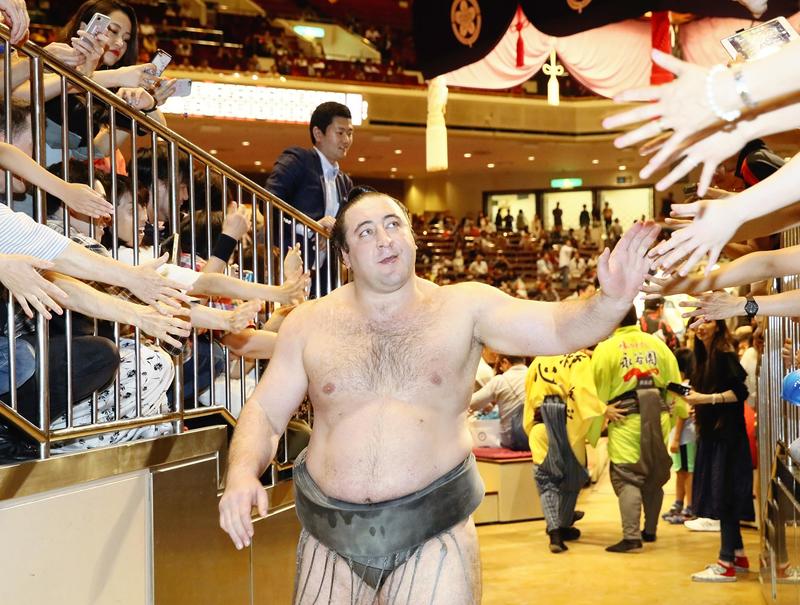
In grand sumo, there is a section of the stage called the hanamichi (literally "flower path"), which is a walkway that connects the shitakubeya dressing room for wrestlers and the dohyo ring. Why is the path called this? Tracing the history led me to the hair accessories worn by sumo wrestlers in those days. While it is said that there are no historical sources that provide clear explanations, it is not hard to imagine.
In those days, sumo was a kind of ceremony an emperor watched while holding a banquet at the Imperial court. Calling powerful men from across the nation to the capital under an Imperial order meant that respective regions obeyed the court, while at the same time, it was an agricultural ritual to pray for a good harvest. An annual event held at the Imperial court in July every year called "Sumainosechi" is believed to have existed until around the 12th century, when samurai warriors began gaining power.
The Sakon (left) and Ukon (right) divisions of the Konoefu, or the headquarters of the inner palace guards, took charge of guarding the Imperial court. Sumo wrestlers belonged to either division. Wrestlers belonging to the Sakon division decorated their heads with hollyhock flowers, while those belonging to the Ukon division decorated their heads with moonflowers. These flowers were artificial, and the flowers worn by a winner were taken over by the next wrestler, while the loser's side wore new flowers on the head. This practice is similar to today's chikara-mizu (literally "power water") practice, in which only wrestlers who win a bout can hand water to a wrestler who will fight in the next bout. Such a superstitious practice might have come from the practice of taking over those flowers.
In those days, sumo wrestlers spoke to each other and grasped each other while raising their arms like in judo. Since dohyo rings were not yet in use, a bout lasted until a wrestler's hand or knee touched the ground, or until one decidedly defeated the other. Once the bout was decided, the winner let out a cry while a court dance and music were performed. It was a ceremony that was worthy to be called a banquet at the Imperial court.
-- Miki is a sumo expert.
Read more from The Japan News at https://japannews.yomiuri.co.jp/