When Spain or Argentina lift the FIFA World Cup trophy after Sunday's 2026 final, they will be holding one of the most recognisable prizes in global sport.
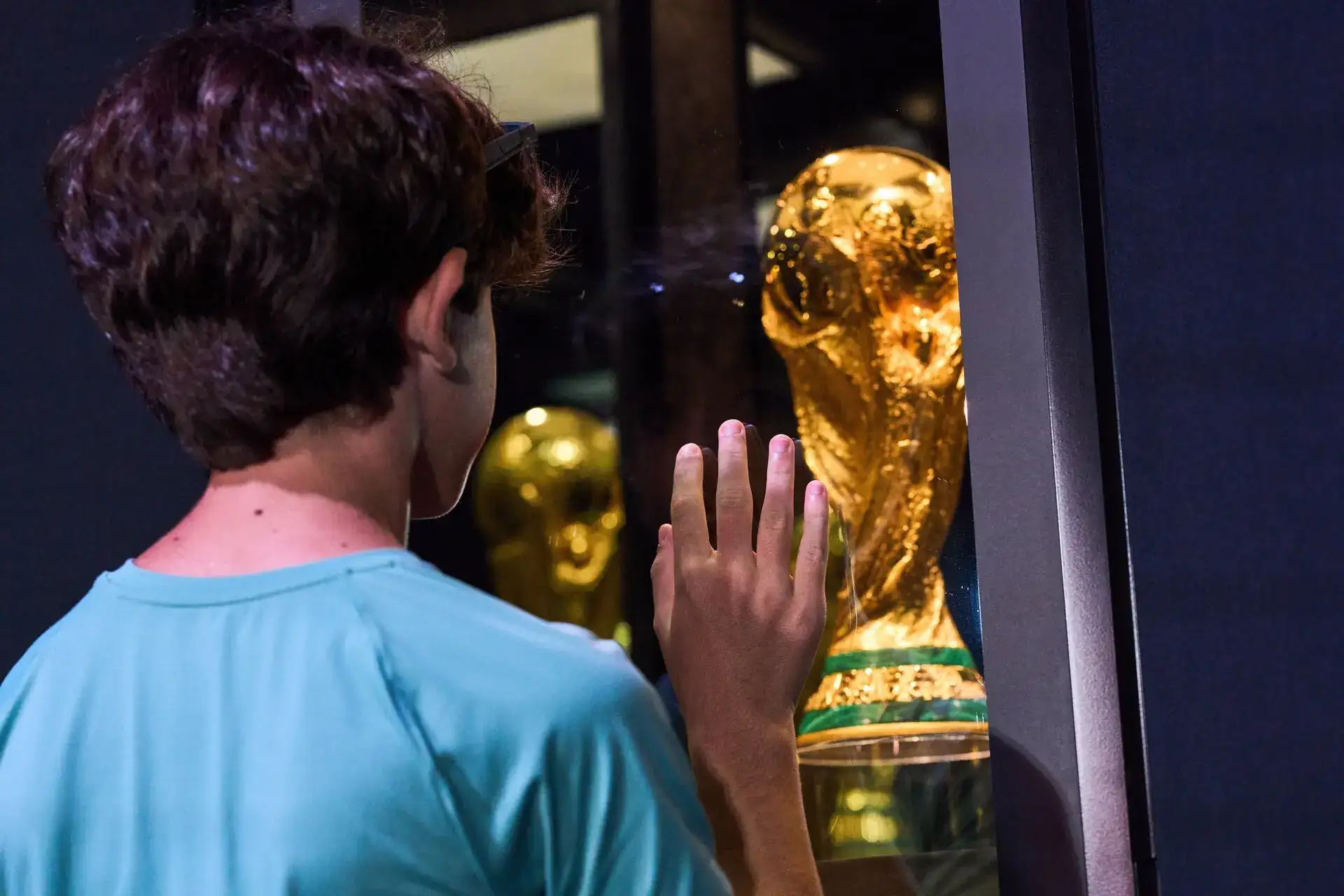
Designed by Italian sculptor Silvio Gazzaniga, the trophy was created to capture three defining emotions of football in a single spiralling form — the athlete's struggle, the fan's jubilation and the moment of victory.
Designed in Milan after Brazil kept the original trophy
The current FIFA World Cup trophy was designed in Milan's Brera district after FIFA launched an open competition for a new design. The governing body needed a replacement after Brazil won its third World Cup in 1970 and earned permanent possession of the original Jules Rimet Trophy.
Gazzaniga's design, now recognised around the world, features two human figures rising toward a globe representing the Earth.
“When he started to design the cup, he was sketching a huge number of drawings and finally started to develop the idea to have the world and this symbol that it is like a two DNA spirals, that are moving up,” said Giorgio Gazzaniga, the designer's son, who was a teenager at the time.
Silvio Gazzaniga, who died in 2016, worked for G.D.E. Bertoni Srl and designed several prestigious trophies, including the UEFA Cup and the UEFA Super Cup.
The original World Cup trophy was stolen twice
The first World Cup trophy, introduced for the inaugural tournament in 1930, depicted the Greek goddess Nike and later became known as the Jules Rimet Trophy after FIFA's founding president.
The trophy was stolen twice. It was first taken while on public display in England ahead of the 1966 World Cup before being famously recovered by a dog named Pickles beneath a hedge in south London. It disappeared again in 1983 after being stolen from the Brazilian Football Confederation headquarters. It has never been recovered and is widely believed to have been melted down.
A design that represents the struggle for victory
More than 50 entries were submitted in FIFA's design competition, but according to Giorgio Gazzaniga, only his father presented a complete model that allowed judges to fully appreciate both the sculpture and its symbolism.
The Gazzaniga family has preserved the sculptor's office on the outskirts of Milan, where his original sketches, the prototype submitted to FIFA and a wax cast of the trophy remain on display.
Winners don't keep the original trophy
The official FIFA World Cup trophy stands 36 centimetres (14 inches) tall and is made of 18-carat gold. It sits on a base featuring two rings of green malachite, symbolising the football pitch.
While the winning captain lifts the original trophy after the final, it is later returned to FIFA, which keeps it at its headquarters in Switzerland. The champions receive a gold-plated replica instead.
Unlike the previous Jules Rimet Trophy, FIFA no longer allows any nation to keep the original permanently, regardless of how many titles it wins.
An enduring sporting icon
The 2026 World Cup marks the 14th tournament to feature Gazzaniga's design, which FIFA plans to continue using through at least the 2038 edition.
Giorgio Gazzaniga still remembers watching the 1974 World Cup final, when West Germany defeated the Netherlands and became the first team to lift his father's trophy.