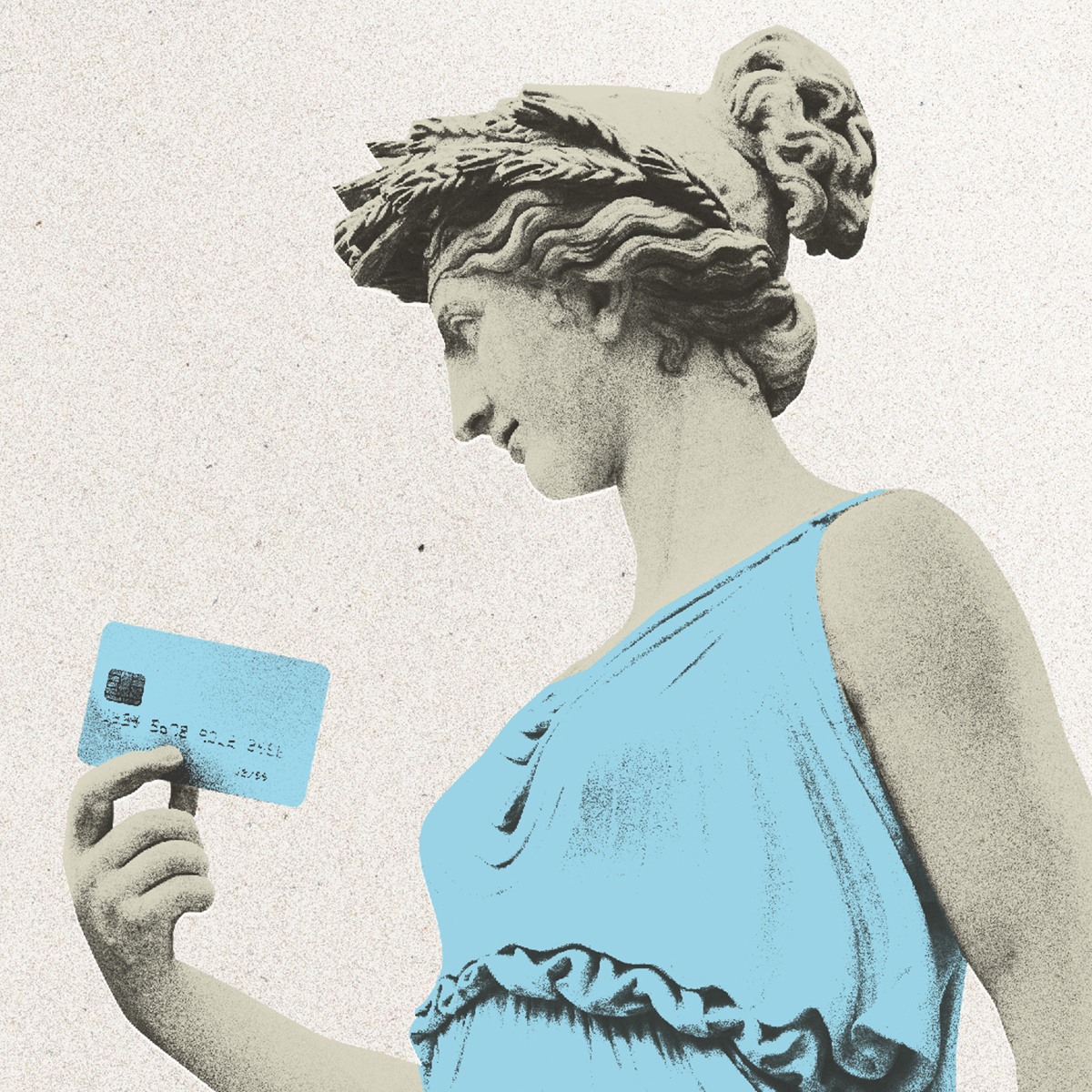
For fun, here are some people who are rich: Cardi B. Latto. Alex Cooper. Greta Gerwig. Selena Gomez. Rihanna. Beyoncé. Jessica Alba. Britney Spears. Shay Williams. Alix Earle. America Ferrera. The Williams’s, Serena and Venus. Those are the notables, but there are plenty of others: The women running multi-million companies, successful fashion brands, and buzzy tech startups.
You could call them the faces of “new” money. A group of women and people of color who didn’t come from generational wealth, but still made it big—and in some ways, are being challenged for it.
One would think that wealth equals wealth, but systems designed to gatekeep continue to perpetuate a stigma around new money; namely that it’s somehow lesser. You can’t say that. You can’t act like that. One doesn’t wear that. People who come from money (you know who we’re talking about) are largely interested in keeping the rules the same. A shift in the status quo is a challenge to their power and affluence.
It’s why there continues to be wealth gaps. They perpetuate race and gender-driven inequalities that prevent people from striking it rich in the first place: Women still earn only 82 cents on a man’s dollar (for Black and Brown women, that number is even less). According to the Federal Reserve’s latest Survey on Consumer Finances, Black and Hispanic Americans have accumulated more wealth in recent years, but their median net worth still lags far behind that of white Americans. In 2022, the Federal Reserve Bank of St. Louis reported that Black families have just 25 cents for every one dollar of wealth held by a white family.
Look at legacy college admissions. According to the New York Times, children from families in the top one percent were 34 percent more likely to be admitted than the average applicant, while newer monied celebrities risked jail time by offering bribes to get their children into elite schools through crooked sports recruitment.
Outside of societal feelings around new money, there are personal ones, too. In the immortal words of The Notorious B.I.G., those with more money can suddenly find themselves with more problems.
People with old money are practically bred to navigate wealth culture. Brad Klontz, PsyD, an expert in financial psychology, likens old money to a “tribe” and to be raised with it brings an innate understanding of how that tribe operates, like how they gather resources and keep resources. “If you're growing up in a different ‘tribe,’ you're not aware of any of those tools and you have to learn them on your own,” he says. And that can be complicated. An abundance of cash can bring a shifting array of pressures, stigmas, and challenges around maintaining psychological equilibrium—especially with those around you.
“We desperately want to belong—that is a fundamental human need,” says Klontz. “If you suddenly have a lot of money, you are very quickly going to start to feel like you don't belong because your family and friends are going to start looking at you differently. You can lean on your history to a certain degree and it's nice to be around people who knew you when, but if you're not sharing a lived experience it's difficult to relate. All of a sudden, you have 100 times the money that your friend has. Are you going to pay for lunch? How is that going to feel for you? How is it going to feel for your friend? Let's say that you have some stress in your life because you have a huge tax bill. Are you going to share that with your friend, when your tax bill is more than they made last year? There's all of a sudden this stuff you can't talk about.”
To avoid drifting apart from friends and family, some might even subconsciously squander their money to “get back to belonging” with the people they connect to the most.
It’s not all bad, though. Psychologically, being self-made carries some important benefits. Those who manage to achieve financial success often have higher self-esteem and a stronger sense of hustle and motivation than people who come from old money. Says Klontz: “Being underestimated hurts and stings but not having a safety net makes you work that much harder.”
Fortunately, what we think of old money and new money—and who gets to have each—is rapidly changing. “There’s been a shift in the way people think about these groups because of the negative portrayals of old money and the glorification of the portrayals of new money,” says Nicole Lapin, host of the Money Rehab podcast and author of Miss Independent: A Simple 12-Step Plan to Start Investing and Grow Your Own Wealth. “The rise of the term ‘nepo baby’ is this rejection of old money and culture and systems.”
Consider how Representative Alexandria Ocasio-Cortez wore a gown plastered with “Eat the Rich” to The Met Ball—an event that used to cater to old money but now opens its arms to new monied celebs, like the Kardashians and Cardi B. New money, new rules.
Clayman says the meaning of old money is now in dynamic tension with how much we want and how much mobility we want in society, and this is reflected in what we read, what we watch, and what we listen to. “Culture gives us a way to understand our place in the world, and money is such a significant part of culture,” says Clayman. “The different attachments that we make to that prescribe the way that we identify what our available paths are, the kind of people that we can be, and the kind of relationships that we can have with each other.”
It just goes to show, as Lapin says, money is “a mind fuck,” and both new and old money come with their share of internalized stigma that can affect how you feel about it and what you do with it. “Any kind of money is good,” she says. “You can be generous with people and causes that you care about. You can cut relationships off that don't serve you. That's the benefit of this idea of aspirational new money, that you can leave a toxic situation because you have your own money.” Let’s not forget—a dollar is a dollar.