
Valve has officially learned to count to three (or four, whatever) and is releasing a trio of new devices, one of which is the reincarnation of the Steam Machine. This pre-built SteamOS-running PC is a form factor option for plug-and-play gaming, and could very well be the best thing to happen to PCs in a long time.
What sets PC apart from consoles is, of course, versatility. Consoles are built for purpose—they are gaming machines meant for doing little more than running video games and providing a more laidback, casual, couch experience. PCs are basically everything else. Every modern technology of our time was probably designed on a PC. It's a fundamental tool, one that can adapt to any scenario, circumstance, or use case you could think of.
And versatility breeds variance. No two PCs are alike, not even two containing the exact same component models. Silicon lotteries determine if our PC is a bit better or worse than another of the same make-up, and no two people are going to have the exact same experience using their PCs.
Though that may be actually quite an excellent thing, it's a fundamental barrier for many game developers today, especially those who are creating games under tight deadlines, using the most advanced, demanding solutions in existence.
The sheer vastness of the PC sphere creates difficulties for studios when it comes to optimization, as there is never a baseline that they are supposed to optimize for. Optimizing for one set of components does not mean the game will work, function, or perform the same on others. Having to pick and choose numerous combinations to orient around leads to developers overworking, overthinking, and ultimately failing to optimize their games, especially if they want all the bells and whistles enabled.
Consoles are set in place - developers know at all times what they can and cannot do with them. The fixed configurations provide an environment in which any given game is supposed to exist, and it's easy to orient around them. But there is no such thing in PCs - the platform heralded as the stronger, more capable, and always more performative.
And that's where the Steam Machine comes into play.
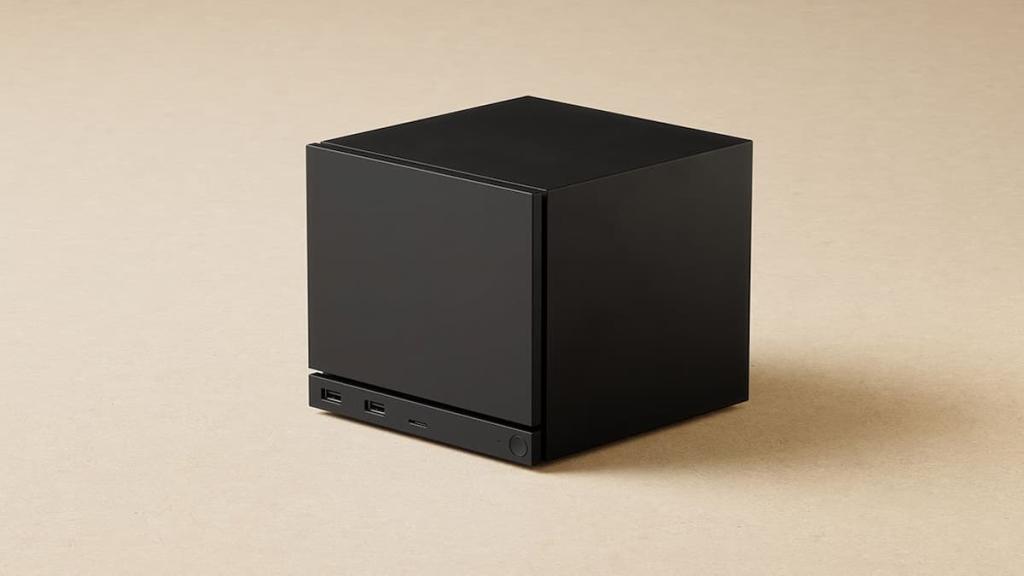
This little Gabe Cube, if it were to take off properly, could become the new PC baseline. Its power is approximately the same as the base PS5, and it carries semi-custom components that are somewhat tailor-made to fit its design. It could be the new orienteer for developers that want to expand into the PC market, and a configuration they would always look to as the "average" PC.
Optimizing for this mid-range baseline would benefit the vast majority of players, who usually carry mid-range components in their rigs, somewhat as or more capable than the PS5 itself.
If it grew popular enough, the Steam Machine could dictate the new technological level of video games and be the guiding light amid a sea of varying and diverse builds, all of which are on the same or higher level as the Machine. It's a great starting point, and one that could spell the end of the unoptimized AAA game that we've become uncomfortably accustomed to.
The creation of a new ecosystem where things "just work," as the head of Bethesda would say, also carries a lot of implications. Things could be tailor-made for Steam, and they somewhat will be through the "Steam Machine Verified" label that Valve itself would check for.
The company is ensuring people who own these devices actually can play the game sold to them, which itself gives developers the extra reason to optimize their games and provide at least a "Steam Machine" graphical preset.
Developers would still need to put the effort in, though. We've seen games run poorly on the PS5 and Xbox, too. But these are rare cases, few and very far between. When devs know what to expect, understand what it is they're working with, creating a well-optimized product becomes an afterthought for them. It reduces the complexity and incessant thinking of what a growing and advancing market would need a month from now.
The Steam Machine would come, be, and remain as such for probably a good while, and shine light on the darkness of technological development that bogs the minds of developers great and small.
It's a massive opportunity for PC gaming, and I hope it turns out great.
The post The Steam Machine could be the best thing that has happened to PC gaming appeared first on Destructoid.