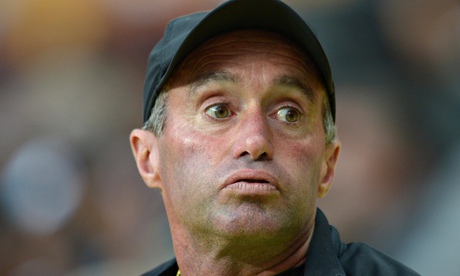
Ploughing through those 11,700 plus words in Alberto Salazar’s dense, detailed, seemingly methodical rebuttal of the doping allegations piling up at his door it’s impossible not to read it as an opening return of fire that is going to result in multiple casualties and could yet ruin reputations and empty bank accounts.
Given the extent to which the Nike Oregon Project (NOP) and Salazar are deeply intertwined, it is also impossible not to feel the hand of the American sportswear giant directing traffic behind the scenes.
And if there is one organisation with the resources to fight a messy, lengthy legal battle it is the $16bn behemoth that has found itself embroiled of late in a rolling series of controversies of various hues – Tiger Woods into Lance Armstrong into the Brazilian FA into Justin Gatlin. And on.
As Salazar released his two-part open letter on the NOP website, the sportswear brand that has bankrolled his money-no-object attempt to take on the world of endurance running put out its own co-ordinated statement.
It is three weeks since the BBC’s Panorama and the ProPublica website in the US first made their claims against Salazar and his protege Galen Rupp, the London 2012 silver medallist who is Mo Farah’s training partner.
After three weeks spent silently plotting and gathering evidence, Salazar went on the attack accusing the BBC and ProPublica of a “remarkable display of irresponsible journalism”.
With both organisations standing by their claims, underpinned by testimony from a list of witnesses now approaching 20, and the BBC in particular launching a strong defence of its journalism, it is a dispute that looks to be heading for the law courts, most probably in the US.
Almost as soon as Salazar had released his statement – complete with its defiant Taylor Swift (or Adidas) channelling “let the haters hate” coda - his accusers were already challenging it with their own new assertions and evidence.
So Salazar painted Steve Magness, one of the key whistleblowers, as an embittered ex-employee who was sacked. Magness responded with a signed document showing the contract had been terminated by mutual agreement.
The Cuba-born coach pointed to a 2011 Runners World interview in which Magness raised no objection to his methods. Magness said he was still employed by Nike at the time and afraid to speak out.
Salazar’s statement can either underpin suspicion or absolve it, depending on your starting position. Viewed cynically, it answers some charges in detail that were not made and skirts over others that were.
Some passages are supported by detailed documentary and supplementary evidence, others are not. Even its mix of corporate legalese and occasional impassioned personal invective can feel a bit too carefully crafted – as though pored over for weeks by lawyers and PR consultants.
There are unavoidable, and for Salazar unhelpful, echoes of Armstrong in the mix of aggression and frenzied detail – from Rupp’s “Shawshank Redemption” description of the method of getting legal medicine through customs hidden inside a paperback to a physician called Dr Thing – that underpins the statement.
Yet for his supporters, the lengthy rebuttal will be seen as exactly what his accusers have been asking for. If you are Mo Farah, with a world championship looming and an Olympics next summer, it is likely to more than provide the “answers” he says he has been seeking since the original broadcast plunged him into a PR nightmare. As the likes of Steve Cram have rallied around, he will also feel he has the support of his peers.
So the most likely outcome of the ongoing UK Athletics review – expected to report by August ahead of the world championships – is that it will cut its formal ties with Salazar while making no judgment as to the validity of the allegations against him, perhaps citing the unwelcome distraction that the arrangement has become as the Rio Olympics loom.
Meanwhile, if Farah retains Salazar as his coach he will do so in the knowledge that he is taking a long-term risk with his reputation and legacy if the claims are later proved.
As an aside, it was notable that Chris Froome (or his PR handlers) chose to come clean about his own missed tests – presumably so they could be disclosed on his terms rather than by the press. If one byproduct of the latest sorry saga to sully the reputation of athletics is more transparency on testing then that would at least be one small positive.
Now that the fuse has been lit by the BBC and ProPublica claims, this affair is likely to be a slow burning one that could yet result in multiple casualties. Meanwhile, confirmation that Usada - and its determined chief executive Travis Tygart - are continuing to investigate is just another sign that none of this is going away and another inevitable echo of the Armstrong affair.
As claim and counter-claim mount up over the specifics, nor should it stop broader questions being asked about the training culture within American colleges or a prevailing performance methodology that praises “marginal gains”, secrecy and the appliance of science in a game that virtually encourages the rules to be bent until they break.
As both sides dig in, exchanges of fire are likely to continue. In the meantime, Farah faces perhaps the biggest call of his career - stick or twist.
The Oregon Project webstore features Farah and Rupp staring defiantly at the lens, clad in the team’s regulation all black regalia. If they stick with Salazar, as they appear increasingly likely to do, they will have to stare down plenty more besides over the coming months and years.