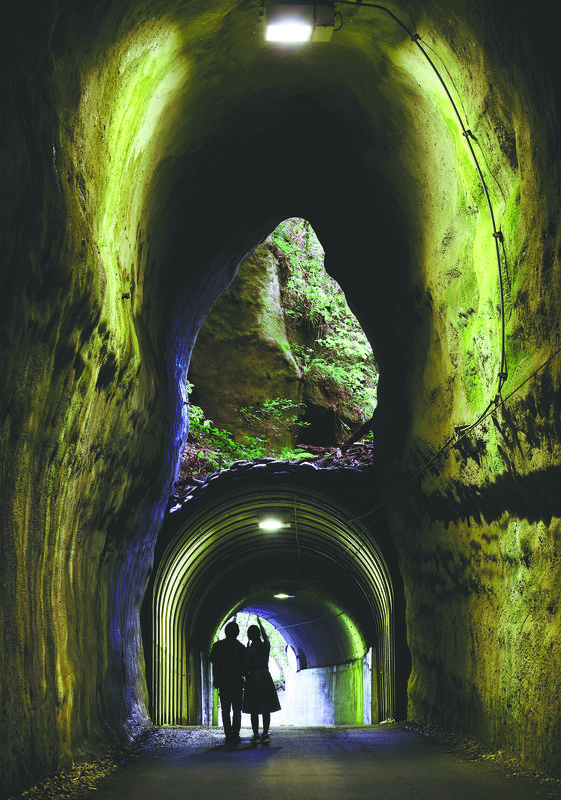
OTAKI, Chiba Pref. -- There are places that could be characterized as being both near and far. For example, when a place is right ahead in a straight line, but a mountain separates it from the rest of the world, you can make a hole in the mountain and, in essence, lessen the distance.
The Kazusa Hills in the south-central part of the Boso Peninsula in Chiba Prefecture, where the terrain is rich in ups and downs, have many characteristic tunnels. Here, some small, unearthed old tunnels remain. In recent years, the Double-Decker Tunnel in the town of Otaki has attracted a great deal of attention.
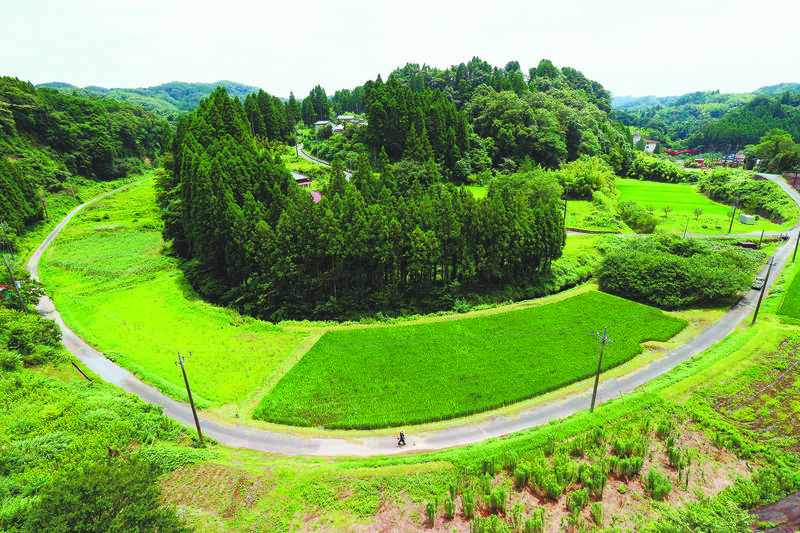
The official name of the tunnel is the Kyoei-Mukaiyama Tunnel -- which consists of two tunnels, an old one and a new one -- and it is about 110 meters long.
The tunnel, which leads from the hot spring town of Yoro Valley to a river, descends gently and has another hole at the top of the exit. The air is cool, and deep greenery sparkles at the end of the two holes.
Both tunnels are unlined, the Mukaiyama Tunnel is about 90 meters from the hot spring town side and the Kyoei Tunnel is about 20 meters from the valley side. These tunnels have been a hot topic on the internet for several years now, and are often visited by young people with their smartphones in hand.
"I think the upper tunnel was built around the time of the Sino-Japanese War [around 1940]," said Okitaro Shikura, 84, who lives nearby and has owned the land in the area for generations.
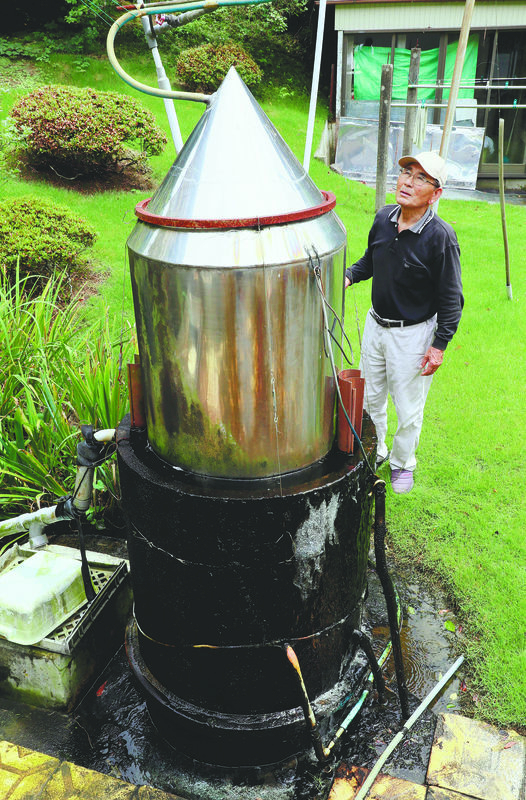
His grandfather dug for natural gas in 1912 and the hot spring town was born from the mineral spring water that was produced as a byproduct.
His memories of the tunnel are tied to the war. It was dug to connect to the village at the back, but his father was away at war and women were overwhelmed with the remaining soil. "The soil around here could be chipped away with a pickaxe," he said.
When the Pacific War broke out, air-raid shelters were dug into the interior walls. And when Shikura fled to the shelter, he saw the sky over Tokyo burning red by incendiary bombs.
The lower exit was completed in 1970, during the period of rapid economic growth. It was excavated a level deeper and connected directly to a bridge that could only be crossed by going down a slope. It is now easier to get to and from the bridge, and it is still an important route for the residents.
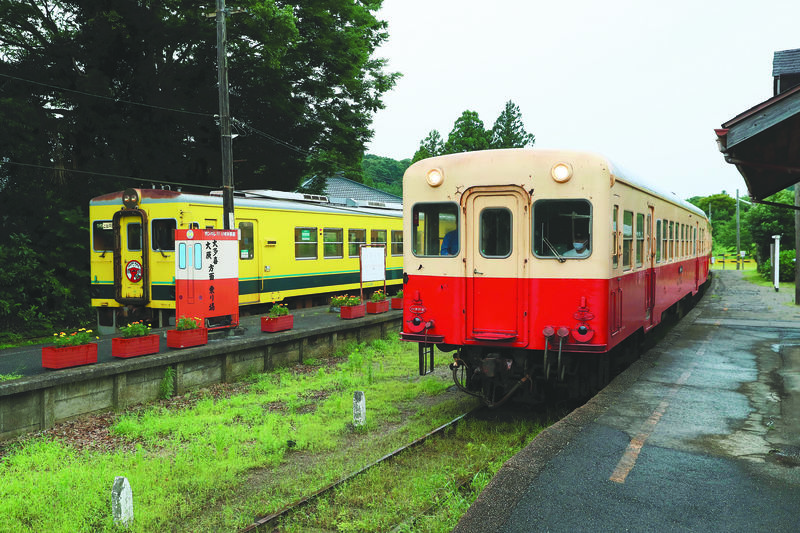
The Kominato Railway, which runs along Yoro Valley, was one of the first to use the photo of the double-decker tunnel in a poster photo. "The land of Chiba Prefecture is 'young'," said President Shinpei Ishikawa, 47, explaining why there are so many tunnels.
In the Boso Peninsula, upheaval has revealed a relatively new geological era that had been deposited in the deep sea. The strata along the Yoro River have been recognized as the reference site, and it was recently decided to call the geological period of 4.6 billion years of the earth's history, 774,000 to 129,000 years ago, Chibanian.
"That's why it's so soft and easy to dig. The climate affects people, and I think the people of Boso have flexible ideas and the ability to take action," said Ishikawa, thinking about the senior residents who have been busy mowing and cleaning up along the railroad lines on a daily basis.
The railroad was severely damaged by heavy rains last fall, including the overflow of fill dirt, but at the beginning of this year, all lines were finally reopened. The efforts of these "young" men were significant.
The earth is new and people's minds are soft and they are digging through the difficulties like a double-decker tunnel.
-- Umami of wild boar fat
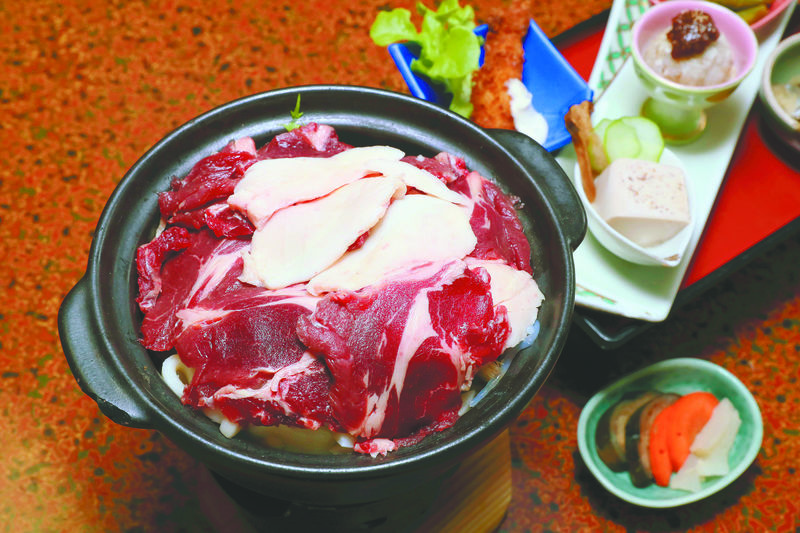
Shishinabe, wild boar hot pot, is one of the specialties in Yoro Valley, where wild vegetables and bamboo shoots are delicious. At the Sagawa Inn, you can have a Shishinabe set meal for lunch.
Ikuo Sagawa, 68, a co-owner, said, "Fat is the life of a wild boar." He freezes high-quality wild boar meat that is locally produced and serves it throughout the year. The meat of the wild boar, which is cooked in a hot pot with Chinese cabbage, enoki mushrooms, shirataki (konnyaku noodles), etc., is soft and moderately chewy, and the fat is surprisingly clear and full of umami. The meat is unexpectedly refreshing and the spiciness of gochujang (Korean chili paste) serves as a secret flavor.
Yoro Valley is famous for its black hot springs. The hot spring water is thick and moistens the skin. At Sagawa, you can enjoy a hot spring bath and a Shishinabe set meal for 1,870 yen.
Read more from The Japan News at https://japannews.yomiuri.co.jp/