In a recent blog post, David Jays says: "Silence isn't a bad way to experience theatre, dance or music." His thoughts were prompted by the experience of watching a dance show at the Roundhouse. With the customary seating usually shipped in for such events not deployed, the show had been presented more as a gig, with the crowd at liberty to take photos and film clips on their mobile phones. He goes on to note suggestions by an American blogger that people might want to use Twitter while actually watching something.
I don't entirely disagree with David's initial position, but I'm intrigued by the alternatives.
Of course, everyone who regularly goes to the theatre can reel off a list of occasions when the inconsiderate behaviour of others has come between them and the work they are trying to watch. Whatsonstage.com has an entire section of its discussion forum given over to the subject, which makes for deeply depressing reading – both the offences and the snide overreactions to them.
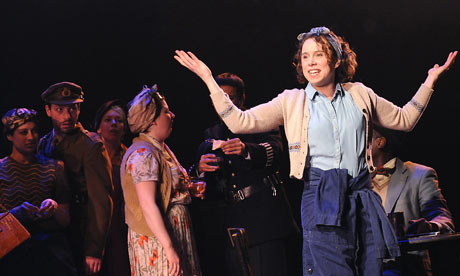
On the other hand, isn't part of the thrill of theatre precisely that negotiation with others in a space? After all, there's silence – and there's silence. I wouldn't, for instance, want to watch England People Very Nice in mute stillness. There's something hugely warming about a roomful of people all bursting into laughter at precisely the same moment – even if Howard Barker does suggest this false communalism makes useful idiots of us all. Similarly, I've sat through plenty of deeply dull plays in an enforced silence, acutely aware that everyone around me is also bored stiff.
However, I've also been in theatres where the quality of the work produces an almost urgent hush. Where you feel yourself, along with 500 perfect strangers, almost holding your breath, not wanting to make the faintest sound; where everyone is totally absorbed in what's happening on stage. In these situations, the involuntary noise – the murmur, the gasp, the sudden moan – adds to the atmosphere. If you want to see something brought to larger life by an audience, go to Rupert Goold's King Lear for the scene in which Gloucester is blinded. It's a roomful of people who know they are licensed to express their horror, and it is the audience reaction that makes the action feel all the more horrific.
At the same time, I'm fascinated by the alternatives. Growing up not in theatre but at punk gigs, the potential parallels between concert and performance have always intrigued me. It used to be a commonplace that using microphones on stage came between the performer and the theatre audience. Mercifully, this cliche is dying out, but every time it was trotted out, I couldn't help thinking "try telling that to the Clash". With the live art scene continually pushing the boundaries of audience interaction and size, it seems that we're at a point where the way we experience art is determined largely by the art itself. Yes, sometimes it forces upon us a reverential hush – and those not feeling that reverence can be an unwelcome distraction. At the other end of the spectrum, evermore complex engagements with liveness and the audience are breeding new ways of watching – and fully engaging – with performance.