The Football Association parted company with its England manager, Sam Allardyce, because it found his unmoderated Big Sam demeanour, covertly filmed for a newspaper by people posing as investors, boorish and “unbecoming”. The FA has subsequently admitted that Allardyce broke no rules; he did not, as widely misreported, advise how to break football regulations forbidding third-party ownership, and that was why the FA had to give him a £1m payoff.
The FA chairman, Greg Clarke, then hauled in front of the parliamentary committee for culture, media and sport to answer for the governing body’s approach to corruption, said the FA was vigilant, wanted to act but needed the “evidence”.
Sadly, that is not borne out by the sorry established facts in a legal action now taken successfully to the court of appeal by one doggedly determined agent, Tony McGill. For two years the FA has been sitting on evidence of wrongdoing, fully established and laid out for it in a high court judgment as a result of McGill’s efforts, which he pursued after the FA did nothing.
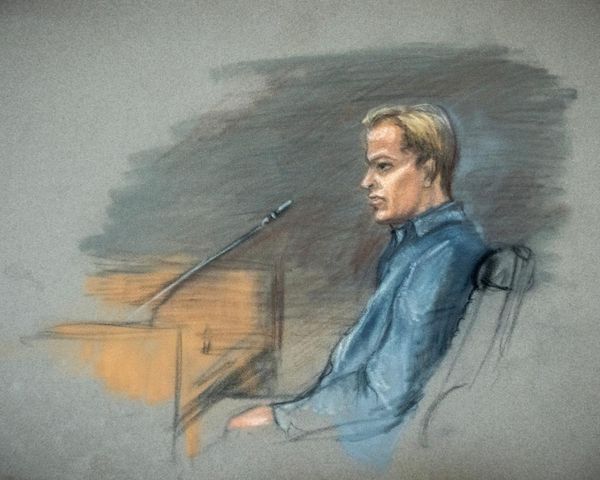
His Honour Judge Waksman QC found that in June 2007, when Bolton Wanderers, then managed by Sammy Lee, signed the midfielder Gavin McCann from Aston Villa, the agents, Jerome Anderson’s SEM, poached McCann from an oral agreement with McGill. Multiple breaches of the FA’s rules were apparently committed and several witnesses, including Lee, lied in court. Lee’s evidence, claiming that he and the Bolton general manager, Frank McParland, had met SEM to discuss McCann in a Liverpool restaurant, seeking to show that SEM had been involved longer than was truthfully the case, was dismissed as “unreliable” and “false”.
Yet when Allardyce, newly appointed as England manager, wanted Lee, his former assistant at Bolton, to join him in the FA’s employ, the FA hired Lee, despite this evidence having been concluded and set out in a published judgment in September 2014. Its findings of fact have now been upheld by the court of appeal, which has said McGill is entitled to damages.
The high court judgment set out the following apparent misconduct: the involvement in the deal of an unlicensed agent, Dave Sheron, employed by SEM; the FA rules at the time required clubs and players only to deal with licensed agents. Sheron poached McCann, for whom McGill had agreed with Bolton a deal paying the player £25,000 a week plus £3,000 every game he played. The contract between Bolton and SEM was backdated to falsely represent that SEM had been involved a week earlier than the reality, which was that they had pushed McGill out at the last minute. Bolton then paid SEM £300,000 for doing “little or nothing”, Waksman found. Bolton, he stated, did not realise the purpose of the backdating, but nevertheless the Premier League club did agree to backdate the contract, which made the document false according to the Forgery and Counterfeiting Act 1981.

Agents’ contracts had to be lodged with the FA, and Bolton sent the governing body a copy with the date, 8 June 2007, changed in handwriting to 1 June. The then Bolton chairman, who signed the contract, was the late Phil Gartside, at the time an FA board member. Gartside was not found to have known about the backdating – he signed first and the date was written in later by SEM’s agent, Jeff Weston, who was found to have done it deliberately. But in court, Gartside dissembled and “became visibly uncomfortable” under questioning, Waksman said, before finally accepting that he had signed on 8 June, only when the evidence made that admission “inevitable”.
The contract stated that SEM was acting for the club only, not the player, even though Sheron had agreed with McCann that SEM would act on his deal, a practice known as “switching”. The court heard that McCann, agreeing this £1m-plus-per-year deal for three years at the end of his career, did not like paying tax where a club had paid an agent’s fee on his behalf, so SEM was noted as acting for the club. Despite that, the Bolton secretary, Simon Marland, did class the agent’s fee, which Bolton paid, as a benefit to McCann with tax to be paid, because, he said, HMRC was closely investigating football transfers.
McGill, who had known McCann for years and worked hard to secure this move from Aston Villa to Bolton, complained to the FA as soon as Sheron poached McCann, on 8 June 2007, even before the deal was concluded. He sent further detail in October 2009, complaining about Sheron being an unlicensed agent, SEM engaging in “switching”, the backdating of the contract and other issues. The FA did interview Weston in July 2008 and McCann in 2009, but no charges were ever brought.
McGill’s solicitors gingerly asked the FA in late 2011 if the governing body had made any progress, and were told it was “confidential”. No action has ever been taken. The FA, which has declined to comment, might argue that it did not have the power, as a court does, to establish if McGill’s complaints were justified – but then, because he would not be cowed, McGill took his case to court, which presented the FA with established evidence in 2014.
Perhaps worse than the apparent breaches of regulations, certainly more depressing for lovers of our national game, were Waksman’s findings about the lying and dishonesty of these football men. Of Lee and McParland’s story about discussing McCann with SEM in a Liverpool restaurant in May 2007, Waksman summarised in his ruling on legal costs: “The events attested to by the Bolton witnesses concerning these meetings simply did not happen. True, I did not use the word ‘dishonesty’ [in his original judgment], but plainly if their evidence on the facts on this issue was false they must have known it to be so.”
Significant elements of Gartside’s evidence were described as “unsatisfactory”; the player, McCann, was “clearly untruthful” on occasion, Waksman found; Anderson was “a very unreliable witness”; Weston’s denial that Sheron was acting as an unlicensed agent was “absurd”; Sheron’s account of it was “implausible”.
Even now, after the court of appeal has upheld all these findings and ruled further in favour of McGill on the question of damages, the FA will not comment. Clarke says they need evidence, to which the obvious riposte in this case is: how much evidence do you need?
When the FA’s newly chosen England manager was filmed covertly, breaking no rules but being a bit of an embarrassment, the FA rolled over in a day. Trying to look strong, it sent Allardyce on his way with £1m, for stuff he said over drinks in a fictitious situation. Meanwhile the FA took on, pays and retains his assistant, who was found to have lied in court about a real life transfer scandal. This week Sammy Lee is working with Gareth Southgate to prepare the England team for the World Cup qualifier against Scotland, poppies proudly on sleeves in roared-on defiance of Fifa, the world governing body disdained for its record on corruption.