In another confirmation of the growing stature of the A-League, the Socceroos coach, Ange Postecoglou, has named seven locally-based players in his final squad of 23 for the Asian Cup, which begins on 9 January.
With no glaring or controversial omissions, the Socceroos supremo has rewarded Nathan Burns and Terry Antonis for their excellent starts to the season. Oli Bozanic, Nikita Rukavytsya and Aaron Mooy were perhaps the most unfortunate to miss out.
With 10 goals in 11 games, Burns has been a revelation this season, and credits his club coach, Ernie Merrick, for improving his game.
Pacey, with a poacher’s instinct and a phenomenal conversion rate of goals from shots of over 50% across the season, Burns offers a different dimension to the Socceroos attack. He’s neither the Tim Cahill-style target man, nor a Matthew Leckie-style flyer.
It’s a necessary inclusion given the damning statistic that in the Postecoglou era no player apart from Tim Cahill has scored from open play.
Whether Postecoglou will shift from his set tactical approach – a 4-3-3 with two wide forwards playing off Cahill – remains to be seen, but the inclusion of Burns gives the squad greater attacking flexibility. He could play in tandem with Cahill, or as a deeper-lying second striker.
The most important evolution of the Socceroos since the World Cup, however, has occurred in midfield, and this is reflected in the Asian Cup squad. With Tom Rogic injured and the mercurial Mark Bresciano entering his twilight, Australia have no natural No 10 who can play a full 90 minutes.
Postecoglou has therefore sacrificed this more attack-minded midfielder, moving to a system of “dual No8s”: two hard-working box-to-box players who give you industry, but not necessarily the creative attacking threat that has become familiar in the A-League with players such as Gui Finkler or Marcelo Carrusca.
This explains the inclusion of Massimo Luongo and Matt McKay ahead of Mustafa Amini or Oli Bozanic. The latter has perhaps paid the price for his Swiss side FC Luzern’s slump (they currently sit bottom of the Swiss Super League), a shame given his impressive cameos during the World Cup.
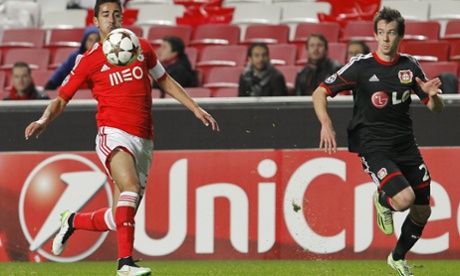
The return of Robbie Kruse, out for almost a year with a knee injury but starting to get minutes again at Bayer Leverkusen, will be crucial for the Socceroos. While Matthew Leckie and Tommy Oar have shown promise – Leckie especially impressed during the World Cup – their lack of final product has been a major problem, and if Australia are to find a goalscorer that isn’t Cahill, look for Kruse to be vital.
That the coach has opted for another target man, Tomi Juric, ahead of cover out wide in the form of Nikita Rukavytsya suggests that he holds no concerns over Kruse’s fitness.
Another key player is Chris Herd, a regular starter in the Premier League with Aston Villa a few years back. Niggling injuries have robbed the Australian public of seeing the best of Herd in the green and gold, but he has edged out Ryan McGowan in the squad and could challenge Ivan Franjic at right-back – a position where Australia noticeably struggled at the World Cup.
Defence in general remains a worry for the Socceroos. With no stand-out leaders of the Lucas Neill or Craig Moore variety, Postecoglou will need one of Matthew Spiranovic, Alex Wilkinson or Trent Sainsbury to really announce themselves to the world at this tournament.
The switch to dual No8s came perhaps partly with defensive concerns in mind. It offers the Socceroos a better defensive platform further up the pitch, allowing captain Mile Jedinak to screen the back four, and play a more strictly defensive role.
The failure of Jason Davidson – one of the discoveries of the World Cup – to cement a starting role at his club side West Bromwich Albion has opened the door for Aziz Behich. Left-back is no longer the achilles heel it was for so long after the retirement of Scott Chipperfield, but this selection dilemma represents another minor headache for Postecoglou.
All things considered, he has a marginally stronger squad than he had for the World Cup, especially with the return of Kruse and Herd.
As demonstrated over the past year, though, the hopes of the nation will once again largely ride on the performances of Cahill. If Chile and the Netherlands couldn’t stop him, one wonders whether Oman and Kuwait will have his measure, as the greatest vertical leap in world football uncoils once more.
Should Australia progress deep into the tournament – as hoped and indeed as expected – don’t be surprised if FFA commission a statue to the “Golden Forehead”.