Invest in land, goes the old saw, they're not making it any more. And, as we have reported, many rich countries and companies are doing just that in the developing world. Partly it's about making money, partly it's about securing food in a world where that commodity is looking harder to come by.
So are the deals being struck for millions of hectares, particularly in Africa, transparent and fair? A fascinating glimpse of the normally secret contracts is delivered in a report by the International Institute for Environment and Development's Lorenzo Cotula, called Land deals in Africa: What is in the contracts?
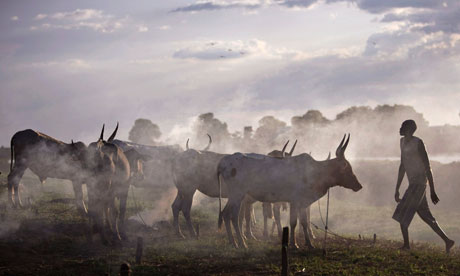
He examines 12 contracts which have become public in which large areas of land have been leased, ranging from a timber deal in Sudan to a rice and corn deal in Madagascar. These are mere snapshot of the hundreds of deals that have been struck, from the finance tycoon that reportedly concluded a deal for 400,000 hectares with a local warlord in Southern Sudan to an agribusiness with established track record in tropical agriculture that negotiated a sophisticated contract for both production and processing in Mali.
The picture from the 12 contracts is not good. The leases are long, up to 100 years, and the rents are low - a dollar per hectare per year in one case. In another contract, the land is allocated explicitly for free. In some cases investors get priority access to water, the very stuff of life.
In theory at least, such land acquisition could be beneficial to the host countries. They could bring investment and expertise, improve irrigation and other infrastructure, and increase crop yields and create jobs. But most of the contracts fail to specify these benefits clearly or enforceably. There is little on the safeguards for local food security - raising the prospect of food being trucked out of a starving nation under armed guard - or for the local environment.
But it doesn't have to be this way. A counter-example is provided in the report by Liberia, where land contracts are ratified by its parliament and available online. Liberia's political leadership allied with expert legal assistance has delivered contracts which are shorter in duration, clearer on investor committments.
Asked about the overall value of land deals, Cotula told me: "Governments hope that land deals may bring investment and jobs – but some of the contracts we analysed only contain vague and unenforceable promises, and it is far from clear that these hoped-for benefits will materialise."
What are we in the rich world to make of this? A blanket denunciation of all land deals could be patronising - those Africans aren't able to manage their affairs, would be the implication. On the other hand, raising concerns about the terms of deals - or the secrecy in which they are struck - could help deliver contracts that provide a fair balance of benefits between the investor and the host nation and its small, frequently disenfranchised, farmers.