
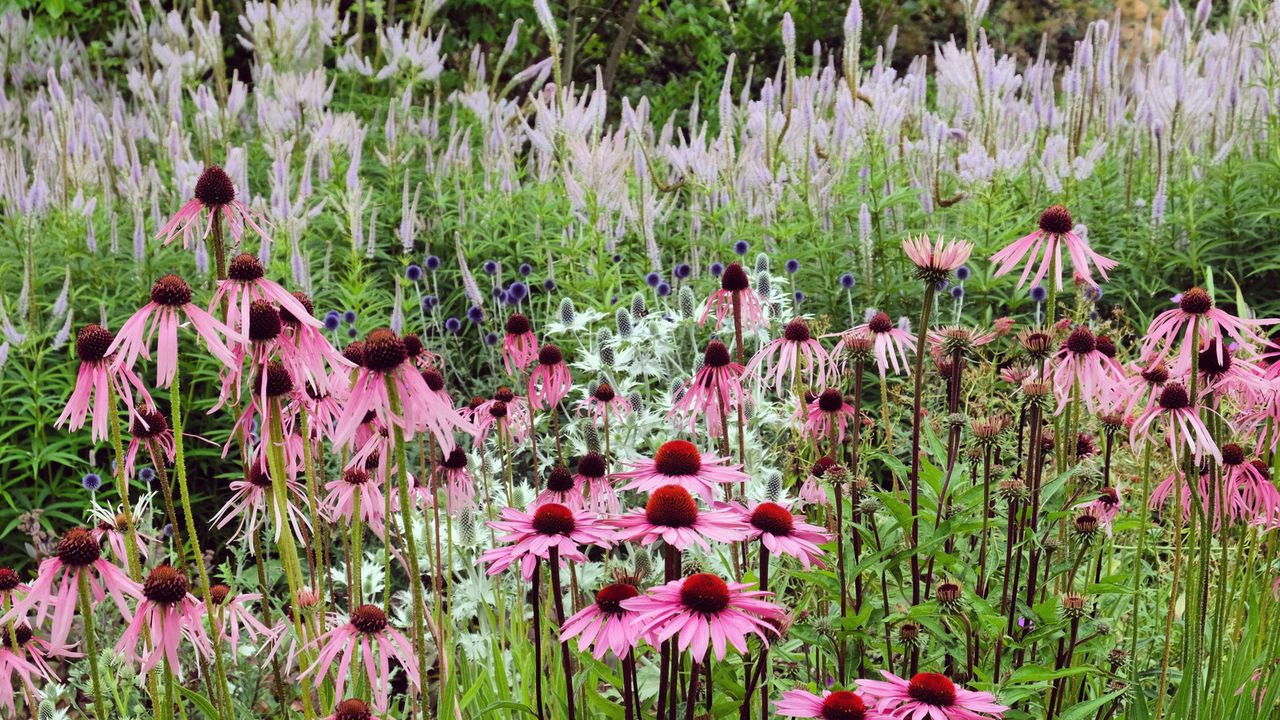
It's official; the neatly clipped lawns, rigid planting structures and formal flower beds of the past are firmly passé. For multiple reasons, gardening trends have given way to looser, wilder, less static schemes.
These types of naturalistic planting are more about working with nature, rather than fighting it. Not only do they have a more relaxed aesthetic, they're generally better for the ecology of your garden (and surrounding areas).
One of these styles is "see-through" planting, and it's a design philosophy to jump on board with, if you're looking for fresh and beautiful backyard ideas. Discover why landscape designers love this mindful, airy aesthetic and how to create it yourself.
What Is 'See-Through' Planting?
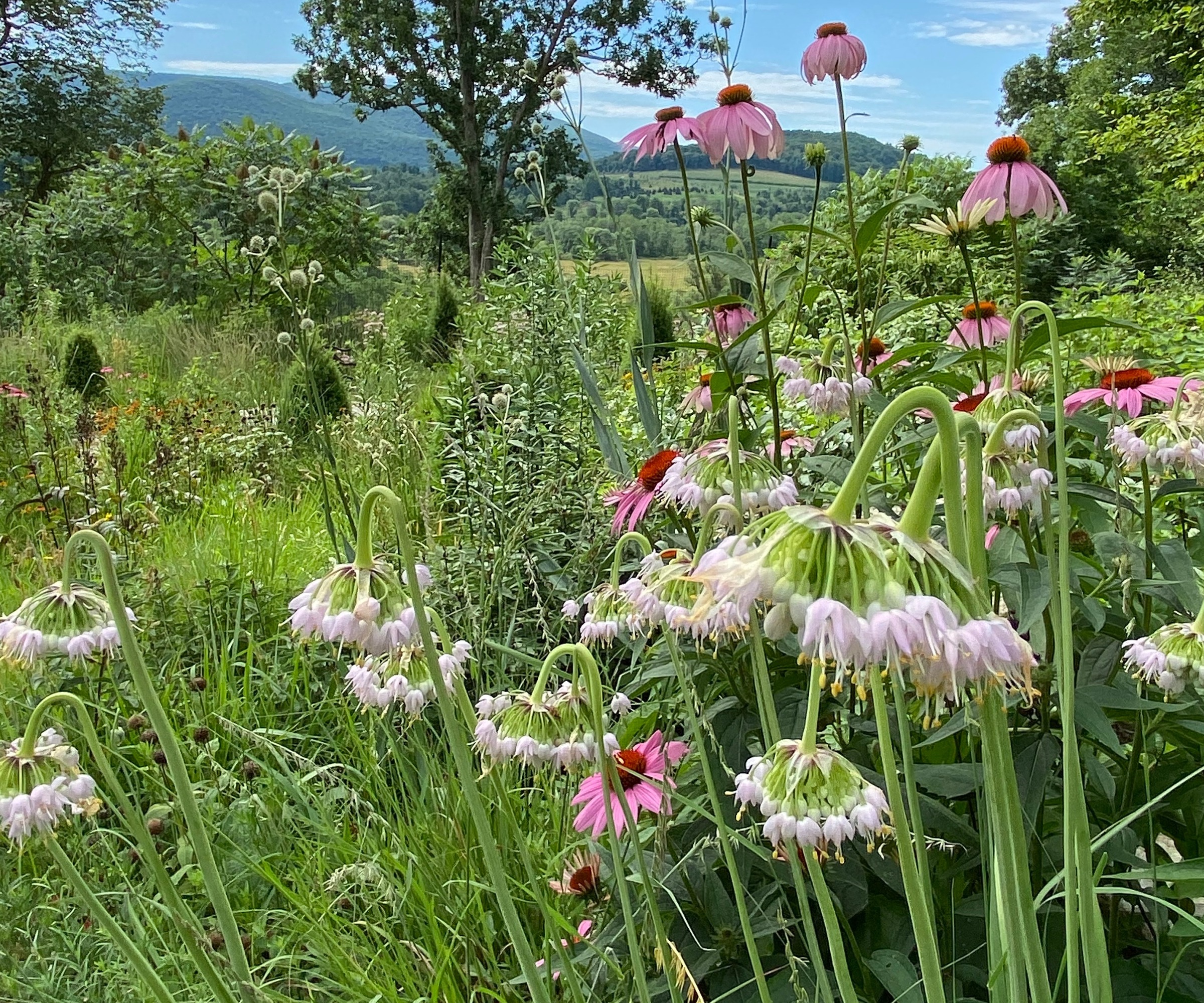
Often featuring ornamental grasses, tall leafless stems and umbellifiers, "see-through" planting has a loose, airy style that's far freer than traditional garden schemes. Award-winning, landscape gardener, Jean-Marc Flack, founder, Hortulus Animae is a strong proponent of this design philosophy and it frequently underpins his projects; he explains more.
'The rise of "see-through" or airy planting is a direct pushback against the static, heavy, "object-based" landscaping of the past," says Jean-Marc. 'For decades, traditional high-end gardens prioritized control, using dense hedges and rigid blocks of color to create impenetrable walls.
'But a mindful landscape shouldn't block your view; it should invite you to look through it. A successful "see-through" garden relies on a solid, grounded matrix at the base, which then allows for taller, expressive, "rambunctious" seasonal display layers to weave through the sightlines.'
Why Is 'See-Through' Planting On The Rise?
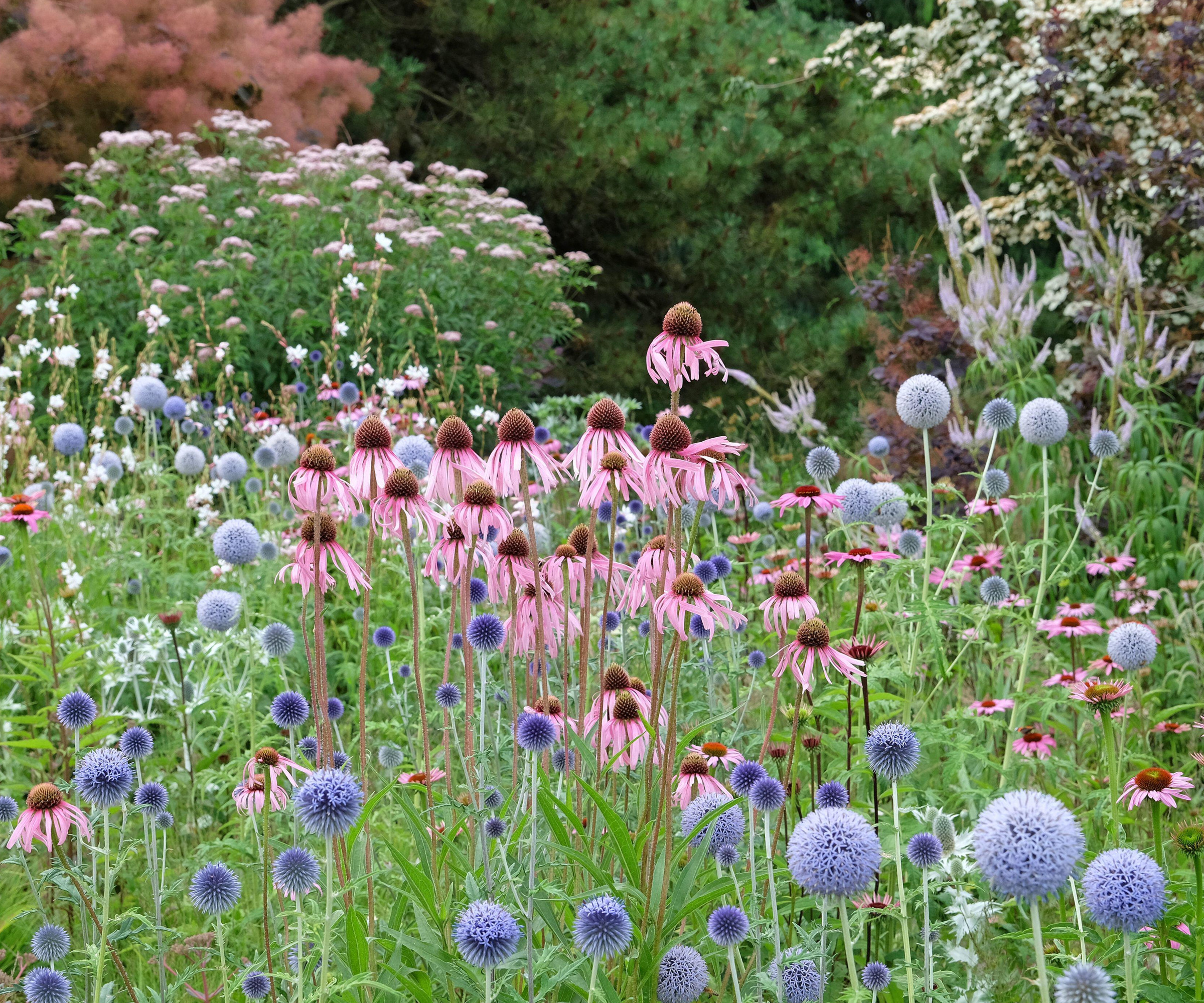
Like any design movement, garden trends evolve and change for multiple reasons. Aside from the differing visual tastes of new generations of gardeners, and less formality in general, there's a growing awareness that nature needs our support and gardening more holistically and ecologically, with native plants that attract butterflies and other pollinators at the forefront, can provide that.
'Loose, gentle airy planting evokes a different feeling than a typically structured and planted garden,' says Jordan Clough, associate principle designer, Richardson & Associates Landscape Architecture in Washington, DC.
'While ornamental grasses have long been part of the planting designer’s toolkit, we are seeing an emphasis on this aesthetic, which I think reflects a few convergent trends.
'Over the past 15-20 years there has been increasing interest in using native plantings in our gardens, many of which are meadow and grassland species. Aesthetically, there has also been a trend away from showy flowers that tend to have a shorter bloom time or only look good for a few weeks of the year.'
Jordan finds that he now designs more with foliage and texture in mind. 'By creating contrast and drama with wispy, airy species paired against more traditional groupings of shrubs, the visual effect is striking and long-lasting,' he says.
For Jean-Marc "see-through" planting aligns with his practice ethos for encouraging biodiversity, and he loves that it creates negative space. 'It's about about layering and movement,' he says. '"See-through planting" allows the eye to travel, capturing the interplay between fine and coarse textures, and catching the light.
'It ensures the garden is never a static composition, but a time-based medium that moves with the wind. It's about elemental permanence and restraint. You are setting a framework in motion and allowing the architecture of the plant itself, its stems, its umbels, its seed heads, to act as a translucent scrim rather than a solid barrier.'
5 Plants to Get The Look
1. Tufted Hairgrass (Deschampsia cespitosa)
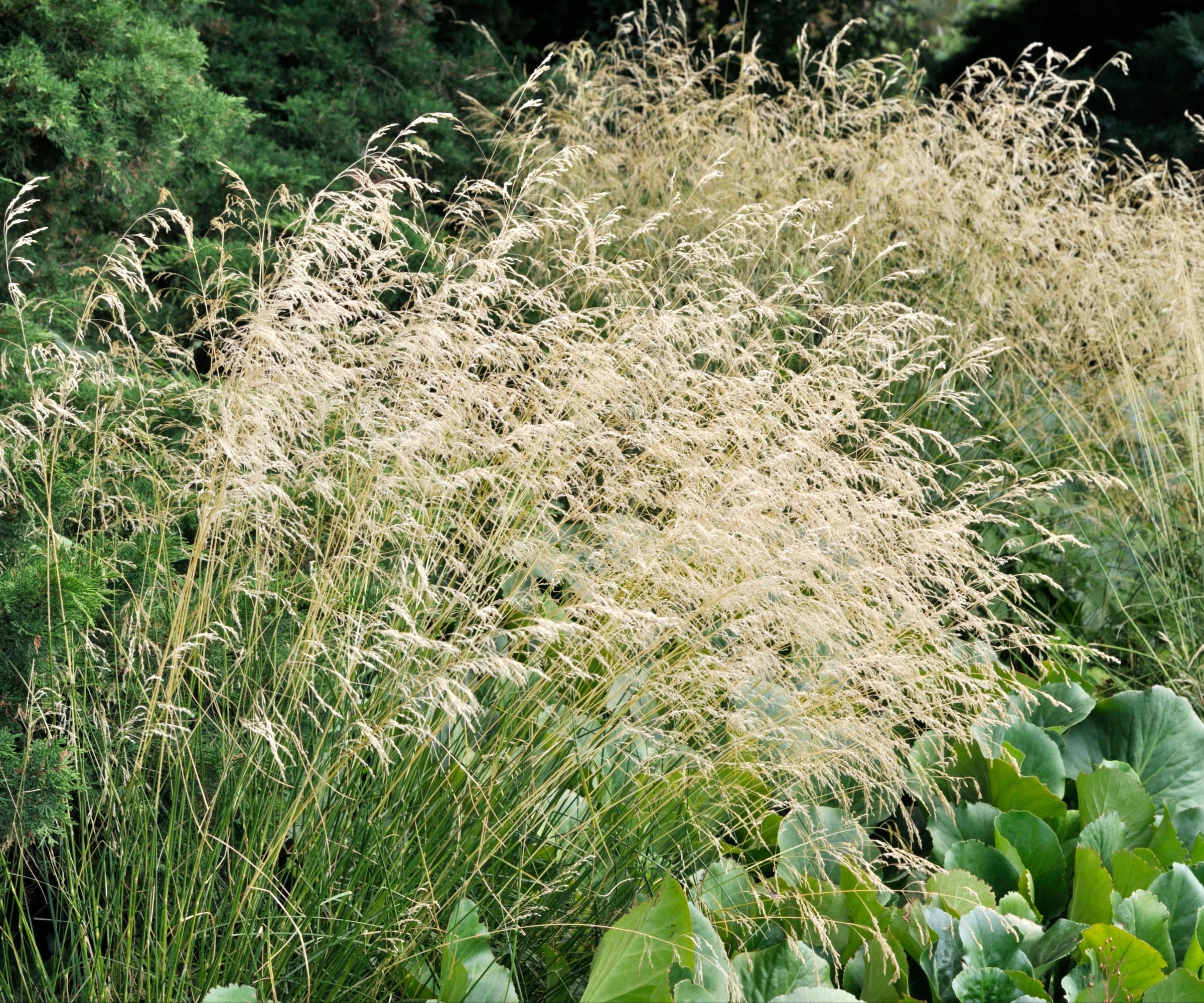
Tall, swaying ornamental grasses play a prominent part in this style, providing structure, movement, and that all-important airy feel. A particular favorite for Jean-Marc is Tufted Hairgrass, an attractive cool-season species with pale, feathery panicles.
'Tufted Hairgrass (Deschampsia cespitosa) is essential for building the "matrix" of your garden,' says Jean-Marc. 'This native grass provides a soft, wispy base layer. In the summer, it produces clouds of tiny, airy seed heads that act like a shimmering, translucent veil.'
This plant is highly adaptable, thriving in partial shade to full sun, and prefers moist, well-drained soils. These Tufted hairgrass seeds from Walmart can be sown outside after the last frost and are suitable across zones 2-8.
2. Switchgrass (Panicum virgatum)
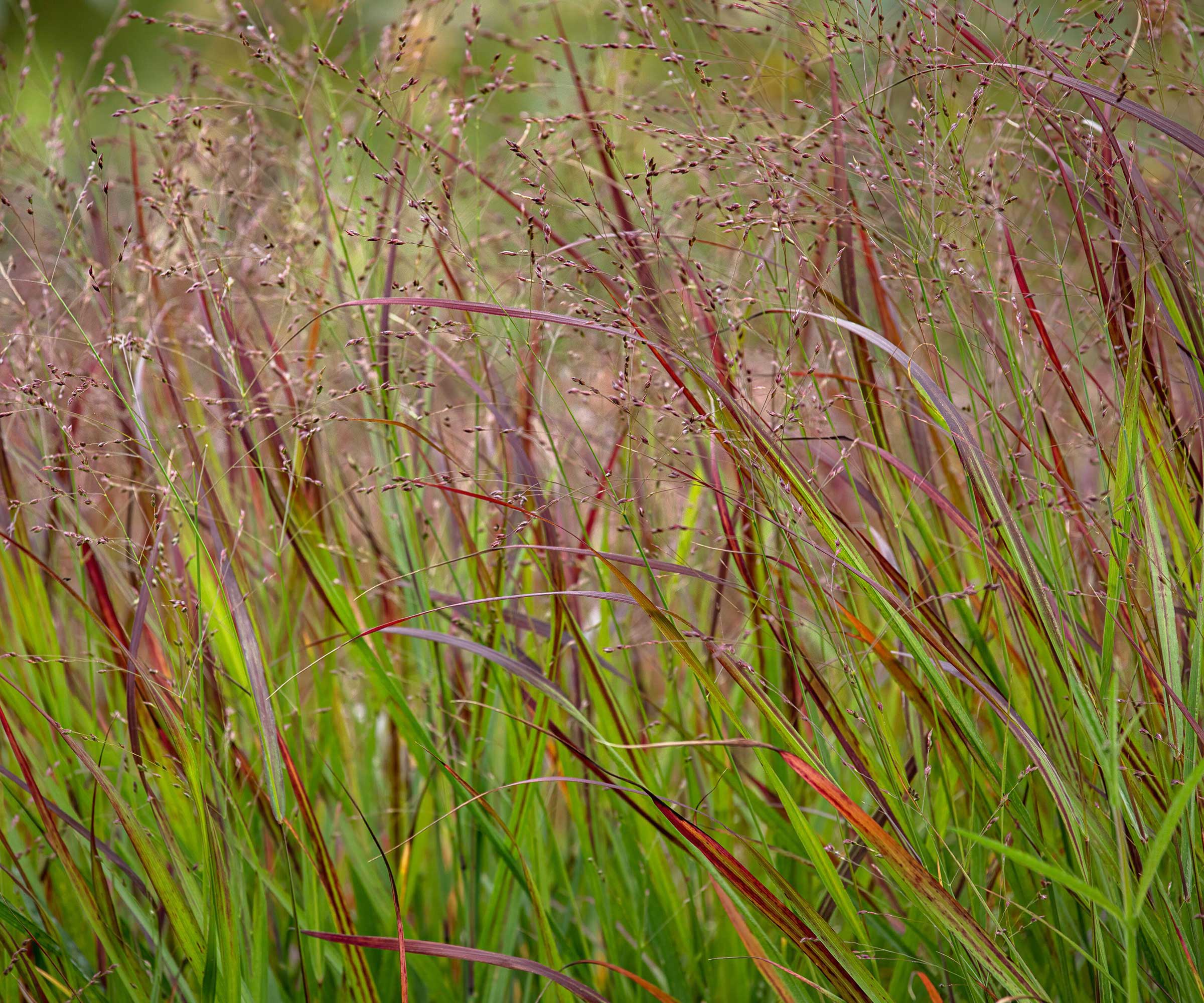
Another popular native grass in "see-through" planting schemes is Switchgrass. Loved for its ecological benefits as well as its height, movement and beauty, Panicum virgatum (and other native grasses) provide nesting materials and seeds for birds, so would suit wildlife gardens too.
'North America is blessed with many attractive native grass species,' says Jordan.'Some of these have proven very suitable for selective breeding in the nursery industry to enhance their colors and other attractive traits.
'The Panicum genus, specifically, has stunning cultivars such as ‘Heavy Metal’ and ‘Shenandoah’, and the many cultivars of Little Bluestem.'
Panicum virgatum is an ornamental warm-season grass that grows well in full sun and is drought-tolerant once established.
This Panicum Northwind switchgrass from Burpee is a prairie native with blue-green leaves and airy seedheads that will provide color, texture and interest to your yard, as well as shelter and food for birds.
3. Drumstick Allium (Allium sphaerocephalon)
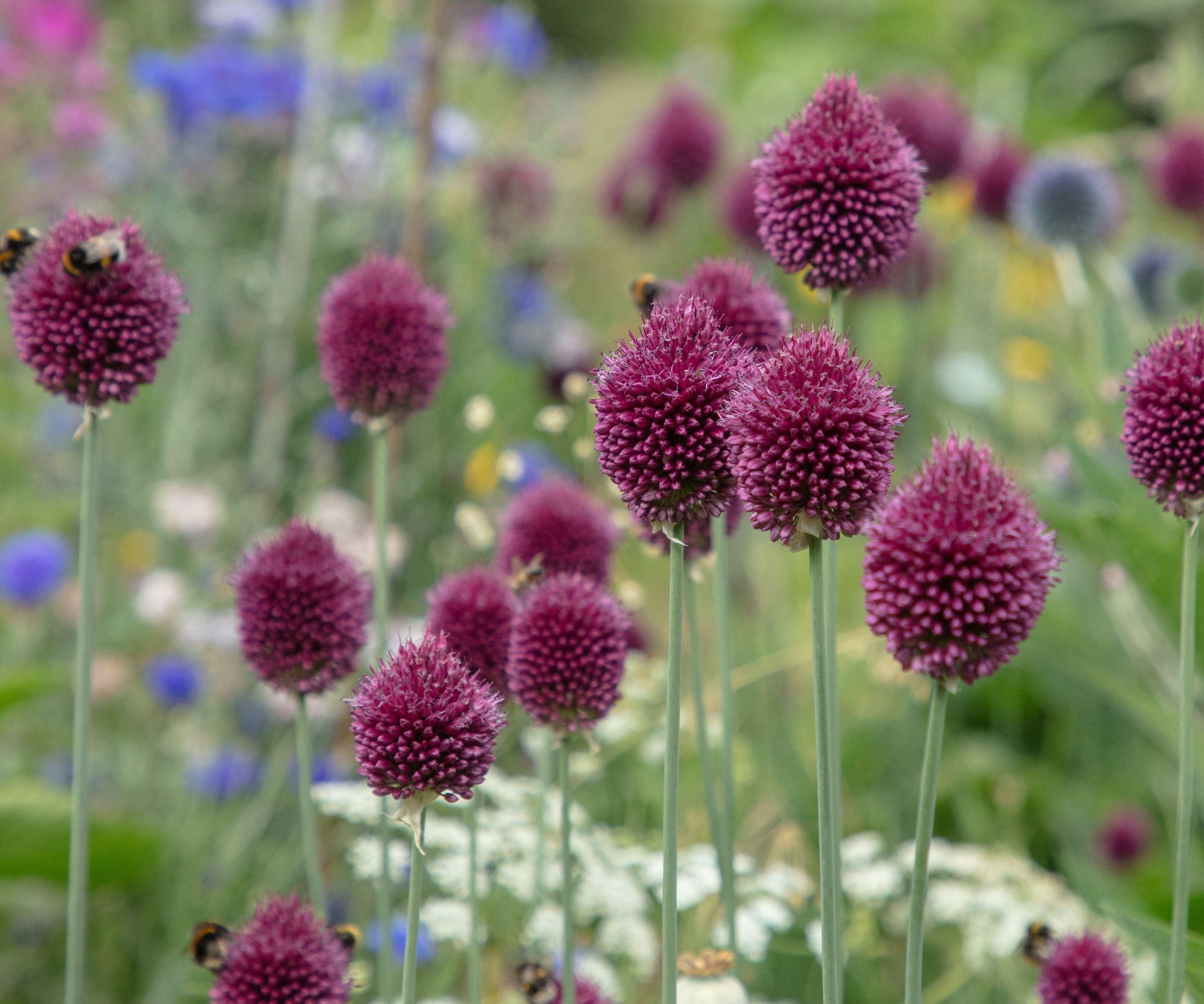
Intrinsic within "see-through" planting schemes are umbellifiers with their flat, lacy flower-heads, plants with globe-like umbels and those with long, leafless stems. Jean-Marc loves to weave Pale Purple Coneflower (Echinacea pallida) and Nodding Onion (Allium cernuum) into his beautiful landscape projects, however one of his best-loved species is the Drumstick allium.
'This is one of my personal favorites for creating a "see-through" moment,' says Jean-Marc. 'Drumstick alliums feature tall, thin, leafless stems topped with tight, burgundy-purple oval flower heads. Because the stems are so slender, they appear to be floating mid-air, allowing you to see completely through to the plants behind them.'
Drumstick Alliums are the last of the family to bloom and are great plants for pollinators. Reaching one to three feet tall, they require full sun and well-drained soil. Try these drumstick alliums from Burpee to capture the "see-through" style.
With its slender stems, purple coneflower looks gorgeous alongside alliums in naturalistic schemes, so experiment with these echinacea seeds from True Leaf Market. Alternatively, opt for edible umbellifiers, with these Mammoth Long Island dill seeds from True Leaf Market for warm-season edimentals.
4. Culver's Root (Veronicastrum virginicum)
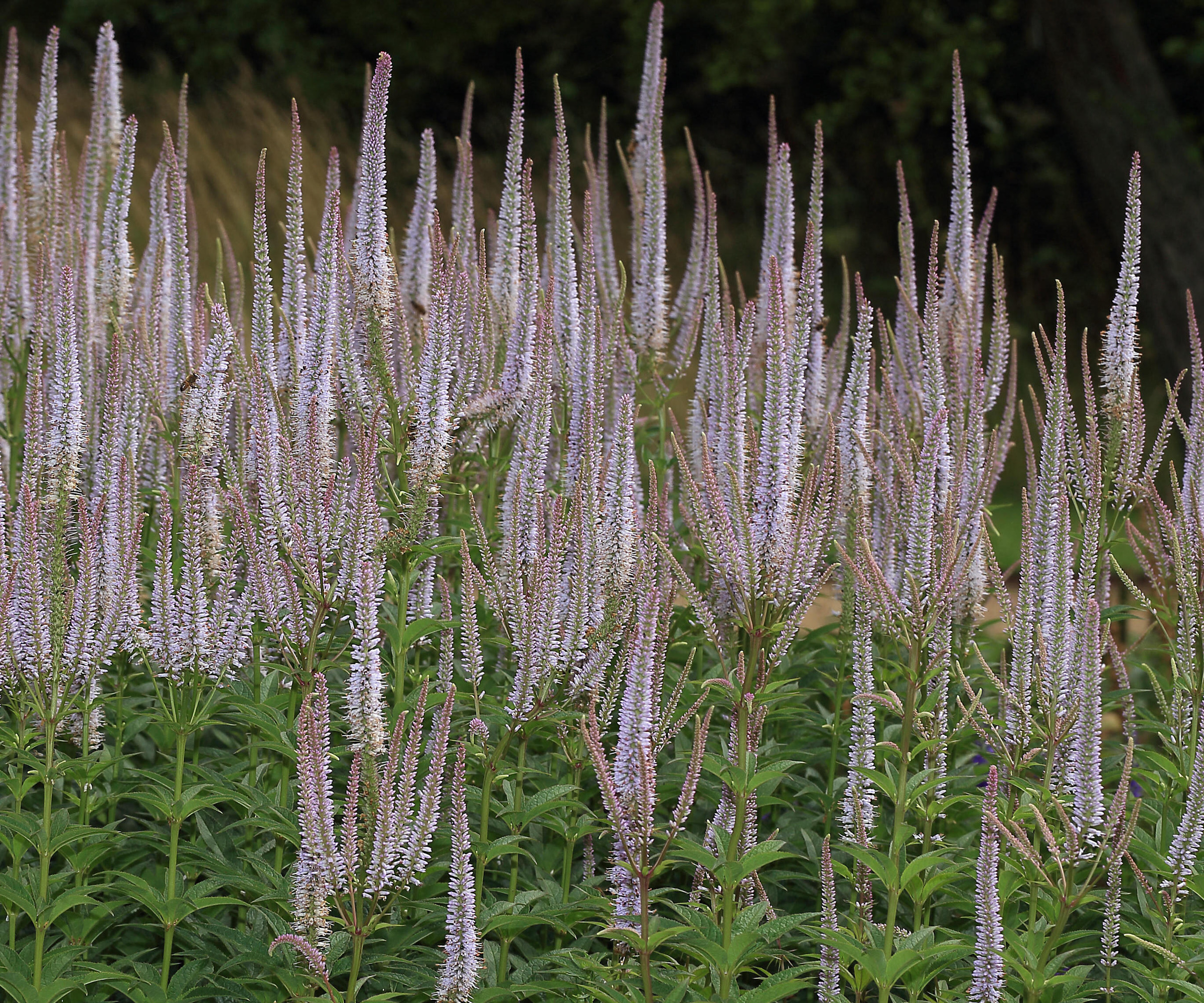
With layering and movement at the heart of this "see-through" naturalistic planting trend, tall, slender stems with flower spikes rather than blousy blooms take precedence. An upright perennial that Jean-Marc likes to work with – and recommends if you're starting out – is Culver's root.
'Culver's root is a magnificent, structural native plant,' says Jean-Marc. 'It produces elegant, slender vertical spires of tiny white or pale purple flowers. Because it grows strictly upright rather than outward, it draws the eye up to the sky without bulking up the mid-ground and blocking the view.'
Culver's root thrives in requires full sun and rich, moist soils. Expect it to flower from summer to fall. This Culver's root from Nature Hill's can reach 5-7' tall for a dramatic display that butterflies will adore.
5. White gaura (Gaura lindheimeri)
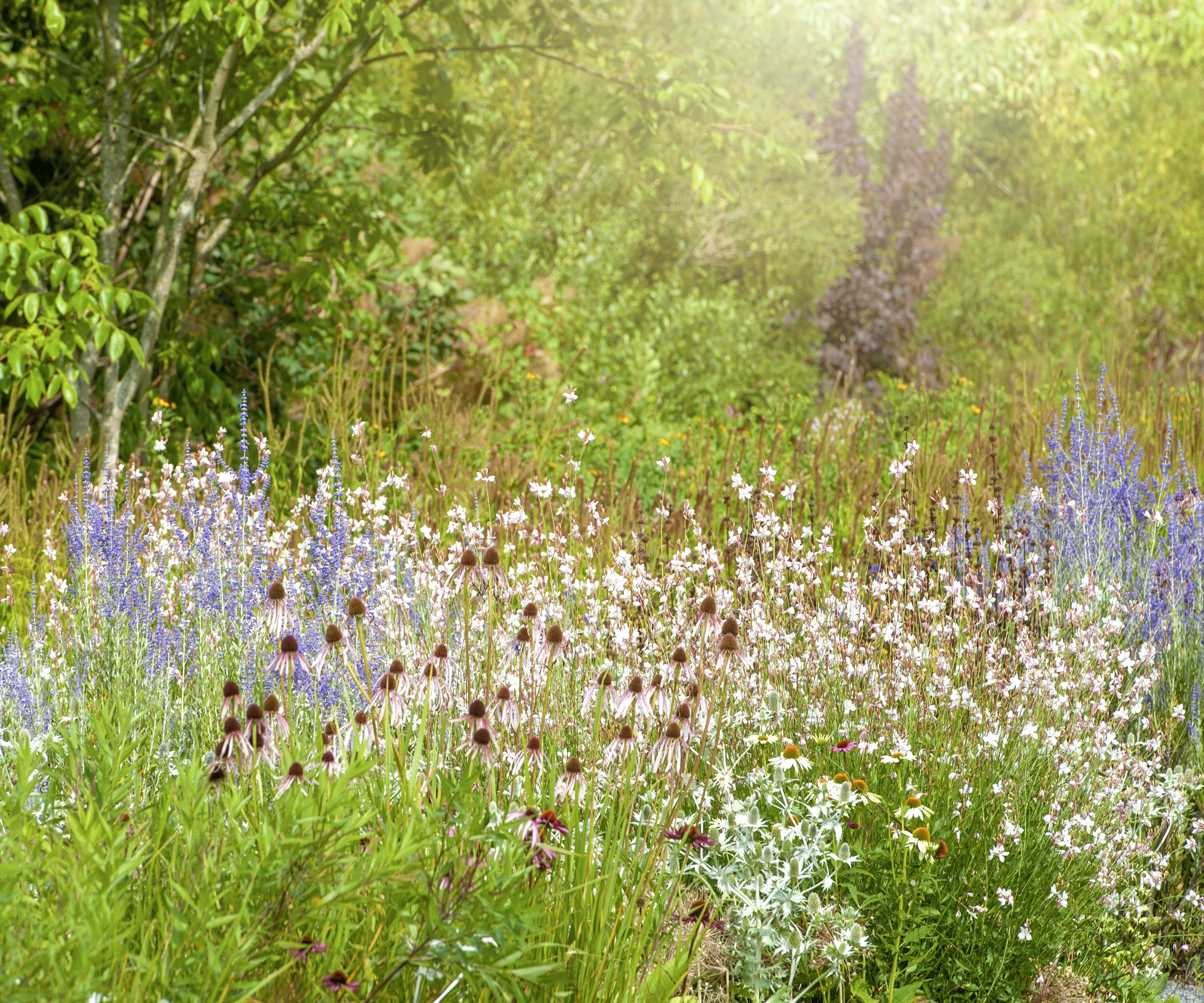
Whilst ornamental grasses, tall leafless stems and umbellifiers are wonderful for the vertical layering, swaying and informality in a naturalistic scheme, this interest can come from other plants at differing heights too. Jordan likes to include flowering perennials in subtle tones.
'There are a few flowering perennials that will also achieve this "see-through" look,' says Jordan. 'Some personal favorites of mine include Gaura lindheimeri and Threadleaf Amsonia, Other species I like to use include Verbena bonairensis and Bouteloua gracilis.'
These white Gaura seeds from Walmart need cold stratification, but can be started indoors several weeks before the last frost. Alternatively, sprinkle them now or in the fall and wait for next season's blooms. Sow them where there is full sun and give them dry soil conditions once established.
If you'd like to embrace this design philosophy, existing plants can simply be replaced, as they expire, with looser, less blousy species. Think layering with tall native grasses, feathery panicles, lacy umbels and flower spikes or tiny blooms that sway or nod in the wind (and provide sustenance for birds, butterflies, bees and other beneficials), for a landscape that looks and feels more alive.
'These airy plantings have more movement than typical garden species, which are usually treated as static objects,' says Jordan. 'This means that every light breeze brings your garden to life with flickering shadows, dancing seed heads or waving flowers.'
If you love inspiring garden ideas, outdoor advice, and the latest news, why not sign up for our newsletter and get the latest features delivered straight to your inbox?