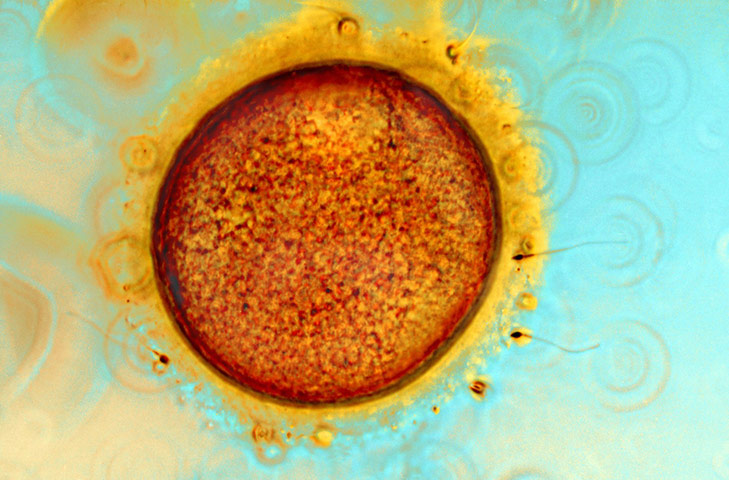
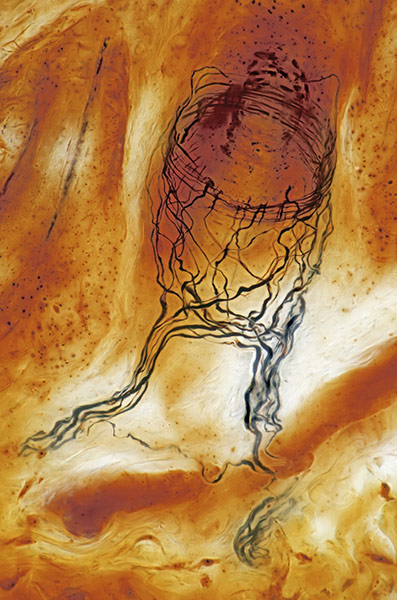
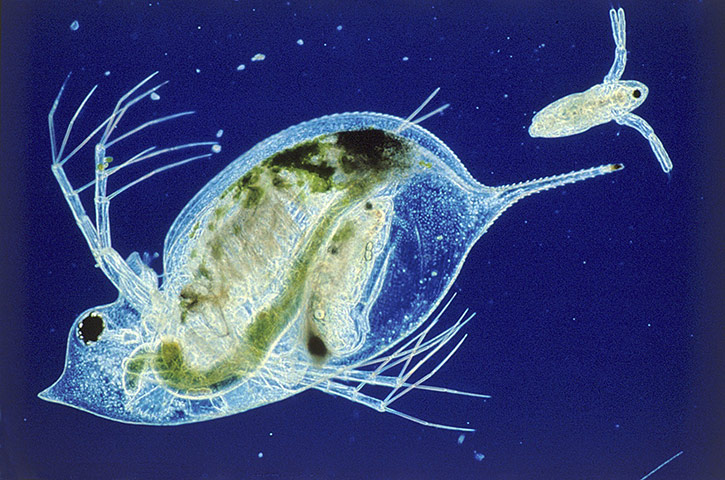
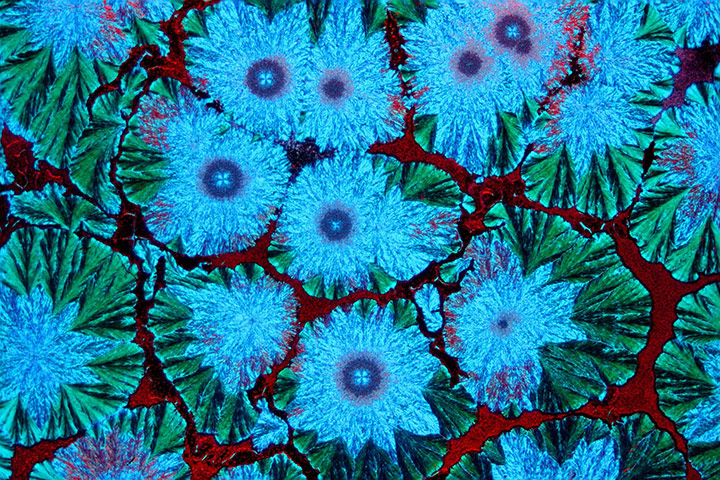
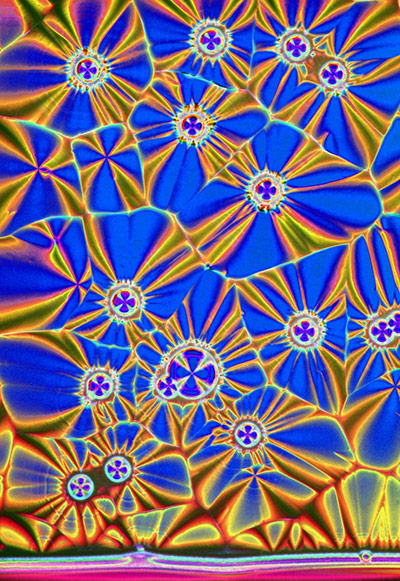
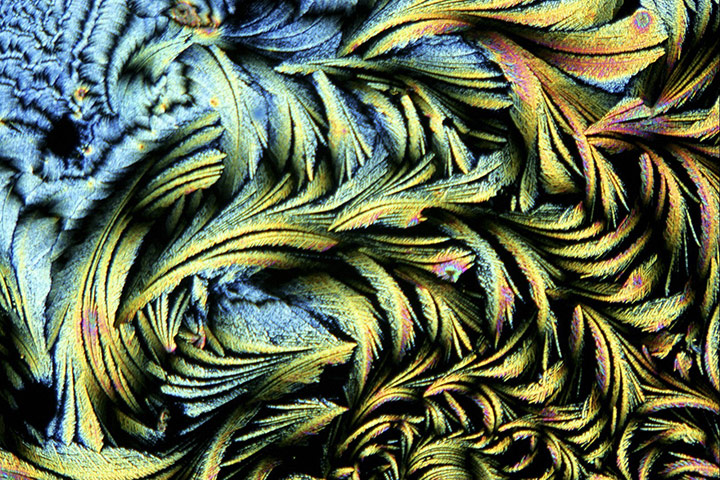
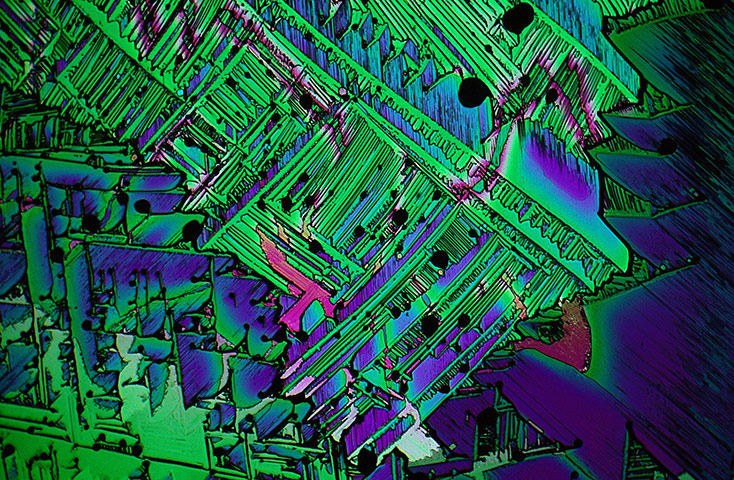
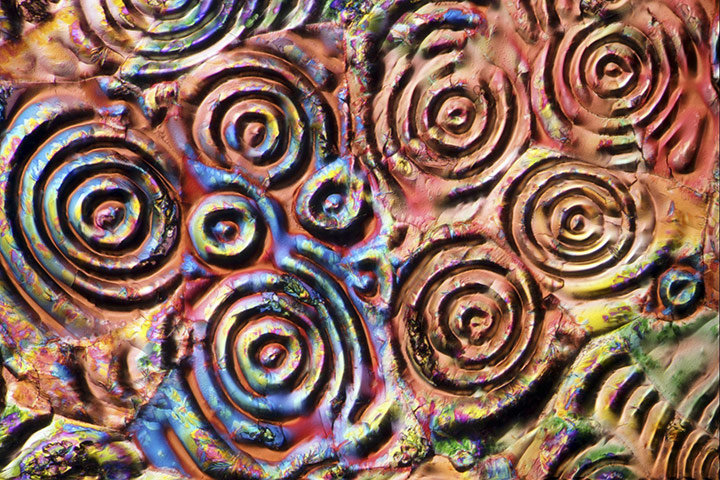
Light micrograph of a human ovum (egg) and sperm. The ovum is much larger than the sperm and is surrounded by protective cumulus cells (light yellow). The membrane surrounding the ovum is the zona pellucidaPhotograph: Spike Walker/Wellcome ImagesSensory nerve endings at the end of a hair follicle. The nerve axons are stained blackPhotograph: Spike Walker/Wellcome ImagesLight microscope image of a water flea (Daphnia) giving birth, with one of its young already free in the water. This is an example of parthenogenesis (live birth of offspring genetically identical to their mother)Photograph: Spike Walker/Wellcome Images
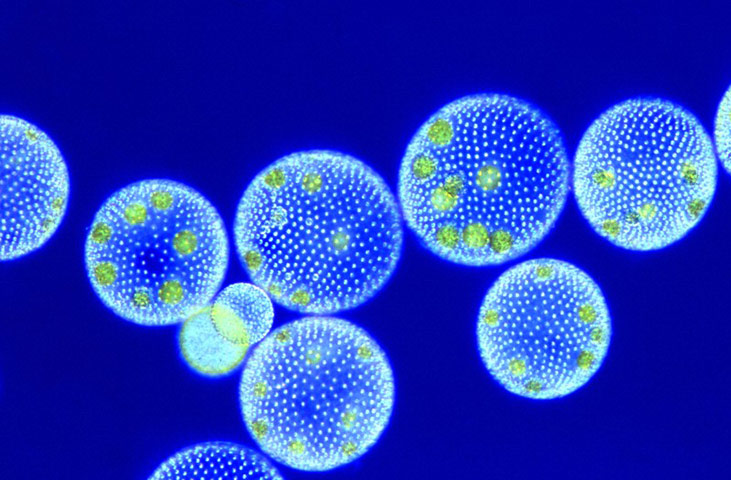
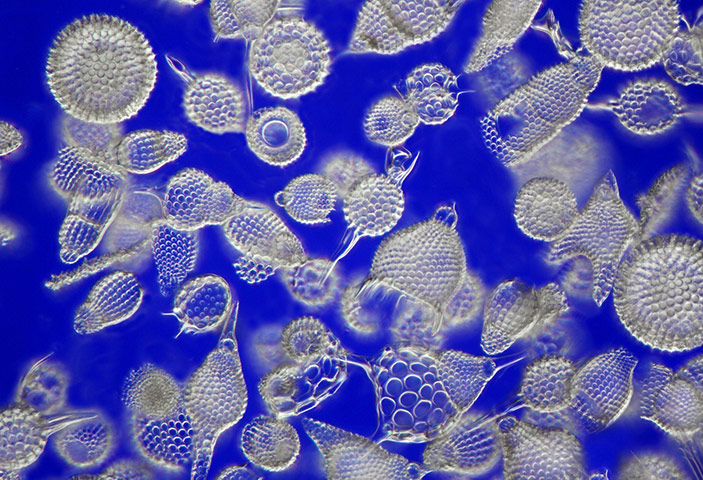
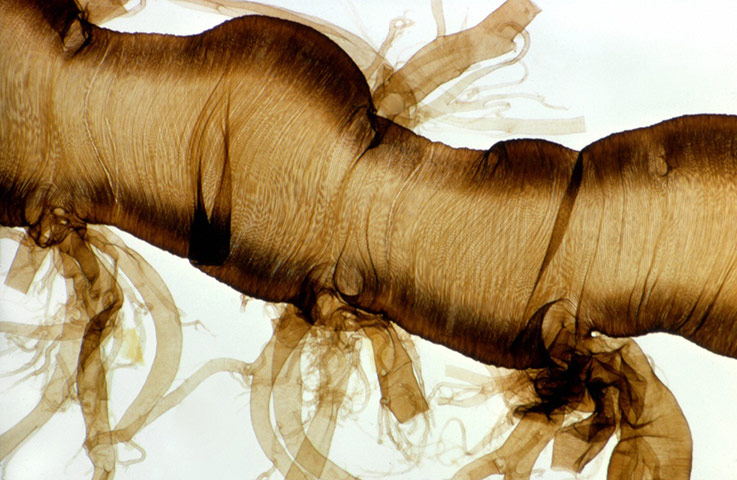
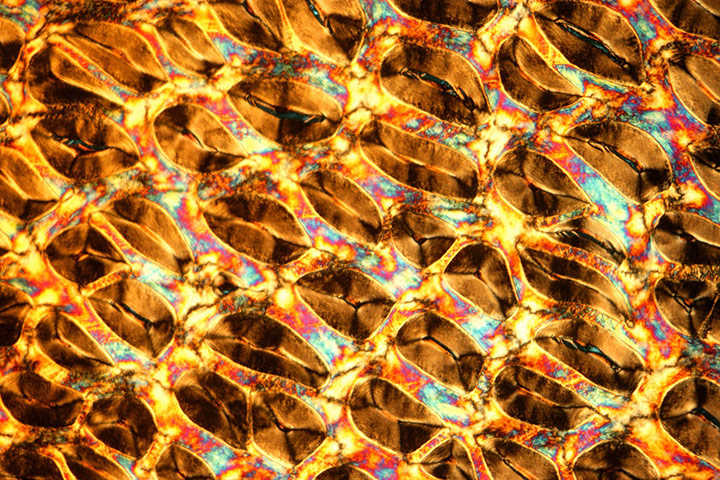
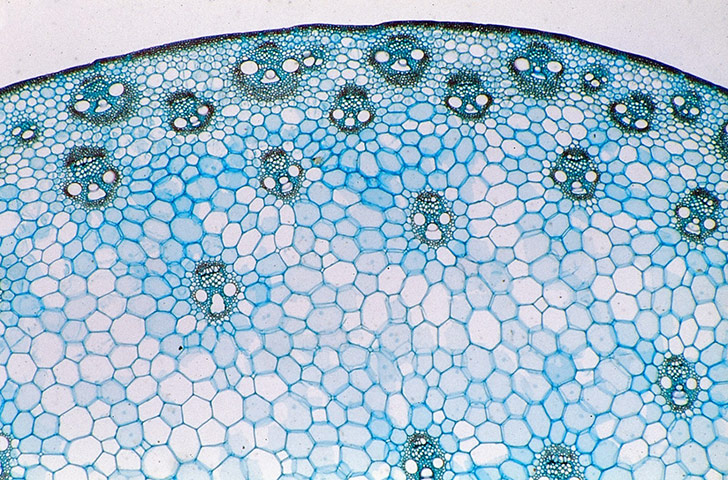
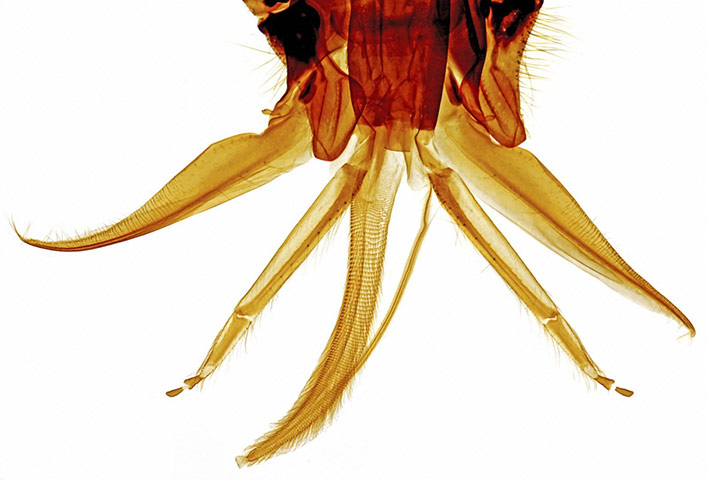
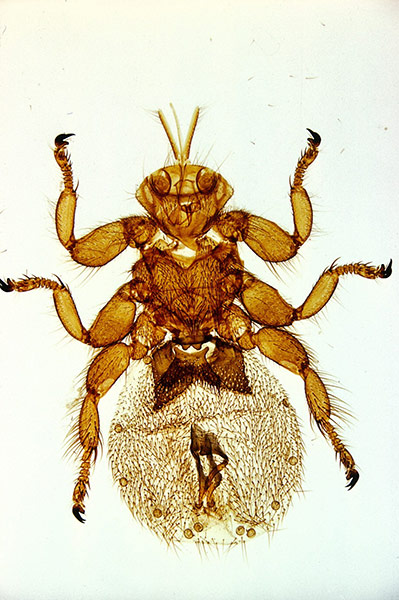
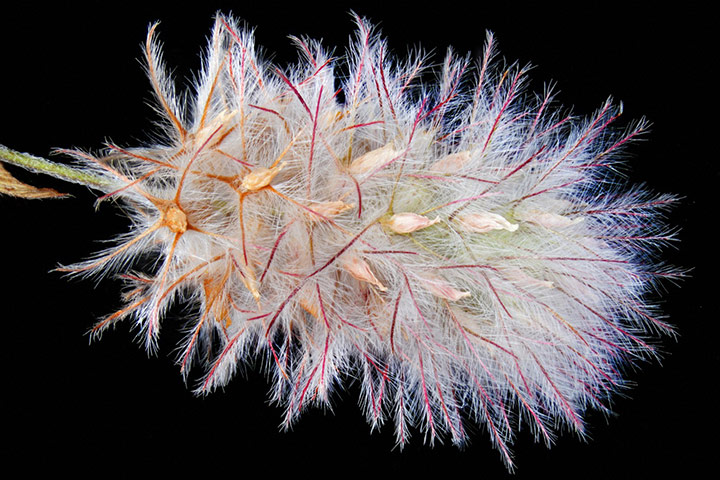
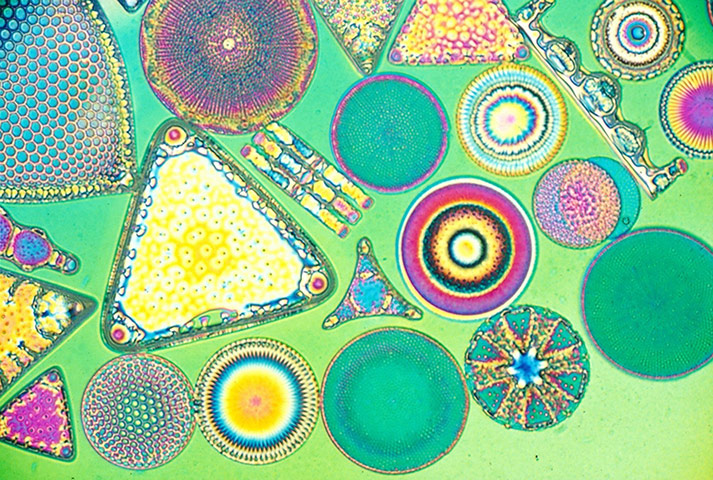
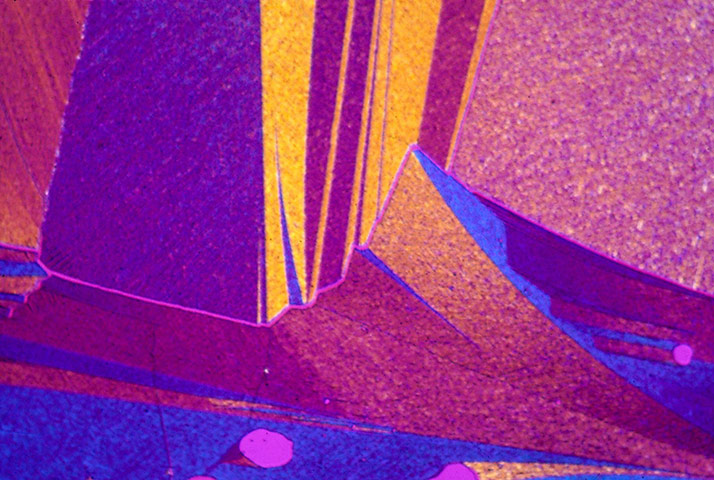
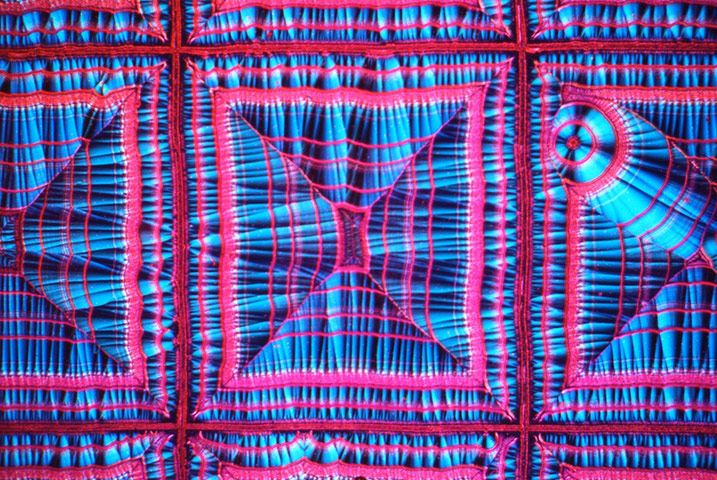
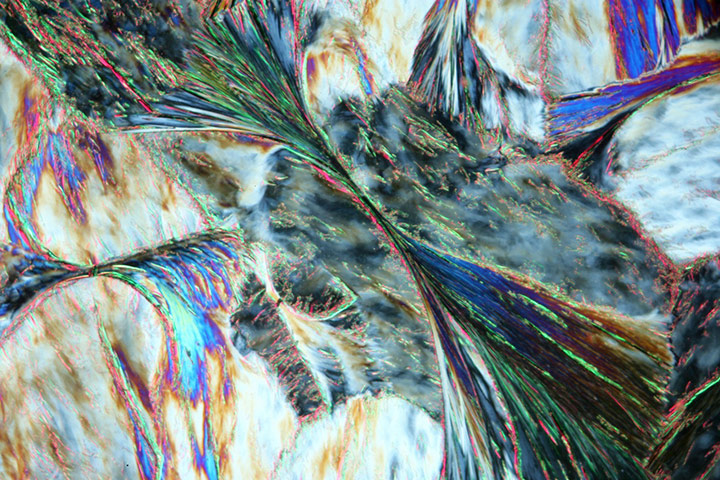
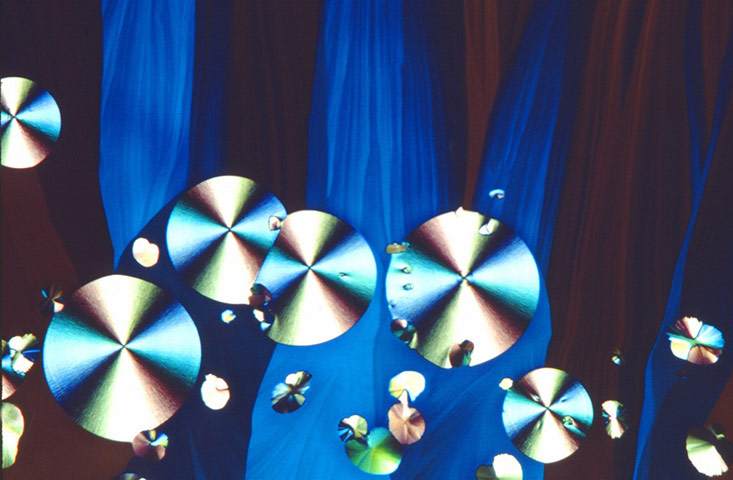
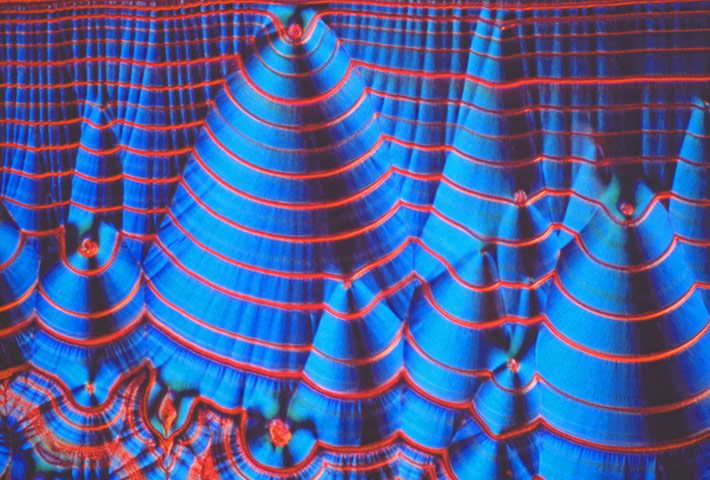
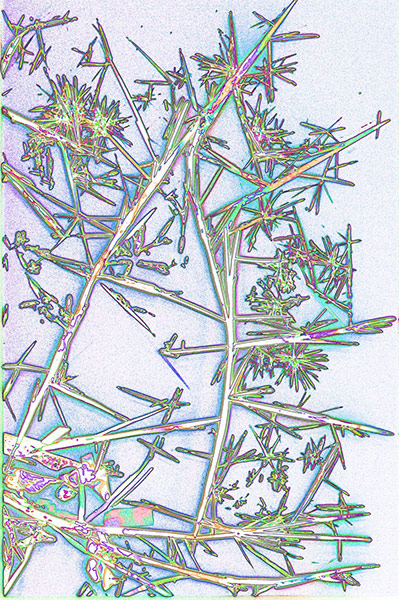
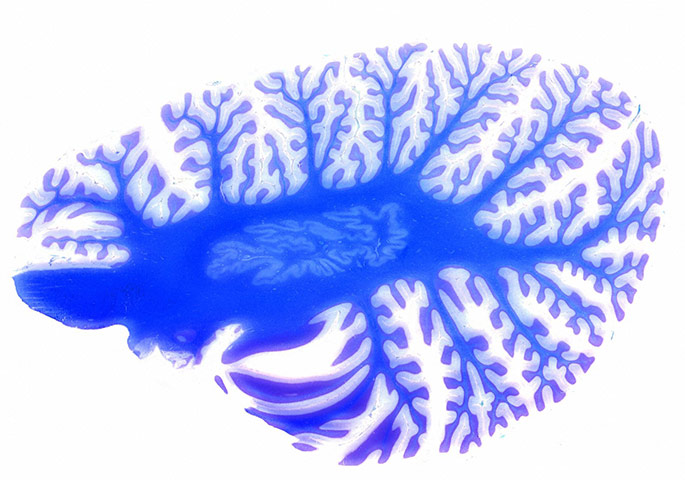
Light micrograph of colonies of the green alga Volvox, which is common in fresh water. Most of the individuals in the colony bear a pair of undulipodia, enabling the colony to spin through the water. The green blobs are daughter colonies developing within the parent colonyPhotograph: Spike Walker/Wellcome ImagesA photomicrograph showing a thick stew of siliceous radiolaria shells. Radiolaria are single-celled protists found in marine environments. They are identified by their delicate glass-like exoskeletonPhotograph: Spike Walker/Wellcome ImagesLight micrograph of a trachea from a silkworm. The tracheal tubes carry oxygen from spiracles (breathing holes over the surface of the insect) through the body. They finally branch into tracheoles - analagous to capillaries - which deliver the oxygen to the tissuesPhotograph: Spike Walker/Wellcome ImagesPolarised light micrograph of a cross section through rhinoceros horn. The horn is made up of compacted keratin fibres, the same protein that makes hair and woolPhotograph: Spike Walker/Wellcome ImagesTransverse section through a maize stem, showing vascular bundles scattered through the cortexPhotograph: Spike Walker/Wellcome ImagesPhotomicrograph showing the mouthparts of a honeybee. The mouth of a honeybee has components that enable it to grip, chew and suck. The long central hairy tongue, or proboscis, allows the bee to suck and lap up nectar and honey. All the mouth projections are covered with tiny hairs to assist in this function. Either side of the proboscis is a pair of mandibles for grasping and cutting. They are used to break open anthers to eat pollen, cut and shape waxPhotograph: Spike Walker/Wellcome ImagesBloodsucking sheep ked (Melophagus species), a parasitic wingless flyPhotograph: Spike Walker/Wellcome ImagesHare's foot, a clover (Trifolium arvense) with soft downy leaves, found on sand dunes and other sandy placesPhotograph: Spike Walker/Wellcome ImagesPolarised light micrograph of diatomsPhotograph: Spike Walker/Wellcome ImagesPolarised light micrograph of crystals of coconut butterPhotograph: Spike Walker/Wellcome ImagesCrystals of vitamin C (ascorbic acid)Photograph: Spike Walker/Wellcome ImagesPolarised light micrograph of crystals of quinidine, a drug for treating heart 'arrythmia' originally derived from the cinchona tree. It stabilises the heart beatPhotograph: Spike Walker/Wellcome ImagesPolarised light micrograph of sulphur crystalsPhotograph: Spike Walker/Wellcome ImagesCrystals of aspirinPhotograph: Spike Walker/Wellcome ImagesUrea crystalsPhotograph: Spike Walker/Wellcome ImagesPolarised light micrograph of vitamin C crystals from a hot solution. A supersaturated solution was placed on a microscope slide that was etched with 1.5mm squares using a fine needle, to provide 'windows' in which crystallisation could proceed independently. The preparation was breathed on at intervals to promote the growth of crystal growth frontsPhotograph: Spike Walker/Wellcome ImagesCrystals of stearic acid, a saturated long-chain fatty acid found in animal fat and cocoa butter. It can be isolated from tallow and is traditionally used in the production of soap (sodium stearate). It is also used in cosmetics, deodorants, toothpastes and to increase the softness of rubberPhotograph: Spike Walker/Wellcome ImagesCrystals of the amino acid asparagine, which is synthesised in the human body from aspartic acid, and plays a role in the metabolism of toxic ammonia. In plants, it used to transport nitrogen, and is produced in large quantities by species such as asparagusPhotograph: Spike Walker/Wellcome ImagesPhotomicrograph of vitamin C crystals. A straight scratch (just above the upper edge of the image) was used to initiate crystal growth from a film of supersaturated aqueous solution on a microscope slidePhotograph: Spike Walker/Wellcome ImagesCrystals of adrenaline, viewed with a polarising light microscopePhotograph: Spike Walker/Wellcome ImagesLight micrograph of a cerebellum - the region of the brain involved in sensory perceptionPhotograph: Spike Walker/Wellcome Images
Sign up to read this article
Read news from 100’s of titles, curated specifically for you.





.jpg?w=600)