With the world’s food supply facing an uncertain future, sludge has emerged as an unlikely hero.
An innovative recovery process in Denmark means the agricultural mineral phosphorus can now be efficiently extracted from wastewater. This allows for the production of fertilisers that are so pure, they can be used to grow crops for human consumption.
Phosphorus is a finite resource with no known substitute that is essential for human lives. Our bodies each contain about 800 grams and it is the second most common mineral in our systems, after calcium. It is also crucial for plants, helping them convert other nutrients into building blocks for growth.
About 90% of the world’s mined phosphorus is used as an ingredient in fertilisers. With the planet’s population heading towards 9bn people by 2050, phosphorus-enriched fertilisers will be vital for the world’s food supply.
The exact size of the world’s phosphorus resources is unclear. Some experts argue that global supply will be depleted in 50 to 100 years and that production will peak in 2030. Others say that the reserves will last for several hundred years.
While agriculture needs phosphorus, operators of wastewater treatment plants need to remove it. Too many nutrients in a body of water cause excessive plant growth – especially algae. The resulting bacteria consume nearly all the oxygen in the water, choking the fish and aquatic life.
Removing the material is difficult. Phosphates – salts containing phosphorus - can clog pipes, pumps and other equipment.
This was the challenge that Aarhus Water Ltd, pump manufacturer Grundfos and technical consultant firm Norconsult set out to solve. The result was a process that allowed for the recovery of phosphorus and nitrogen from wastewater through the use of a separate reactor.
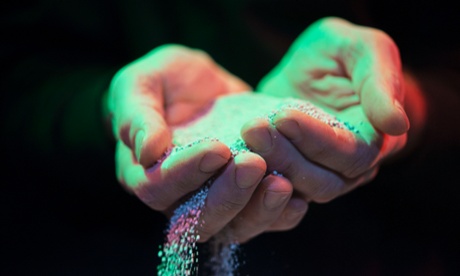
The reactor increases the concentration of phosphorus and nitrogen in the main wastewater flow. The process does this by sending a side stream of wastewater through the reactor and adding magnesium salt. The precipitation process then refines the phosphorus, discarding heavy metals and environmentally unfriendly substances. The outcome is a granulate that contains phosphorus, nitrogen and magnesium – well suited for use as a fertiliser.
Phosphorus is normally distributed to farms to be spread on fields. Unfortunately it is unhygienic and potentially harmful to certain types of crops and can only be used for fields growing animal feed. Aarhus Water’s refined sludge can be used for crops to feed people as well.
The technology is now being used in Denmark’s first phosphorus recovery plant, which opened in 2013. The operation produces about 50kg of phosphorus daily.
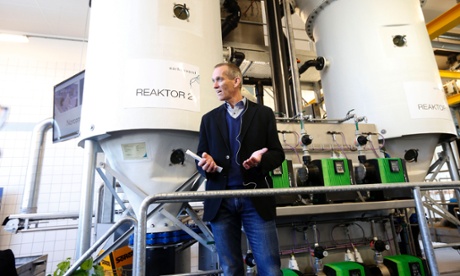
“It’s new to us that we can actually make money on what we produce,” says Claus Homann, chief operating officer of Aarhus Water. “At the same time, our operational costs are lower, we need less energy, and the amount of sludge is reduced. It sounds too good to be true.”
Commercially viable recovery
The technology for recovering phosphorus has been around since the 1980s but is not patented, says Per Krøyer Kristensen, business development manager at Grundfos.
“Now it is commercially viable to build recovery plants,” he says. “The price of phosphorus has increased, and there is a general focus in the world on energy efficiency and reuse of nutrients.”
Denmark’s phosphorus demand for crop production requires imports of 11,000 tonnes of phosphorus. Kristensen says recovery plants can change that.
“If similar recovery plants are built at the 50 largest water treatment plants in Denmark, we can produce 3,000 tonnes of pure phosphorus fertilisers per year, representing more than 25% of the country’s imports,” he says.
The new recovery system means good business for Aarhus Water. Lower operational costs combined with sales of fertilisers mean the investment pays for itself in less than seven years.
“The second plant is already being constructed, this time for Herning Water, another Danish municipal owned company, and we’re in the process of creating new partnerships for sales in the rest of Europe,” says Kristensen.
Content on this page is paid for and provided by Grundfos, sponsor of the water hub