Having worked in the energy industry for 25 years, I would have thought by now I would be able to predict at least some of its behaviour. After all, I have only known my daughter for all of her eight years, and I can generally predict that within about 12 minutes of giving her a bowl of Ben & Jerry’s ice-cream she will have run at least three loops around the garden, punctuated by a string of cartwheels on each orbit.
The energy industry on the other hand could hardly be described as predictable. In seeking to find a solution to the much debated energy trilemma – secure, affordable, low carbon energy – it has suffered more genetic engineering than anyone can now comprehend but we are still looking for a solution, unless we are prepared to walk hand-in-hand, with faltering lights, towards irreversible and damaging climate change.
However, take heart: the UK has a rather overlooked and understated trump card. Over three quarters of the UK’s territory is seabed.
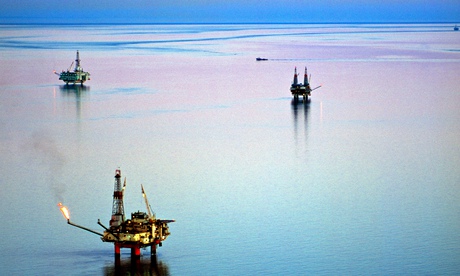
As an island nation, the UK’s seabed is a fundamentally important strategic asset but, crucially, it also happens to provide the equivalent of around half of the UK’s primary energy consumption, from both fossil and renewable energy resources.
With some forward thinking, and with the right management, the seabed could provide a key part of the solution towards solving the UK’s energy trilemma.
The UK seabed as a national energy asset
Offshore wind has seen rapid growth over the last 10 years, to the point where it is already meeting around 4% of the UK’s electricity demand and on course to deliver around 10% by 2020. As costs continue to come down, there is potential for offshore wind to make a material and sustainable contribution to our energy security – as long as the earth keeps turning and the wind keeps blowing.
National Grid has highlighted the challenge facing the UK’s energy supply as we approach this winter with a record-low power generation margin for electricity. One of the primary energy sources for producing electricity is gas, and since the 1960s the UK has produced a substantial amount from its offshore reserves. It was only in 2004 that the UK started to import gas, and as it stands today the UK’s indigenous production is sufficient to meet half of UK demand.
It is expected that, with continued investment in the UK Continental Shelf, this level of gas supply could continue beyond 2020, with possibly enough oil and gas to provide half of the UK indigenous energy resources over the next two decades. Gas remains an important contributor to the UK’s energy security. And while it is a producer of CO2, it is less than half that of coal. The more coal that can be displaced with gas the closer we get on our journey towards lowering carbon emissions.
However, the average gas field discovery in 2012 was approximately one tenth the size of those in 1966, consequently making the production costs far higher. With volatile global oil and gas prices, the art of making profitable decisions by investors has never been more difficult.
So how do we create the right conditions for producers to keep investing in the sector, while also supporting the transition to a low carbon economy?
Joining up the dots: offshore wind, natural gas and carbon storage
One answer to this could be to start thinking laterally about offshore wind. Producing and transporting gas offshore consumes significant amounts of expensive power. However, there are huge offshore substations connected to the national grid currently only servicing offshore wind farms that are located relatively near to gas fields.
We should seek to connect these substations to the gas fields to provide them with a cheap and abundant source of power. If we could also combine the construction and maintenance operations for offshore wind, oil and gas, further cost reduction opportunities could be found.
Even modest cost reductions could allow more marginal gas fields to become viable, and in turn the additional production of these fields could help pay for the infrastructure needed to prolong the life of the fields. The unexpected net result is that offshore wind farms could help maintain the conditions that gas producers need to keep investing in the sector. This could ensure that the UK seabed is able to provide at least half of the UK’s indigenous primary energy needs beyond 2030.
The seabed also offers the potential to indefinitely store vast quantities of CO2, captured from gas power stations – even from the gas originating from the seabed itself. Though it will require significant investment and some minor technological advancement, it is possible that the seabed could effectively eliminate the net production of CO2 by the UK as a whole.
Pulling the three themes – security, affordability and sustainability – together, the UK’s seabed offers a unique opportunity to help solve the UK’s energy trilemma. The truly great part of this story is that we already have all the tools and resources available to make it happen.
With the cost of offshore wind already coming down, we now need a clear objective and commitment to properly put the seabed to work. The opportunity directly in front of us is to combine the capability of offshore wind with sustained gas production while storing CO2, using the UK’s seabed to provide secure, sustainable energy, at a more affordable price.
Rob Hastings is director of energy and infrastructure at The Crown Estate
Content on this page is paid for and provided by The Crown Estate, one of the sponsors of the Big Energy Debate.