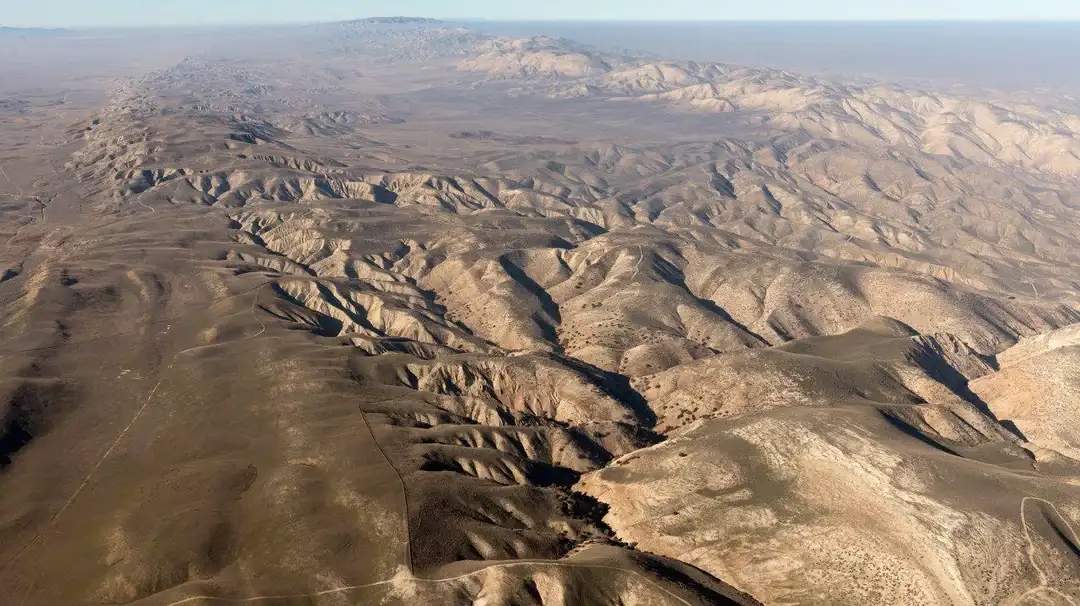
The San Andreas Fault has entered a new phase of scientific attention after researchers found that tectonic stress across parts of Southern California has reached some of the highest levels in nearly a millennium. The discovery does not signal an immediate earthquake, but it reveals a deeper story about how Earth quietly stores energy before releasing it.
For decades, the San Andreas Fault has represented California’s most famous natural threat. Popular culture often shows dramatic images of cities breaking apart, but reality is much slower and more complex. The real danger comes from hidden pressure building underground over generations.
A new physics-based study examining the San Andreas and San Jacinto fault systems suggests that some sections now carry stress levels exceeding those linked with major historical earthquakes. Scientists studied centuries of geological evidence to understand how these faults have behaved since around 1100.
The research offers a clearer view of a system that affects millions of residents, major highways, water networks, energy supplies, and economic centers across Southern California. The message is not panic. It is preparation.
The San Andreas Fault is a massive boundary where the Pacific Plate and North American Plate slowly grind against each other. The movement is measured in inches each year, but the pressure can accumulate for hundreds of years before a rupture happens.
The San Andreas Fault Hits a 1,000-Year High—Is California Ready?
A fault is a fractured zone in Earth’s crust where rocks move. When plates continue pushing but sections remain locked, stress begins increasing underground. Eventually, that stored energy may be released through an earthquake. The San Andreas Fault stretches more than 800 miles through California and forms one of the world’s most studied fault systems. Its slow movement has shaped the state’s landscape, but its locked sections create long-term seismic concerns.
Researchers used computer models, radiocarbon dating, tree-ring evidence, and historical earthquake records to rebuild the stress history of the region. Their findings showed that some fault sections reached unusually high stress by 2025. One important area is Cajon Pass, located northeast of Los Angeles. This region connects the San Andreas and San Jacinto systems and may influence whether an earthquake rupture stops or continues.
Historical events show different possibilities. The 1857 Fort Tejon earthquake, estimated near magnitude 7.9, stopped around the Cajon Pass area. Meanwhile, evidence from the 1812 Wrightwood earthquake suggests a rupture may have crossed through connected fault zones.
The concern is not only the shaking itself. Modern California depends on complex infrastructure that includes highways, rail corridors, communication networks, water pipelines, and electrical systems. A major earthquake could test every part of that chain.
However, high stress does not equal a countdown. Earthquake science cannot currently identify the exact day, location, and size of a future earthquake. Instead, researchers calculate probabilities and improve hazard planning.
Could the San Andreas Fault trigger a major California earthquake soon?
The San Andreas Fault study changes how scientists understand earthquake risk, but it does not provide a prediction. The difference is important because earthquakes remain one of the hardest natural events to forecast.
What the research adds is a deeper understanding of accumulated pressure. Scientists now have better tools to examine how stress moves between nearby faults and how one earthquake system can influence another.
The San Andreas Fault and San Jacinto Fault together create a complicated underground network. Their relationship may determine how future earthquakes spread across Southern California.
Cities such as Los Angeles, Riverside, and San Bernardino sit near areas where strong shaking could have major consequences. The focus is therefore on resilience rather than fear.
Buildings, emergency systems, transportation routes, and public awareness all play a role in reducing earthquake damage. Scientific research becomes valuable when it helps communities prepare before a disaster happens.
California cannot prevent tectonic movement. The plates will continue shifting beneath the surface. But better science can help reduce losses and protect communities when the ground eventually moves.
What rising San Andreas Fault pressure reveals about California’s future
The growing stress along the San Andreas Fault is becoming a major focus for earthquake researchers because it shows how Earth’s hidden forces evolve over time. Scientists are not looking for signs of an exact earthquake date. Instead, they are studying patterns that reveal where pressure is accumulating.
The latest findings highlight the importance of long-term monitoring. Instruments placed across California track ground movement, small earthquakes, and changes in the fault environment. These measurements help experts understand whether underground forces are increasing or shifting.
The San Andreas Fault story also reflects a larger lesson about natural hazards. Earthquakes are not sudden surprises created in isolation. They are the result of slow geological processes happening beneath the surface for decades or centuries.
For California, the challenge is balancing awareness with realistic preparation. Stronger buildings, improved emergency planning, and public knowledge can reduce the impact of future earthquakes even when the timing remains unknown.
The new stress analysis does not predict a disaster. Instead, it provides another piece of evidence about a powerful fault system that continues shaping California’s future. The science behind it helps communities prepare for a risk that cannot be eliminated but can be better managed.
FAQs:
Where is the San Andreas Fault located?The San Andreas Fault stretches about 800 miles through California, from the Salton Sea in Southern California to Cape Mendocino in Northern California.
Which cities are closest to the San Andreas Fault?
Major cities near the fault include Los Angeles, San Bernardino, Palm Springs, San Jose, and San Francisco.
Why is the San Andreas Fault considered a major earthquake risk in California?
The San Andreas Fault is a massive tectonic boundary where the Pacific Plate and North American Plate slowly move against each other. Its long history of stress buildup and past earthquakes makes it one of California’s most monitored fault systems. Scientists study it to improve safety planning and infrastructure protection.
What is fault stress?
Fault stress is the pressure that builds up as tectonic plates slowly move against each other over time.
Which part of California is most affected?
Southern California, particularly areas near the San Andreas and San Jacinto fault systems, is a key focus of the research.