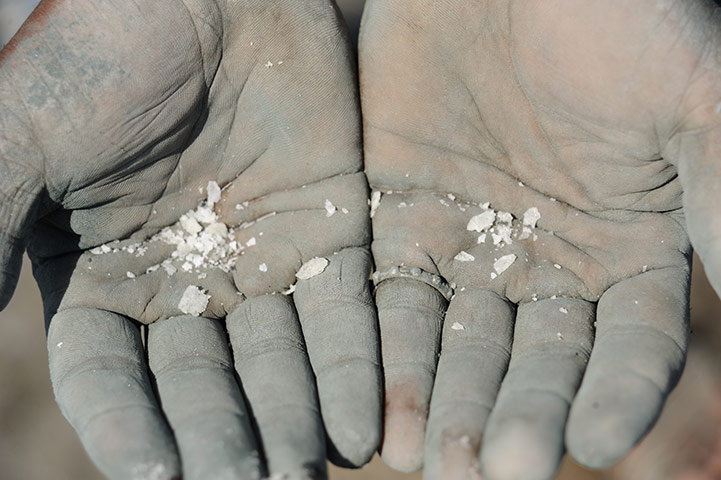
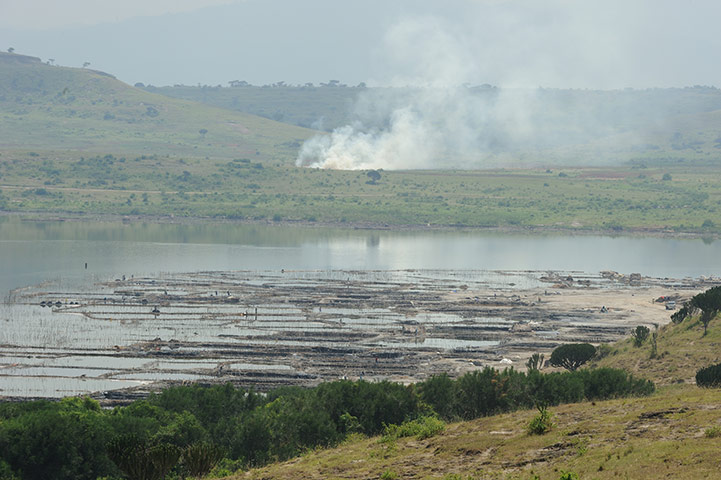
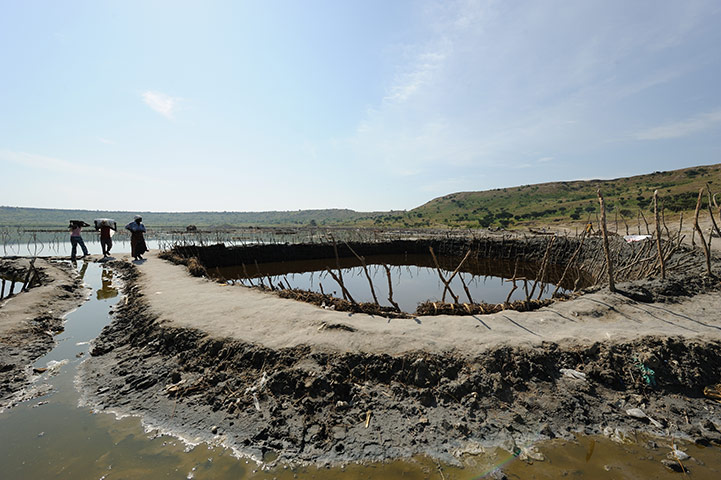
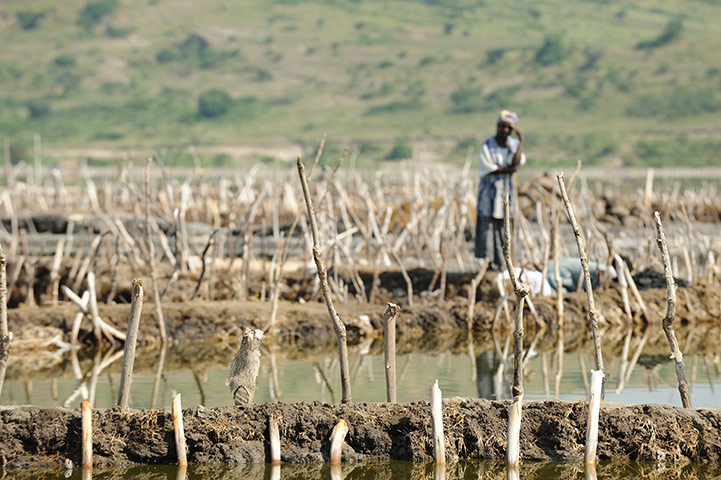
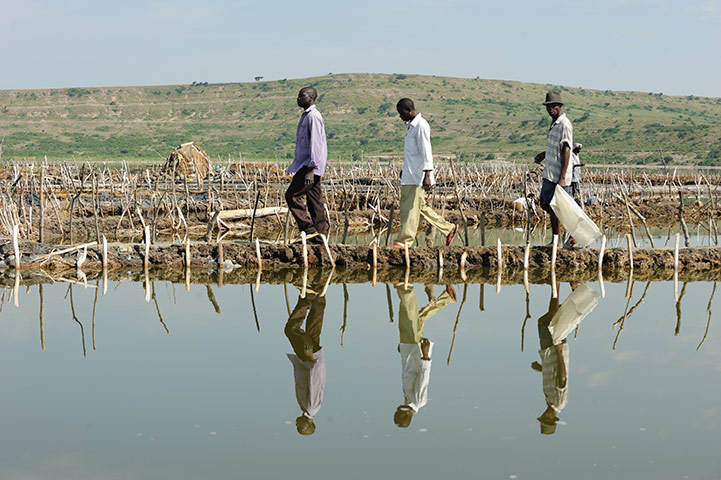
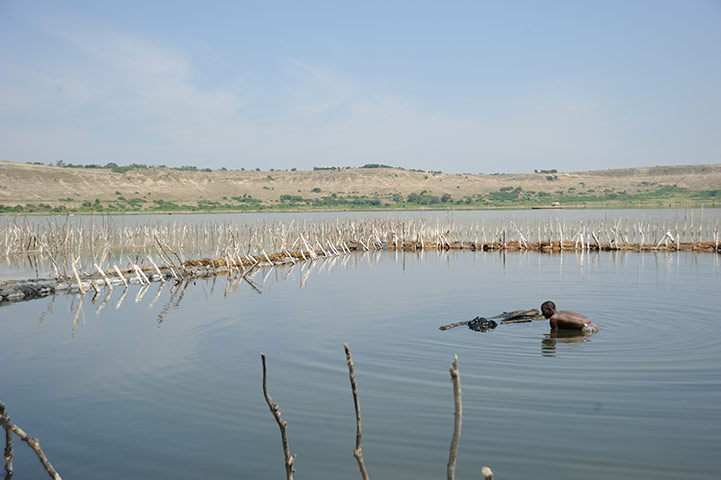
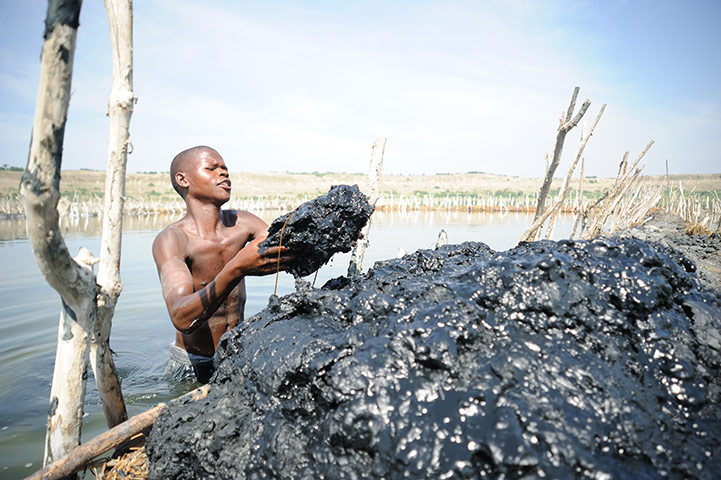
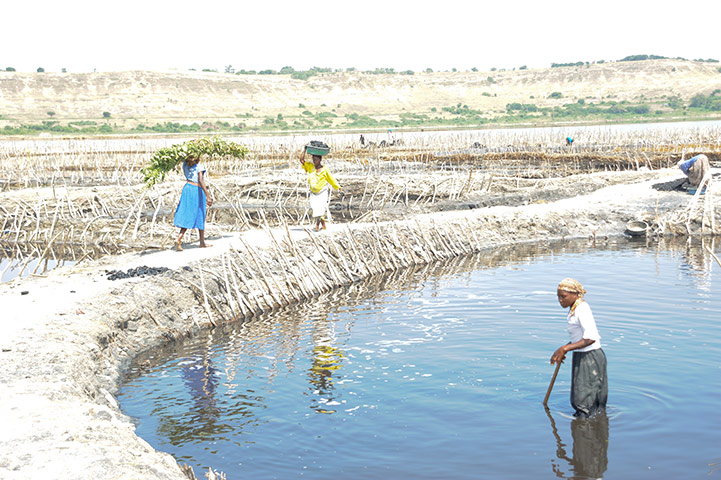
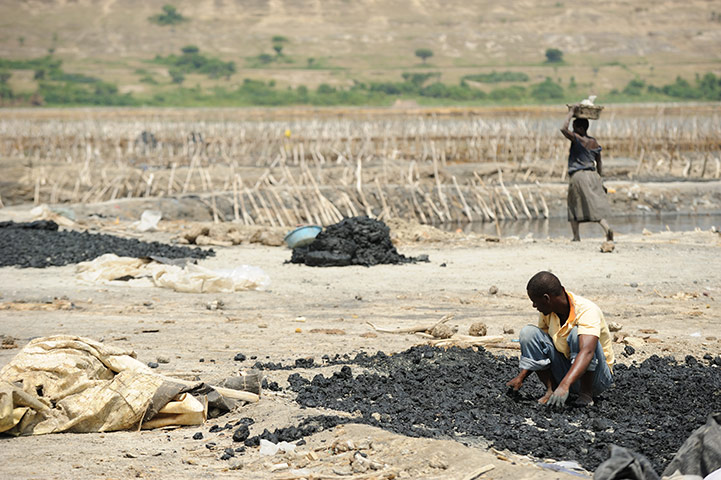
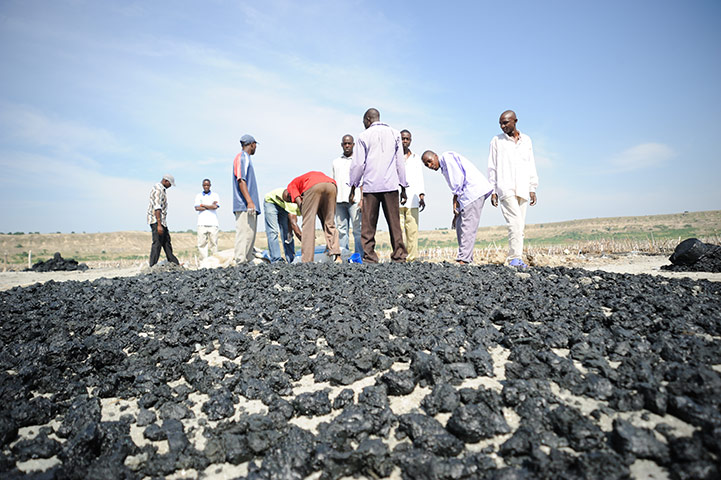
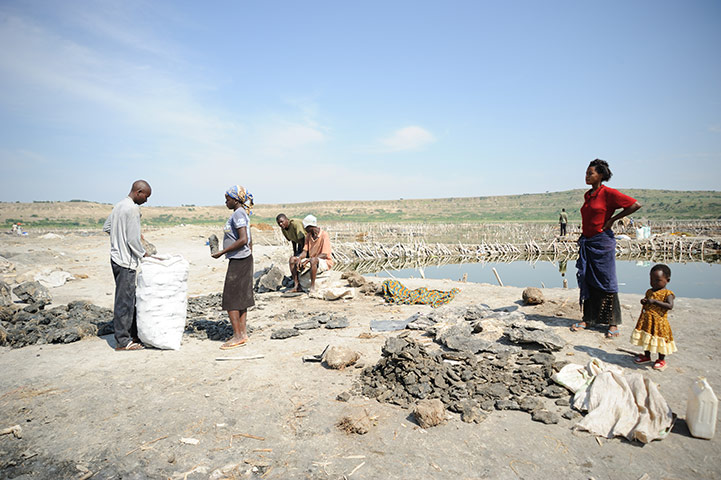
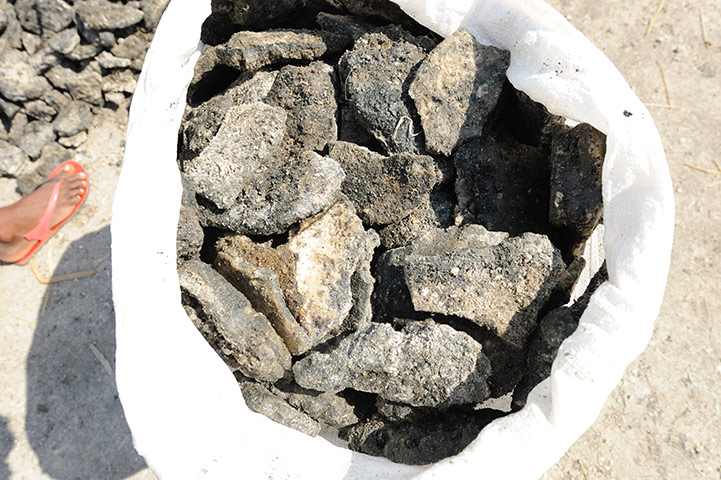
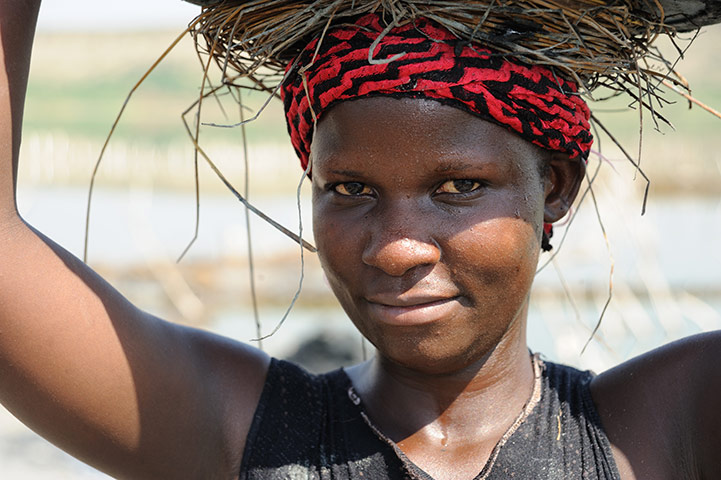
Workers extract three main products from the lake: blocks of rock salt; high-quality salt crystals that can be sold as table salt; and salty mud that is used as salt licks for cattle Photograph: James Ewen/Earthmedia/OxfamLake Katwe is a crater lake situated inside Queen Elizabeth national park, an internationally important area of savannah that is home to a wide range of species. Several streams drain into the lake, but it has no outlet, so intense evaporation during the dry seasons leads to the water becoming extremely salty Photograph: James Ewen/Earthmedia/OxfamWorkers construct saltpans at the margins of the lake to intensify the evaporation and concentrate the saltPhotograph: James Ewen/Earthmedia/Oxfam
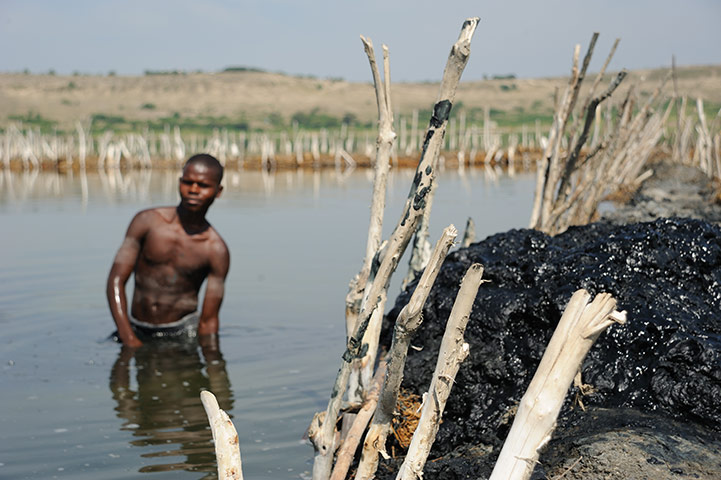
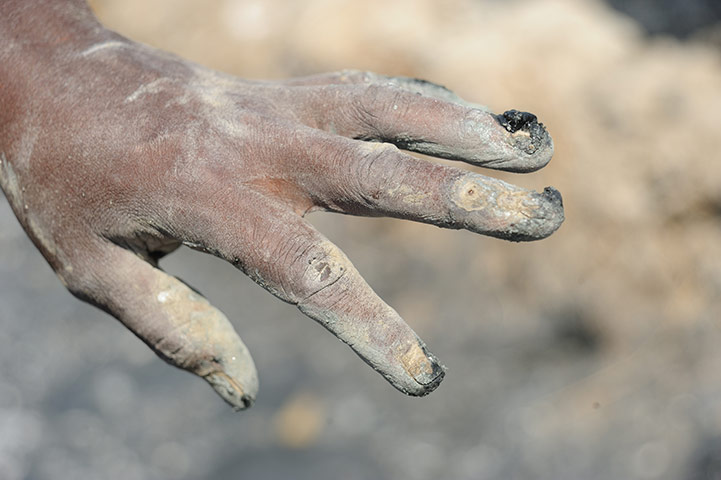
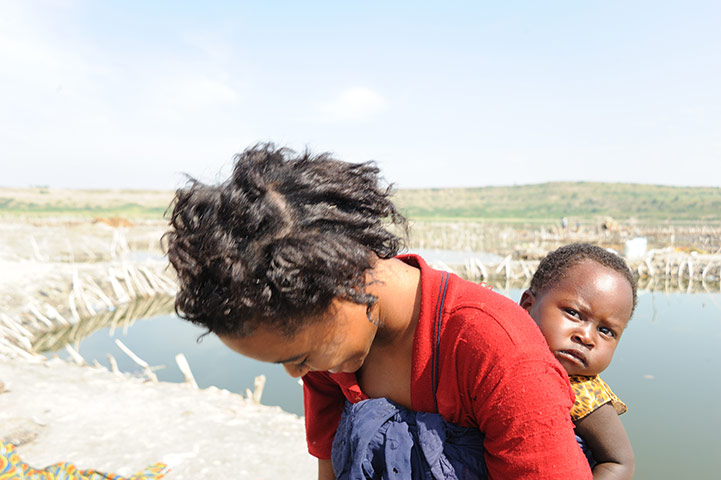
Ownership of the saltpans is crucial because the owner takes a cut of the profitsPhotograph: James Ewen/Earthmedia/OxfamThe salt extraction method has changed little in decadesPhotograph: James Ewen/Earthmedia/OxfamExtraction of the salt from Lake Katwe is done by hand by both men and women and involves standing waist or chest deep in water for hours at a time. The air is infused with the bad egg smell of hydrogen sulphide gas and traces of ammoniaPhotograph: James Ewen/Earthmedia/OxfamThe desiccating hyper-saline water has severe effects on the workers, who do not wear any protective clothing or use any specialist equipment beyond a mattock to dig up the salty mudPhotograph: James Ewen/Earthmedia/OxfamReuben Yuryahewa misses school 4 days a month to work in the saltpans with his older brotherPhotograph: James Ewen/OxfamIn an effort to protect themselves from the toxic water men tie plastic bags around their genitals or wear condoms. Some women put flour inside their vaginas. These strategies have little effect and reproductive health problems are commonPhotograph: James Ewen/Earthmedia/OxfamBefore it can be bagged and sold the black mud is spread out and driedPhotograph: James Ewen/Earthmedia/OxfamThe mud dries quickly in the intense equatorial sunPhotograph: James Ewen/Earthmedia/OxfamWorkers bagging the salt rich mud on the lake shorePhotograph: James Ewen/Earthmedia/OxfamThe black salty mud is sold to farmers as 'salt-licks' for cattlePhotograph: James Ewen/Earthmedia/OxfamA worker carrying salt to be driedPhotograph: James Ewen/Earthmedia/OxfamThe salty water turns cuts or wounds on the workers bodies into painful soresPhotograph: James Ewen/Earthmedia/OxfamThere are no childcare facilities so mothers work with their children strapped to their backsPhotograph: James Ewen/Earthmedia/Oxfam
Sign up to read this article
Read news from 100’s of titles, curated specifically for you.