
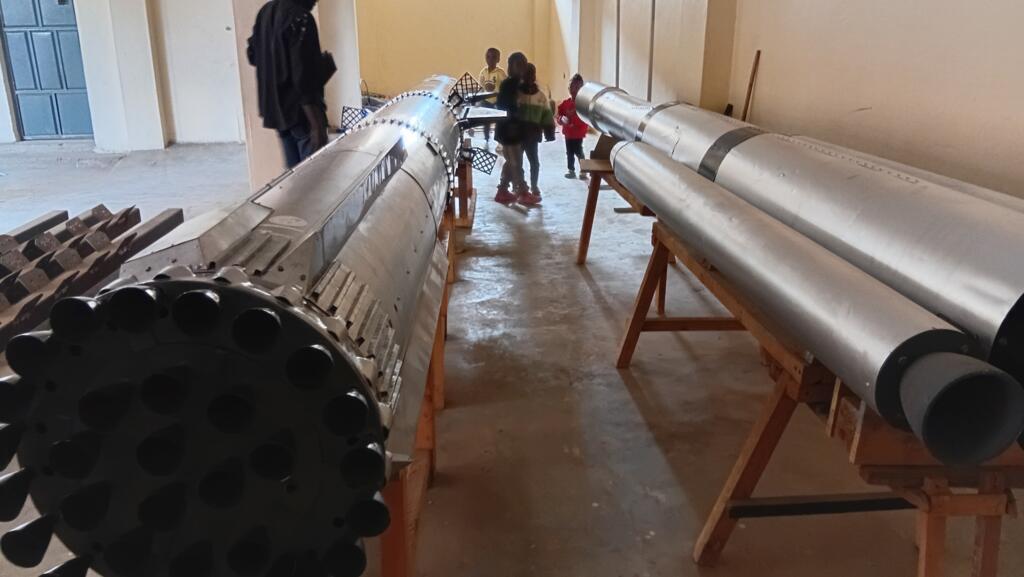
Ongata Rongai, Kenya – On the ground floor of an apartment block in the town of Ongata Rongai, south of Nairobi, two rockets stand upright on metal pillars, their aluminium skins catching the light. They look out of place here – too ambitious, too futuristic for a space meant for laundry lines and water tanks. But for Eugene Awimbo, this is exactly where Kenya’s space dream begins.
For more than 10 years, this self-taught inventor has spent his days cutting metal, soldering wires and studying rocket designs from a workshop in his modest home.
There are no blue-chip investors or institutional logos on the walls here – just tools, YouTube tutorials paused mid-frame and prototypes that reflect thousands of hours of trial and error.
“I didn’t study this in school,” he says simply. “This is passion.”
As a young man, Awimbo became fascinated with space exploration, drawn in by documentaries and the rise of private spaceflight in the United States.
Elon Musk’s work in particular captured his imagination – not as the endeavour of a celebrity, but as proof that audacious ideas could be turned, piece by piece, into reality.
What followed was not a dramatic breakthrough, but a slow, disciplined commitment. Awimbo taught himself the fundamentals of rockets online, learning through failure.
He experimented with locally available materials such as steel, aluminium and salvaged components, adapting global ideas to Kenyan constraints. Each model improved on the last.
The Kenyan teacher using laptop batteries to power motorbikes
Educational tools
The rockets in his workshop are not designed for orbit. Not yet, anyway.
Instead, they are educational tools – physical representations of what is possible. Awimbo’s real target is not the stratosphere, but the classroom.
“I focus on schools,” he explains. “I want students to understand space science and exploration. To see that scientists and astronauts can come from here.”
In a country where access to advanced scientific infrastructure remains limited, Awimbo’s work is practical, aspirational and deeply local.
He collaborates with schools to demonstrate the principles of rocket flight, explain propulsion and spark curiosity in students who may never have seen such technology up close.
The Kenyan engineer building a sustainable future with recycled plastic bricks
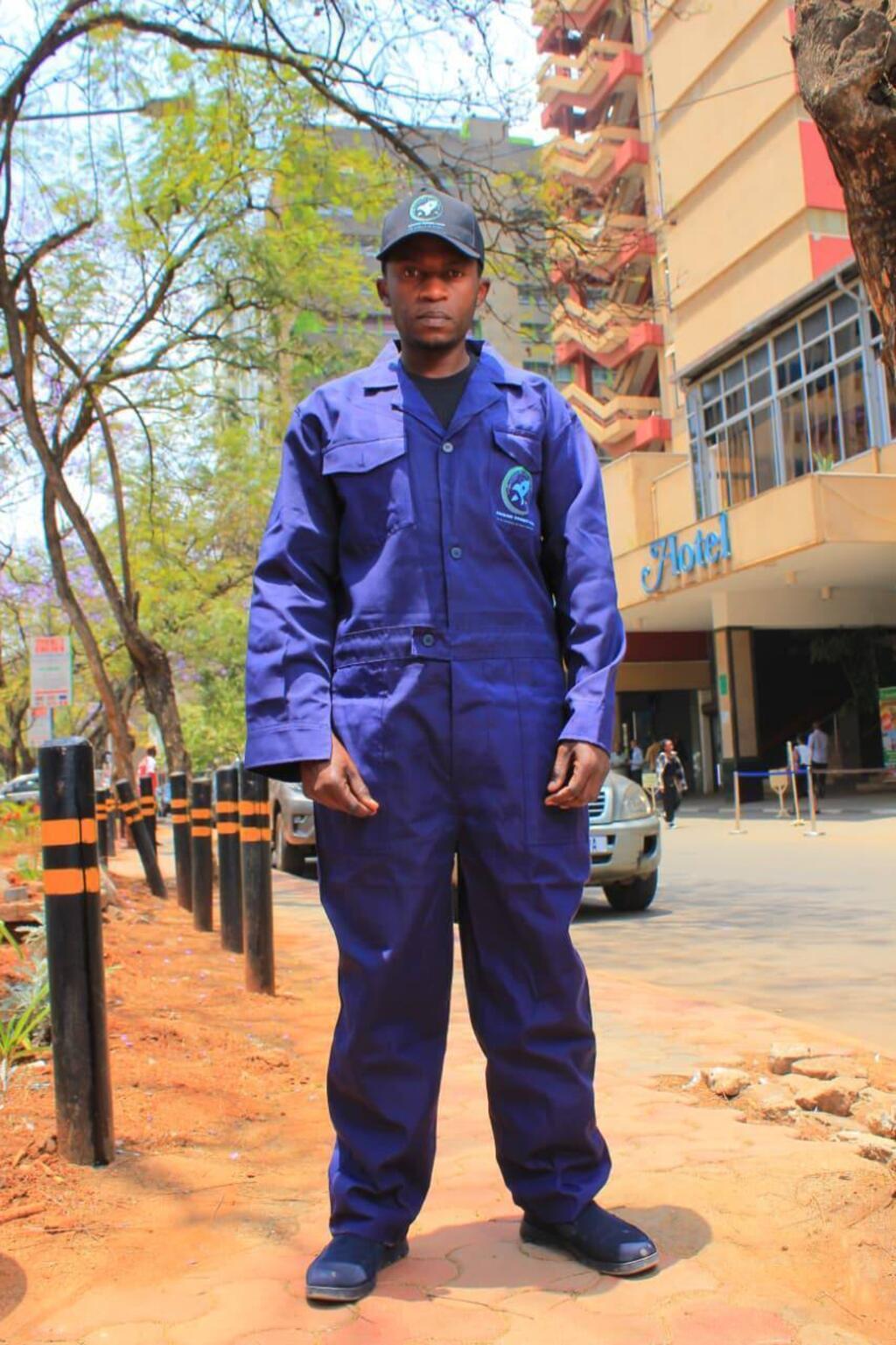
There are challenges, of course. Funding is scarce, space is limited and progress is slow.
Yet Awimbo persists, driven by a sense of responsibility rather than a search for recognition. When he speaks about the future it is that of the students he teaches, rather than his own.
“Kenya has talent,” he says. “What we need is exposure and belief.”
He imagines Kenyan scientists contributing to global space research, engineers designing launch systems, astronauts carrying the national flag. His is a story of quiet defiance against the assumption that world-class innovation must come from elsewhere.
His rockets may never leave the ground, but for the young minds that pass through Awimbo’s workshops, they have already done their job in lifting imaginations, and redefining where the future of space exploration can begin.