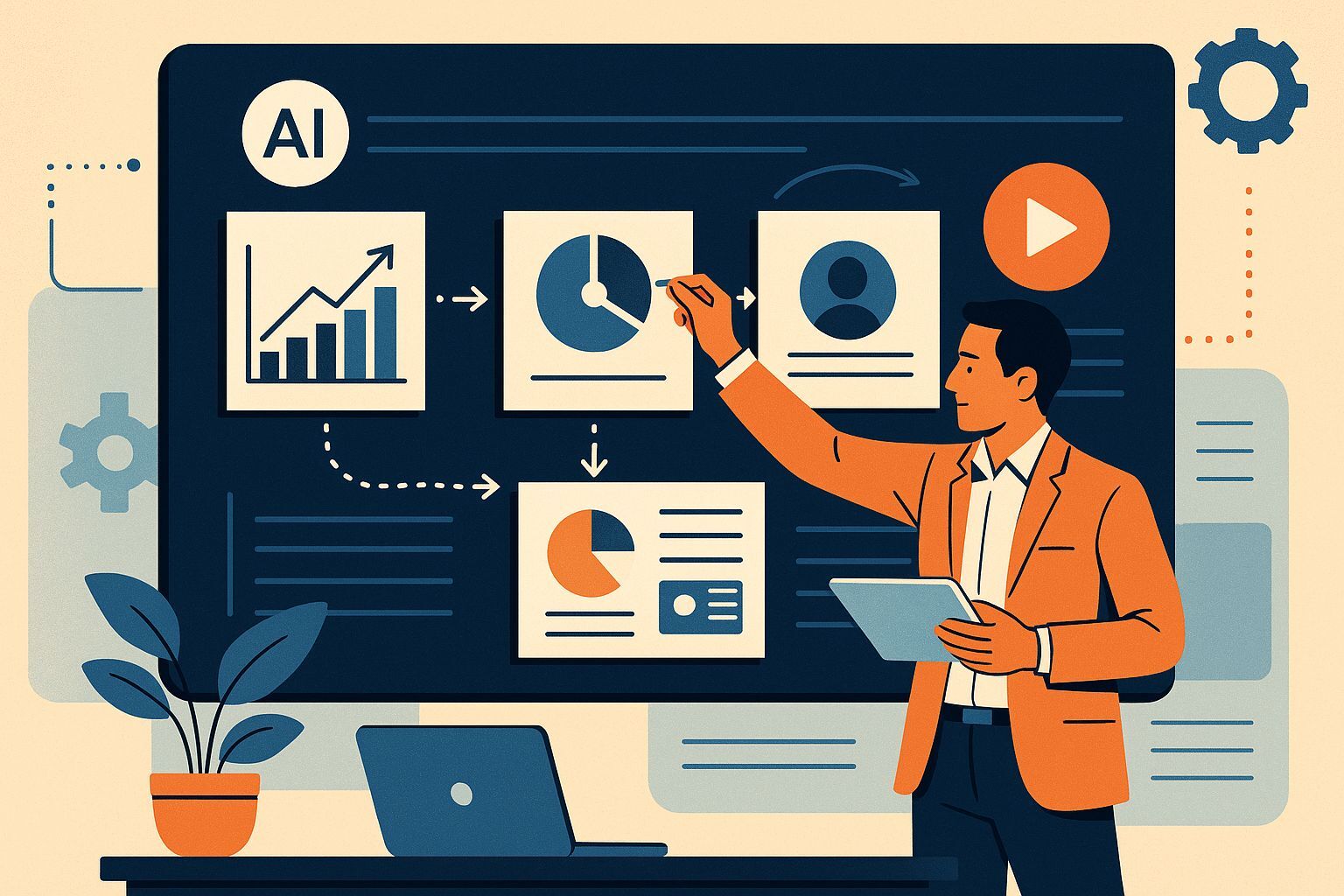
For decades, business presentations were little more than bullet points on blue backgrounds. But in 2025, slides have become something far more powerful — a medium for storytelling, persuasion, and even emotional connection.
Artificial intelligence and human-centered design are reshaping how ideas are shared in boardrooms and Zoom calls alike. Whether pitching investors in Silicon Valley or presenting strategies to clients in Sydney, professionals are discovering that how they tell their story now matters just as much as what they say.
From PowerPoint to Performance
The humble slide deck used to be a supporting act. Today, it’s the main stage. As attention spans shorten and competition for visibility intensifies, clear and visual communication has become a core business skill.
“In 2025, presentations are no longer administrative documents — they’re experiences,” says James Hollis, creative strategist at the design agency PitchMont. “The goal isn’t to dump data on a screen. It’s to make people care.”
This shift has elevated presentation design from an afterthought to an essential part of branding. Startups are investing in presentation design services the way they once invested in websites. The logic is simple: if your slides look dated, your entire brand feels dated.
The AI Revolution Behind the Scenes
The AI boom of the past two years has transformed nearly every creative process, and slide design is no exception. Tools like Tome, Gamma, and Microsoft Copilot can now generate outlines, visuals, and draft layouts in seconds.
But while automation accelerates production, it hasn’t replaced human creativity. “AI is incredible at structure,” Hollis says. “It can organize content faster than any designer. But it still takes human intuition to craft a story that feels authentic.”
Agencies are now blending both — letting AI handle routine tasks while designers focus on narrative, emotion, and tone. It’s a hybrid model: machine efficiency meets human empathy.
Why Visual Storytelling Wins
Every business, from a solo consultant to a global brand, is fighting the same battle — how to hold attention in a world of infinite distraction. Neuroscience backs the new approach: visuals are processed up to 60,000 times faster than text, and stories trigger more memory retention than data alone.
That’s why presentation design in 2025 looks more like movie direction than desktop publishing.
Slides are structured like scenes, transitions build rhythm, and color palettes evoke specific moods.
This design-driven storytelling helps small businesses compete on a level playing field with corporate giants. A well-crafted presentation doesn’t require millions in ad spend — just clarity, empathy, and strong design.
The End of “Template Thinking”
One of the biggest casualties of the AI era has been the cookie-cutter corporate deck. Generic templates can now be spotted instantly, and they often do more harm than good.
In contrast, the best presentations of 2025 are unmistakably branded: bespoke fonts, custom graphics, and consistent voice. Agencies like PitchMont help businesses define their “visual identity” not just for websites, but for the decks that win deals and funding.
The result is a new creative niche — presentation branding. Just as companies once sought brand guidelines for their social media, they now request “deck systems” that unify every visual touchpoint from investor updates to sales pitches.
When AI and Design Work Together
The most forward-thinking teams aren’t choosing between AI and design — they’re integrating both. Here’s what that looks like in practice:
- AI drafts → Human refines. AI proposes a structure; a designer adjusts flow, emphasis, and emotion.
- Data visualization at scale. Algorithms turn raw data into charts, but humans decide which stories the numbers actually tell.
- Brand guardrails. AI learns a company’s logo, fonts, and colors, ensuring visual consistency across decks.
- Iterative storytelling. AI tools simulate audience reactions, helping presenters refine timing and tone.
It’s not about replacing designers — it’s about amplifying them.
The New Skill Set for Professionals
In this environment, knowing how to design a deck isn’t enough. Professionals now need visual literacy: the ability to read and craft stories in pixels and motion.
Business schools have started teaching “visual communication” modules alongside finance and marketing. Recruiters list “presentation storytelling” as a desired skill. Even executives are hiring coaches to refine their delivery and design intuition.
“The modern pitch deck is part psychology, part cinematography,” says Hollis. “If your story doesn’t resonate visually, it won’t land at all.”
Beyond the Slide Deck
Some of 2025’s most innovative presentations don’t look like slides anymore. They’re interactive microsites, short motion videos, or hybrid documents blending visuals, voice, and data.
AI can now tailor content in real time — adapting tone, visuals, or even order of slides based on audience engagement. The result is personalization at a scale unimaginable a few years ago.
Still, the human touch remains irreplaceable. The best decks succeed not because they’re algorithmically perfect, but because they feel human — concise, confident, and emotionally intelligent.
What Comes Next
As AI continues to evolve, so will our expectations for communication. The line between designer and storyteller will blur further, and presentation design services will sit at the intersection of creativity and technology.
For small businesses, that’s good news. High-quality design is no longer a luxury — it’s accessible, affordable, and often AI-assisted. The power to craft a world-class presentation now fits in a browser tab.
Visual storytelling has become the universal language of business. And in 2025, those who master it — with the help of design, AI, or both — will command the world’s attention.