It was early 2013, in the run-up to the budget. The Conservative-led coalition was under pressure from UKIP. Sensing opportunity, numerous Tory backbenchers were pushing the government to drop its commitment to spend 0.7% on foreign aid. At a time of domestic austerity, it looked like a soft target.
Then a group of over 30 CEOs wrote to the Financial Times, calling on the prime minister to stick to the commitment. In doing so, they made both a moral case – and a business one. Helping the poor in developing countries not only saved children’s lives, they argued, it helped boost their future markets and secure their supply chains.
Bolstered by the move, the government stuck to its guns. International development secretary Justine Greening even cited the letter in speeches reaffirming the 0.7% commitment.
“It seems like it was a really effective intervention”, says Francis West, head of private sector policy and advocacy at UNICEF UK. “The fact that business were calling for this, not only NGOs and charities, showed how broad the coalition of support for 0.7% was.”
That letter encapsulates the motives of CEOs taking a stance on sustainability issues. First, there is the straightforward business case, where company interests align with moral imperatives. And second, a wider recognition that power implies responsibility.
On the first point, says Solitaire Townsend, founder of change agency Futerra: “This is really just a case of CEOs doing their job … Issues like resource price volatility, climate change, human rights and so on are company-scale threats ... they are simply unignorable.”
Keith Clarke, ex-CEO of WS Atkins plc, an engineering consultancy, agrees. Interventions on such issues are “first and foremost about protecting your business, and enabling your staff and your customers to cope with a revolution.” For Clarke, that revolution is the shift to a low carbon economy, which will require action way beyond business-as-usual.
But the business case goes well beyond climate change. Polly Courtice, director of the University of Cambridge Institute for Sustainability Leadership, says that there are many cases where corporations find it pays to invest in community welfare, including child development. Such investments might have much in common with development programmes, but, says Courtice, “they are also entirely in the interests of the company.”
Taking a position on issues like these is no longer an indulgence for the progressive CEO. “Given the sophistication with which they can argue the business case, I don’t think [any issue] is off limits,” says Forum for the Future’s founder-director Jonathon Porritt. “Whether it’s about protecting supply chains, building reputations, or securing a license to operate, it all plays deep into an integrated business case.”
There is a straightforward “power brings responsibility” logic at play, too, he says, pointing to Ian Cheshire, ex-Kingfisher CEO, and Unilever’s Paul Polman. These are CEOs who not only grasp this logic, but act on it. “Polman understands that this is fundamentally about the role of business in society, and that [Unilever] needs to be seen to advocate for change through societal initiatives.”
West points to Unilever’s Human Rights Report as an example of the company “being ahead of the pack”. “They deserve the reputational benefits which such moral leadership brings”, he says, and urges other multinationals to follow suit.
Increasingly, CEOs realise that the prospect of a sustainable future for their business is not in their hands alone: hence a growing willingness to collaborate on reshaping the system, and doing so in a way which can lead to surprising alignments between altruism and profit.
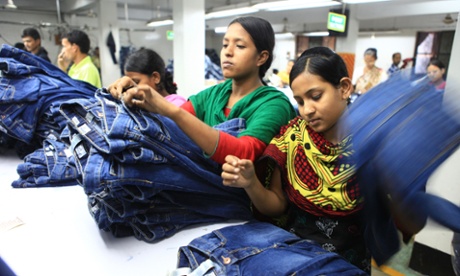
When the Cambodian government was resisting demands from textile workers for a higher minimum wage, eight leading fashion retailers, including H&M and Primark, urged it to think again, saying they were “ready to factor higher wages” into their pricing.
It’s not the only example. Several major corporations, including Tesco, successfully lobbied the government to introduce a clause into the UK Modern Slavery Bill -which has now become law - compelling companies to report on steps taken to ensure their supply chains were free of slave labour. As a piece of proactive lobbying, says West, this was groundbreaking. “That clause wasn’t even in the original bill sent to Parliament, and it wouldn’t have happened without those progressive companies speaking out on the issue. It’s a great example of how some CEOs are inviting smart regulation to drive up standards. And they probably don’t get enough credit for that.”
On occasion, then, self-interest can combine with altruism – even if it’s not always apparent. “Sometimes,” says Townsend, “we may not be able to fathom why a CEO is suddenly becoming very vocal on a particular social or environmental issue, and so we conclude that it’s a purely moral stance. But more often than not, it’s because they’ve got an exposure on it long term. Take child rights or labour standards: they know that, as a business acting alone, they will struggle to resolve [these issues] completely in their own supply chain, and so they become a vocal advocate for global, concerted action to raise standards. So the purely morals-driven CEO could be rarer than we think.”
Which, for anyone concerned about ends, rather than motives, might actually be rather reassuring.
Content on this page is paid for and produced to a brief agreed with UNICEF, sponsor of the child rights and business hub